Author Archive

Google's big bet: Android beyond the cellphone

Much of the iPod’s success, says Steve Jobs, is down to the fact that Japanese consumer electronics companies don’t produce elegant software. He makes the same accusation of handset makers too. They can do hardware but they “just can’t seem to get the software right.” Enter Android, Google’s open source OS, which although explicitly designed to deliver better software for Internet-connected cellphones, will also soon find its way onto all manner of devices.

“Over the last few weeks I have learned that numerous companies are tinkering with Android in an attempt to get the OS to power a whole slew of gadgets — everything from set-top boxes to navigation systems to mobile Internet devices to smart picture frames”, reports Om Malik.

Motorola have already confirmed that it has at least one Android-powered handset in the pipeline, but the company is also a major player in the television set-top box space and is said to be exploring the potential of Android in the living room too. Malik also says he’s heard from “fairly reliable sources” that two large PC makers are experimenting with Android-based Internet devices. None of which I find surprising. From both a technical and business point of view, Google has laid the foundations for Android to move quickly beyond its cellphone roots and, the company hopes, eventually become a ubiquitous platform.

Continue reading »
My new Macbook and me (first impressions)

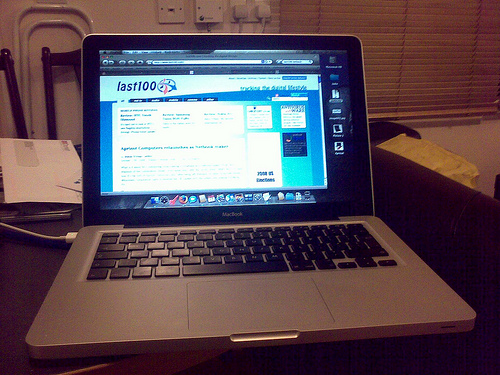
Late yesterday afternoon I purchased one of the new Macbooks (announced on Wednesday) and in the process finally retired my trusty 12 inch Powerbook from daily blogging duties.

I’ve only really had the new machine fully set up and operational for about a day (after transferring over my user accounts/data, and installing essential apps such as Firefox, Skype etc.), and while I may get around to doing a full review, I wanted to first share my initial impressions, a few of which have surprised me.

Continue reading »

Apricot Computers relaunches as Netbook maker

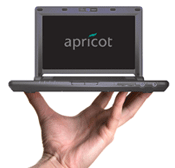
What is it about 80’s computing icons making a comeback as a Netbook maker? First, the relaunch of the Commodore brand – if by name only – with the catchy titled UMMD 8010/F. And now it’s the turn of Apricot Computers who, after being left dormant for years by former owner Mitsubishi Corporation, have re-entered the UK market with the rather nice looking PicoBook Pro.

The device meets the typical specs of most Netbooks currently doing the rounds, sporting a 8.9 inch wide screen screen (1024 x 600), 1 GB Ram, 60 GB hard drive, VGA output, 1.3 MP webcam, Wi-Fi, Bluetooth, two USB 2.0 ports and a 4 in 1 card reader. The PicoBook Pro comes in two flavours: Linux (Novell SUSE Enterprise) and Windows XP.

In terms of how Apricot intends to differentiate the PicoBook Pro from others in this crowded market, the company has chosen to use a VIA chipset rather than Intel’s Atom platform, which CEO Shahid Sultan told me offered better integrated graphics and at least as much bang for your buck. (Having said that, he did hint that next for Apricot might be an Atom-based Netbook with a larger screen.) The company also claims its Netbook is one of the greenest in the marketplace, and Sultan was keen to talk up the build quality of the PicoBook Pro compared to competing products such as the “plasticky” Eee PC, making it more suited to business users.

See also: Don’t buy a Netbook pleads PC industry

I got to spend a few minutes with the PicoBook Pro at a press event on Thursday, and my first impressions were good. Expect a full review in the next few weeks.

Hands-on: BBC iPlayer for Nokia N96

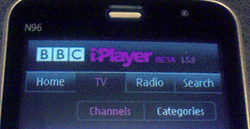
It’s no secret that I’m a huge fan of the BBC’s TV catch-up service iPlayer (UK-only), which I regularly access on my laptop, cable television set-top box, and of course my trusty iPod touch. The problem with the latter version, however, is that it offers streaming only not downloads, which doesn’t sit well for a mobile device as it prohibits off-line access such as when traveling on a plane or train or anywhere without WiFi access. It isn’t the BBC’s fault but the fact that Apple doesn’t license the iPod and iPhone’s proprietary DRM solution – so-called FairPlay – to third-parties. DRM is a necessary evil, says the public broadcaster, in order to meet its obligations to copyright holders who require that programs only be made available for up to seven days after broadcast.

In contrast, the newly released version of iPlayer for Nokia’s latest flagship handset, the N96, doesn’t suffer the same problem, offering both streaming and downloads. Earlier this afternoon I got some hands-on time with iPlayer on the Nokia N96.

Continue reading »

Pay-as-you-go Internet TV service Jalipo sent to the deadpool

Jalipo, the Internet TV service that charged on a minute by minute pay-as-you-go basis, has entered the deadpool. The browser-based offering, which delivered both on-demand and live streaming, was purchased by the ROK Entertainment Group earlier this year at a valuation of $16.8 million. But after just five months, its new owners appear to have had a change of heart. Blaming the current economic climate, ROK has decided to shut down the service and reportedly lay off its 30 London-based employees.

“We had high hopes for Jalipo when we acquired the business earlier this year, but it did not gain the traction we were expecting,” ROK marketing director Bruce Renny told Broadband TV News.

“Without significant and unplanned additional investment, we believe it would not grow significantly and, given the current economic climate, we have taken the decision to concentrate our resources and efforts on promoting our core revenue-generating mobile entertainment businesses whilst saving the costs associated with Jalipo.”

While the current economic downturn will likely make all companies re-evaluate their future spending plans, ROK’s decision to shutdown Jalipo probably has more to do with the service’s broken business model.

Continue reading »

RWW Live: Mobile App Development – phones getting smarter, pipes getting dumber

After a month-long hiatus, I made a return appearance on ReadWriteTalk’s fortnightly podcast RWW Live hosted by Sean Ammirati. In this latest episode we focused on mobile app development and platforms, and joining regular contributors Richard MacManus and Marshall Kirkpatrick (ReadWriteWeb), along with Sean and myself, were special guests Loke Uei Tan, Tech Product Manager from Windows Mobile, Tom Conrad, CTO of Pandora, and Ben Strackany from mobile development company DevelopmentNow.
What ensued was a lively conversation about the challenge of building mobile apps based on the number of  different devices and platforms, and that’s before you factor in the carriers. From a technical point of view, a lack of a standard platform poses a real challenge, not dissimilar to the early days of developing for the web, or as one of our guests suggested, writing software for the Mac back in 1984!

Continue reading »

Nokia launches 5800 XpressMusic touchscreen phone (formally known as the "Tube")

At long last, Nokia has taken the wraps off its much anticipated entrance into the touchscreen smartphone space, post-iPhone of course.
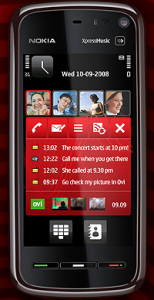
The new device – dubbed 5800 XpressMusic – is, as the name suggests, being pitched as a music (and video) centric phone, and is to be the second handset to support the company’s all-you-can-eat music subscription service, Comes With Music, which also officially launched today. Perhaps unsurprisingly, Nokia is also emphasizing the 5800’s media production and sharing capabilities, two areas where the company feels it competes strongly against Apple, especially since the iPhone lacks video recording functionality. On that note, the 5800 features a 3.2 megapixel camera with Carl Zeiss lens and is capable of 30 frames-per-second video playback and recording.

There’s also the now standard support for Nokia’s ‘Share on Ovi’ web service, which along with the ability to upload to Nokia’s own media sharing site, also supports uploading to Flickr and Facebook. Additionally, music play-lists can be shared via Bluetooth, although this feature will likely only be of real use to Comes With Music subscribers.

Continue reading »

Rumor: New Nintendo DS to encroach on iPod territory

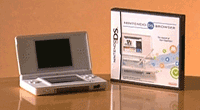
With Apple recently re-positioning its iPod touch, and to a lesser extent iPhone, as a portable gaming device, in addition to media playback and Internet functionality, it would make some sense for Nintendo to move the other way with its DS handheld games console. And that’s exactly what might be about to happen.
According to Japanese newspaper Nikkei, an upgraded version of the device sporting a built-in camera, larger screen, improved WiFi, and perhaps most significantly, music playback features, could be unveiled as early as Thursday.

It’s suggested that the inclusion of a camera would be utilized in new gaming experiences – think Sony’s EyeToy – while improved WiFi access could pave the way for a much better out-of-the-box web browsing experience. However, its an emphasis on music – and possibly video – playback that would raise the most eyebrows (including those in Cupertino) since it would mark a significant departure from Nintendo’s single-minded focus on gaming, and gaming alone, compared to competitors Microsoft, Sony and Apple.

(via The Register)

Roku to open its Netflix set-top box

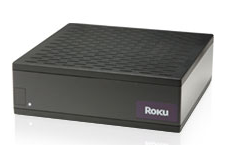
Roku is once again talking up plans to open its Netflix-only set-top box to other online video providers. Talking at the Streaming Media West conference, Roku CEO Anthony Wood was quoted as saying:
“We’re going to release the software developer kit [SDK], so anyone can publish any channel, and users can access web content on their TVs.”

Of course, just releasing an official SDK won’t lead to the Internet TV set-top box nirvana that we, and Roku, are seeking. For that to happen, Netflix’s competitors will need to be persuaded that it’s worth their while to actually build something using Roku’s SDK, otherwise poular services such as Hulu, BBC iPlayer or YouTube, for example, may never make it onto the set-top box.

As Dave Zatz advises: Roku needs to “continue working the phones” in order to build the kind of partnerships that will lead to more quality content. Because its content that will ultimately lead to more hardware sales, which is of course where Roku makes its money. “There’s a much larger audience of potential Hulu and YouTube viewers than there are Netflix subscribers”, notes Zatz.

One potential sticking point: Earlier this year Netflix made a small investment in Roku, which could make things awkward as Roku attempts to woo competing content partners.

Review: XBox Live Video Store – where's all the content?

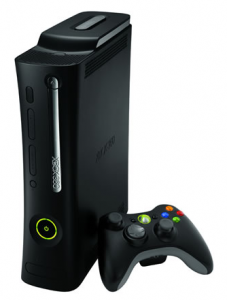
Although the UK version of Microsoft’s Video Store for its XBox 360 console launched last December, it wasn’t until just over a month ago that I got to try out the service for myself. Microsoft’s PR team kindly loaned me a top of the line model – the HDMI equipped 120GB “Elite” version – to hook up to my High Definition TV to download and watch a few shows and movies purchased from XBox Live. However, while the service is dead easy to use and worked as intended, for a number of reasons I came away disappointed.

Continue reading »