Mobile OS wars heat up as Verizon joins LiMo Foundation, a Google-Android rival

by Daniel Langendorf
May 14th, 2008 | Posted in Comms, Mobile | 1 Comment

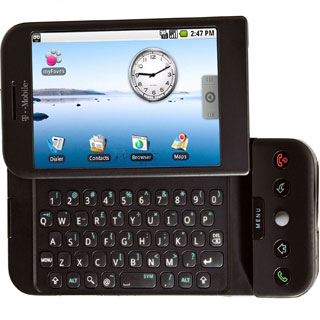
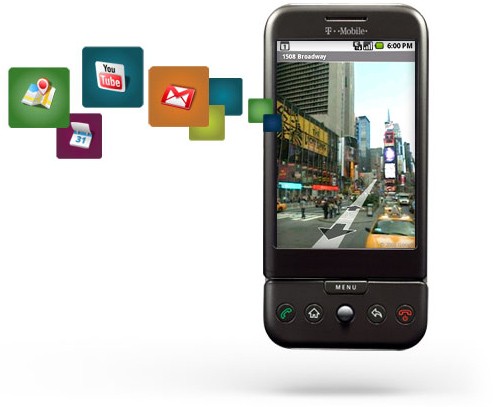
VerizonHere’s an interesting jab at Google and its mobile operating system Android: Verizon, the No. 2 U.S. carrier, is joining the LiMo Foundation because it has software and phones available, Google does not.

LiMo FoundationThe LiMo Foundation, representing Linux Mobile, is the lesser known of the mobile operating systems. There’s Microsoft’s Windows Mobile, supplying many makers of smart phones; Symbian, supplier mostly to Nokia; Qualcomm, supplier mostly to Verizon; upstart Google, and Apple. Then there’s Linux Mobile, slowly creeping along by adding devices mostly in Europe and Asia.

The LiMo (Linux Mobile) Foundation is a consortium of companies well vested in the mobile industry: Motorola, Samsung, LG Electronics, Vodaphone, NTT DoCoMo, and many others. Verizon is the first U.S. carrier to join the LiMo initiative, which now has 40 members worldwide.

The idea behind LiMo is to build a standardized, Linux-based mobile platform, which members can customize to meet their needs. For the most part, Linux Mobile is a competitor to Android, which is not yet available on any handsets. Linux Mobile is showing up on phones from Motorola, NEC, Panasonic, Samsung, and LG.

Kyle Malady, vice president of network for Verizon, said in a conference call today that he expects Verizon to sell both regular devices and smart phones using mobile Linux next year.

“We expect that Linux Mobile will rapidly become our preferred operating system,” Malady said to The Associated Press [via The New York Times] . “As the development community looks at how best to bring new applications to the marketplace, they should check out LiMo and Linux Mobile first.”

Continue reading “Mobile OS wars heat up as Verizon joins LiMo Foundation, a Google-Android rival” »

If you enjoyed this post, make sure you subscribe to the RSS feed!

Through its own mobile client, Skype is now available on about 50 cellphones

by Daniel Langendorf
April 25th, 2008 | Posted in Comms, Mobile | 1 Comment

For the first time Skype is offering its own mobile client to make phone calls over its popular VoIP (voice over Internet protocol) service.

The Skype client is an open beta (available here) and is expected to work with about 50 handsets from Nokia, Motorola, Samsung, and Sony Ericsson. Other phones may work if they support Java, the language the client is based on.

It will not work on the iPhone.

“This product is part of our goal to be on as many platforms as possible,” said Wilhelm Lundborg, product manager for Skype Business (via InfoWorld).

All features — chat, group chat, presence, SkypeIn, Skype-to-Skype and SkypeOut calls — work in the U.K., Brazil, Sweden, Denmark, Finland, Poland, and Estonia. Elsewhere, the data features and incoming Skype calls work, but the client does not allow outbound calls.

The client allows you to connect a cellphone to your Skype account. It uses cellphone minutes, but adds all your Skype contacts and gives you a mobile presence.

A “Skypephone” has been available by the U.K. carrier 3 since November.

If you enjoyed this post, make sure you subscribe to the RSS feed!

Video: Sony’s Mylo 2 Personal Communicator

by Steve O'Hear, editor
April 9th, 2008 | Posted in Comms, Mobile | No Comments

The folks over at Akihabara recently got their hands on Sony’s new Mylo 2 Personal Communicator (see our previous coverage).

The device resembles a small WiFi tablet, not dissimilar to Nokia’s N810, and features a 3.5 inch WVGA display, slide-out QWERTY keyboard, 1.3 megapixel camera, Skype support, and 1GB of on-board storage, as well as a Memory Stick Duo/PRO Duo card slot. Applications include Web browsing, media playback, Instant Messaging and VoIP. Akihabara’s major complaint is poor video playback, which is restricted to 320 x 240, despite the device having a generously sized 800 x 480 screen.

Akihabara’s video demo after the jump…

Continue reading “Video: Sony’s Mylo 2 Personal Communicator” »

If you enjoyed this post, make sure you subscribe to the RSS feed!

Whether people want it or not, AT&T will deliver live mobile TV in May

by Daniel Langendorf
March 27th, 2008 | Posted in Comms, Mobile | 2 Comments

samsung att tvI asked the question in September, and I’ll ask it again: Do we really need live TV on our cell phones? AT&T, the largest U.S. carrier, says we do.

AT&T said Thursday it will offer live mobile TV service from MediaFLO in May through two handsets — the LG Vu and the Samsung Access. Subscribers willing to pony up the extra bucks (prices won’t be announced until later) will receive eight channels of live TV plus two exclusive channels in select markets.

AT&T offers everything from music to Web surfing is looking to live mobile TV as a way to earn additional revenue, something all the carriers desire as cell phone call prices continue to fall. Rival Verizon, the No. 2 U.S. carrier, already offers broadcast mobile TV through V-Cast.

Continue reading “Whether people want it or not, AT&T will deliver live mobile TV in May” »

If you enjoyed this post, make sure you subscribe to the RSS feed!

Motorola’s decline in mobile industry has been coming for a long time

by Daniel Langendorf
March 26th, 2008 | Posted in Comms, Mobile | No Comments

old motorola phoneI’m still shaking my head over this one. Motorola, one of the stalwarts of the mobile communications industry, will split into two publicly traded companies in 2009, one for its profitable infrastructure equipment, the other for its not-so-profitable mobile handsets.

How did this happen?

And what does it mean for the mobile industry?

I’ll let Wall Street debate the finer details of how Motorola’s crash-and-burn happened, but it comes as no surprise. I’ve been watching Motorola lose its grip in the mobile industry for almost three years, since the heady days of the Razr.

Back in 2005, Motorola introduced the Razr as an exclusive fashion phone costing $600 with a service plan, $800 without — and people complained that Apple’s iPhone was too expensive at its introduction. Like the iPhone, the Razr was the must-have geek toy of its time.

In 2006, however, Motorola allowed the Razr to enter the mass market as a mid-price (then super-cheap) phone, which lessened its must-have coolness and social impact. It seemed every snot-nosed kid at the mall had a Razr stuffed in a back pocket.

Continue reading “Motorola’s decline in mobile industry has been coming for a long time” »

If you enjoyed this post, make sure you subscribe to the RSS feed!

Jockeying for position is over: Time for the U.S. mobile industry to innovate

by Daniel Langendorf
March 20th, 2008 | Posted in Comms, Mobile | No Comments

verizon wirelessThe jockeying for position is over. It’s time for the U.S. carriers, the world’s handset manufacturers, and third-party application developers to innovate the mobile wireless future.

Today the U.S. Federal Communications Commission announced that the big winners in the 700 MHz wireless spectrum auction were, indeed, Verizon and AT&T, the two biggest players in the industry.

Verizon won the coveted C-block for $4.74 billion, besting Google’s bid of $4.71 billion. Going into the spectrum bid, which began at the end of January, many industry followers had hoped that Google would take its bid seriously as a way to shake up a stagnant industry.

google springGoogle committed to bidding the minimum of $4.66 billion, which triggered a rule that the winner of the 700 MHz C-block spectrum would have to open its network to any device, any application. Just by bidding, Google dictated the new rules of the game — rules that Verizon must now follow.

at&tAT&T won 227 regional licenses around the U.S. Those licenses, along with the piece of the 700 MHz puzzle it already owned, allows AT&T to further enhance the quality and reliability of its existing network and wireless broadband.

“It means that the two big guys just got much bigger,” Rebecca Arbogast, an analyst with Stifel Nicolaus, told Reuters.

It also means that the jockeying for position is now officially over. The remainder of 2008 will be for the carriers, handset manufacturers, and application developers to introduce their initial products — and you can bet these will be far from perfect. There will be missteps, misfirings, false starts, claims of so-and-so being unfair, buggy software, crappy hardware, and disappointment, but these are the growing pains of an industry in transition

2009 is still the Year of Wireless.

For now, with the auction over, here’s how the U.S. wireless industry shapes up for the remainder of 2008.

Continue reading “Jockeying for position is over: Time for the U.S. mobile industry to innovate” »

If you enjoyed this post, make sure you subscribe to the RSS feed!

Excitement continues: wireless auction ends in U.S., winners will be known within 10 days

by Daniel Langendorf
March 18th, 2008 | Posted in Comms, Mobile | No Comments

fcc wirelessI know you can’t wait — it’s better than who is going to make it to the Final Four. OK, not really, but the largest and most lucrative wireless spectrum auction in U.S. history ended today, and we’ll know within 10 days who won the coveted C-block.

Presumably it’s Verizon, the No. 2 U.S. carrier, and not “telecom” upstart Google, but who knows? Maybe there is a surprise or two in the final results. Or not.

Even so, the auction will bring in $19.5 billion for the Federal Communications Commission, with $4.744 coming from the C-block winner. The winner can claim its prize within the year and start building that super-duper, next-gen, open-access wireless network we’ve been hearing about.

All in all, the event took 38 days to complete with 261 rounds of bidding. For a blow-by-blow account, see RCR Wireless News.

If you enjoyed this post, make sure you subscribe to the RSS feed!

Another DVR-like patent unearthed for Apple; this one might be game-changing

by Daniel Langendorf
March 13th, 2008 | Posted in Audio, Comms, Mobile, Net TV | 1 Comment

apple patentNow that the iPhone is conquering the mobile world … and the super-thin MacBook Air has made its debut … and the AppleTV has been updated into something useful … and the iPod line has been revamped for the future … and the Intel transition is long over … everybody wants to know what’s next for Apple.

An eBook device? Doubtful, but that’s thinking too small.

A Newton-like PDA? Doubtful, and PDAs are a dying product anyway.

A tablet computer? Maybe, but they’re still too niche.

An honest-to-goodness DVR/entertainment hub? Now we’re talking.

The sleuths over at the AppleInsider today dug up another Apple patent, this one dealing again with a digital video recorder-like device. With it, users can browse for television programming, tune into TV channels, record programs, playback those shows, and download and manage content purchased at the iTunes Store.

From the patent it also looks like Apple might integrate the iPhone and/or the iPods into the tightly-tightly controlled, almost choreographed user experience.

Continue reading “Another DVR-like patent unearthed for Apple; this one might be game-changing” »

If you enjoyed this post, make sure you subscribe to the RSS feed!

Update: Android has landed, but it’s months away from a Hollywood debut

by Daniel Langendorf
February 12th, 2008 | Posted in Comms, Mobile | 1 Comment

ti androidAndroid has landed. And it looks like, well, some sort of space alien.

Several companies at this week’s Mobile World Congress unveiled prototypes of Android, Google’s highly anticipated, open-source operating system. But rather than showing off sleek, sexy cell phones, with a super-fast OS running groundbreaking applications, attendees were treated to reality.

Android, for now, is mostly a bunch of circuit boards, displays, solder, prototype “phones”, and “alpha” applications intended to show the mobile world that yes, in fact, Android and the so-called Gphones do exist and, to some degree, work. They’re not vaporware.

“It’s not fair to laugh at the huge circuit boards: These are design prototypes and will of course be shrunk down to a fraction of this size,” Charlie Sorrel writes for the Wired’s gadget lab.

“But despite the fugly appearance, these Android phones are the buzz of the show. At the NEC booth, the guy pointed me straight past the other boards saying, ‘This one is the Android. That’s the only one anybody is interested in.’”

So, without further ado, here’s Android in all its, uh, splendor.

Continue reading “Update: Android has landed, but it’s months away from a Hollywood debut” »

If you enjoyed this post, make sure you subscribe to the RSS feed!

It’s an interesting idea: Modu to introduce modular cell phones

by Daniel Langendorf
February 7th, 2008 | Posted in Comms, Mobile | 3 Comments

basic moduThe Modu modular cell phone is a really interesting idea. Its timing may be perfect, or not. It may spawn its own ecosystem, or not. It’s design, interface, and support products may hit the bulls-eye, or be total cheese.

But you’ve got to give Israeli startup Modu credit for trying something different. Modu is introducing a tiny modular phone that can be slipped into different “jackets” to give the base phone additional features and functions depending on the user’s needs.

Basic “jackets” may include an MP3 sleeve, turning the phone into a digital music player. Or a GPS device. Or a digital camera for wireless image transfers. Or an alarm clock interface. Or with a larger screen, a video playback device. The possibilities are plentiful.

The phone module weights just 1.3 ounces and is smaller than a credit card. It will launch Oct. 1 with mobile carriers in Russia, Italy, and Israel, but not in the U.S. or elsewhere in Europe at this time. It will be on display next week at the Mobile World Congress in Barcelona.

Continue reading “It’s an interesting idea: Modu to introduce modular cell phones” »

If you enjoyed this post, make sure you subscribe to the RSS feed!

Experts: Verizon to win 700 MHz auction; if so, “Can You Hear Me Now?” must live up to its promises

by Daniel Langendorf
February 6th, 2008 | Posted in Comms, Mobile | No Comments

verizonIf Verizon Wireless is truly the winner of the FCC’s 700 MHz spectrum auction, as many industry experts now believe, the No. 2 U.S. wireless carrier must live up to its promises.

Promise: On Dec. 4, Verizon said it would support the Google-led Open Handset Alliance. By doing so, Verizon, a notoriously protective carrier known for its iron-fisted rule over the devices and software applications running on its network, said it would support the open network initiative.

Promise: At the same time, Verizon said it would support the Google-powered open-source mobile operating system Android. By doing so, Verizon said it was willing to allow phones from any manufacturer — even those using the Android platform — to run on its network as long as they meet Verizon quality specifications.

Promise (and one it can’t worm out of): If Verizon does win the C block in the 700 MHz spectrum auction, it must — as a stipulation set forth in pre-auction rules — open the new network to any phone running any software.

Forbes speculates that “analysts believe Verizon — thought to be the only bidder besides Google that is both rich and motivated enough — is poised to win the coveted C block of spectrum that Google has been eyeing.”

Continue reading “Experts: Verizon to win 700 MHz auction; if so, “Can You Hear Me Now?” must live up to its promises” »

If you enjoyed this post, make sure you subscribe to the RSS feed!

FCC reaches important milestone in 700MHz spectrum auction

by Daniel Langendorf
January 31st, 2008 | Posted in Comms, Mobile | 1 Comment

scorecardsFor those of you playing along at home, the Federal Communication Commission’s 700 MHz spectrum bidding reached an important milestone today: The FCC received a bid of $4.71 billion, surpassing the $4.68 billion minimum and setting in motion events that could have profound changes on the U.S. wireless industry.

With the minimum now achieved, the winner must abide by the “open access” rules the FCC agreed to last summer, meaning that the winner will have to allow consumers to use any handset or software application on the spectrum purchased.

Funny, but no one is celebrating in the streets outside.

Anyway, who made the $4.71 billion bid remains a mystery. There’s plenty of speculation all over the Web (here, here, here), but Saul Hansell of The New York Times seems to have the best grasp of what’s going on. Suffice to say, early analysis has Verizon, the No. 2 U.S. carrier, and newcomer Google punching it out for the coveted C Block, with No.1 carrier AT&T in the mix somewhere.

Without full media access, the 700 MHz spectrum auction is a game of pure speculation because the participants — and for our purpose that’s Google, Verizon, and AT&T — cannot talk about their bids until the auction is over, whenever that will be.

Suffice to say, by reaching the open access milestone, a new market has just been launched. For those scoring at home, put a “W” next to consumers, handset manufacturers, and third-party software developers and a ? next to Google, Verizon, and AT&T.

If you enjoyed this post, make sure you subscribe to the RSS feed!

Entries (RSS)  |   Comments (RSS) last100 is proudly powered by WordPress

© 2007 last100.com