Archive for the ‘Social’ Category

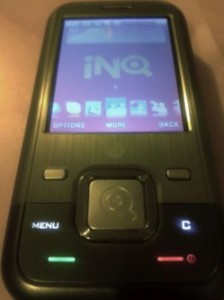
INQ working on a mass market ‘Twitter phone’

Hutchison-owned INQ, makers of the Skype phone and INQ1 – dubbed the Facebook phone – is said to be targeting Twitter next, according to a Reuters report. That’s hardly surprising considering the rise in popularity of the ‘micro-blogging’ site and the large amount of media attention the service has garnered here in the UK, one of the primary markets for the INQ1 via mobile network “3″, which is also a subsidiary of Hutchison.
“This can really help open up and drive Twitter use on mobile when usage becomes part of your data package like on the PC”, Frank Meehan chief executive of INQ tells the news service. One again the proposition to carriers is that a low cost ‘Twitter phone’ would help to drive data usage and retention amongst mass consumers not just those who can afford a traditional ’smart phone’.

Continue reading »

XBox 360 to support Twitter and Facebook. Whose the biggest social network on TV now?

Facebook on XBox 360

Facebook on XBox 360

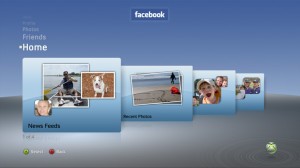
For a long time now, Microsoft has made the rather lofty claim that the company’s XBox 360 was the biggest social network on TV. For the most part that was in reference to XBox Live – the games console’s online service – and its integration with Windows Live Messenger, Microsoft’s cross platform Instant Messaging service (Windows, Mac and mobile). Yesterday, however, Microsoft announced at E3 that the XBox 360 will soon be adding support for two competing social networks – Twitter and Facebook – making the XBox 360 undoubtedly the most socially networked set-top box, but not necessarily a Microsoft-owned social network the biggest one on the television. I’m not sure how Windows Live Messenger user numbers and Facebook’s compare in terms of cross-over with XBox Live membership but it’s nonetheless significant that Microsoft has chosen to embrace two competitors.

Continue reading »

A glimpse into the Nokia N97’s Facebook app (screen shots)

fb_home

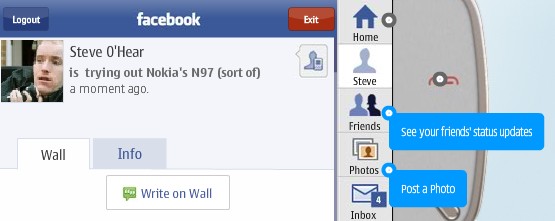
Six months prior to its scheduled release, influential tech blogger Robert Scoble dubbed Nokia’s upcoming N97 the “ultimate Facebook phone“. And as impressive as the device promises to be, that seemed just a tad premature, especially as the handset maker was reportedly still working out how deeply it should integrate a rival’s web service into its flagship phone. The competition wasn’t going to stand still either.

Continue reading »

Palm Pre aiming to be THE Facebook phone – social networking still mobile’s killer app

fb_3d_pre_ad

(Credit: Jamie Gonzalez via twitpic)

I’ve written many times before that social networking, and Facebook in particular, is the killer application for mobile phones. It’s what’s driving take up of mobile data and the adoption of higher end so-called smartphones. The mobile networks have taken notice and jumped on the social networking bandwagon, heavily promoting access to Facebook as a key feature, and handset makers are doing the same.

RIM has been targeting consumers with an ad campaign that features the Blackberry’s Facebook application.

Ditto Apple with the iPhone.

And there’s INQ, a new entrant whose first device, the INQ1, has been dubbed ‘the Facebook phone‘ based on its deep integration with the social networking site.

Continue reading »

BlackBerry address book integrates Facebook, apes Palm Pre’s “Synergy” and INQ1

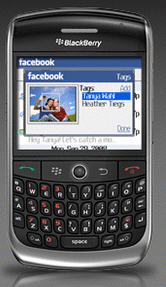
blackberry-facebookA new version of the Facebook for BlackBerry application has been released that offers better integration with the social networking site. Two standout features: a user’s friends list is kept in sync with the handset’s built-in address book – Facebook avatars show up as called ID, for example – and notifications from the social networking site are “pushed” to the phone’s home screen. Other features offered, not all of which are new, include:

  • Send/receive message or wall posts, pokes and friend requests.
  • Update your status, view and comment on your friends’ status.
  • Share photos from your BlackBerry smartphone with tags/comments and post to Facebook with just one click.

Continue reading »

Gravity, a really nice Twitter app lands on Symbian S60 phones

Gravity S60 Nokia screenshot 0004At last, smartphones running the Nokia-led Symbian S60 OS have a native Twitter application. And a very slick one at that.

Gravity is supported on phones running S60 version 3, including my own Nokia E71, as well as the latest touch-friendly S60 version 5, which powers the Nokia 5800 (aka the Tube) and the upcoming N97.

The app supports a host of features, including…

Continue reading »

Hands-on review: INQ1 a.k.a. the ‘Facebook phone’

Over the last week I’ve been playing with the INQ1, the so-called ‘Facebook phone’. Designed by the same team behind mobile carrier 3’s original “Skype Phone” (see last100’s coverage), like its predecessor, this fairly nondescript 3G candy bar slider masks plenty of innovation on the software side.

Integrated into the handset, for example, is Facebook, Skype and Windows Live Messenger, along with various widgets, such as Yahoo Weather. Just don’t call it a smartphone, says the company. Instead, the INQ1 is billed as a low cost device, designed to appeal to a broader and, perhaps, younger market than existing smartphones from the likes of Apple, RIM, Nokia and HTC.

Continue reading »

Should Nokia get into bed with Facebook? Err, yes

Nokia is in protracted talks with Facebook about ways to further integrate the hugely popular social networking site into select handsets, reports WSJ. Although any partnership deal has yet to be struck, and may never be, according to the article, citing “a person familiar with the talks”.

An obvious feature that’s being explored is deeper integration of Facebook user profiles and contact info into the phones address book, similar to the INQ1 and the yet-to-be released Palm Pre. “When users looked up a contact, they could see whether their Facebook friends were logged on, send them messages and post comments on their profile pages.”

A potential stumbling block, however, is Nokia’s concern over how much mobile-specific user data Facebook would get their hands on. “Nokia doesn’t want the service to provide Facebook with an avenue to compile data about cellphone users, such as their Web browsing or purchasing habits…”

Continue reading »

Google Latitude shows what’s wrong with Nokia’s social location (SoLo) strategy

If the next frontier is mobile, a key battle ground is going to be location-based services. And, drilling down further, location-based social networking, such as the ability to share your current location with friends. Yesterday, Google went head-to-head with Nokia and a plethora of startups with such an application. Called Latitude, the Google Map-powered software enables users to keep track of where their friends are and what they’re up to. Sort of like Twitter, IM and GPS rolled into one.

If that sounds a lot like Nokia’s Friend View and, more broadly, the handset maker’s social location strategy (SoLo), that’s because it is. But there’s one significant difference: despite investing heavily in its own mobile operating system, Google Latitude has launched simultaneously on multiple mobile platforms: Blackberry, S60, Windows Mobile, and Google’s own Android. iPhone support should also arrive soon, says the company. In comparison, like other Nokia web services, Friend View is only available on S60 and targeted solely at Nokia’s own cell phones.

Continue reading »

Deja vu: Internet ‘widgets’ coming to the TV in 2009

I’m getting a case of deja vu. Apparently, 2009 will be the year that Internet ‘widgets’ come to the TV.

At this year’s Consumer Electronics Show (CES) to be held in Las Vegas next month, Samsung, Toshiba and other manufacturers will unveil new televisions that bring Internet content into the living room through support for the “Widget Channel”, a platform for Internet-connected TVs developed in partnership by Yahoo and Intel (see ‘Yahoo, Intel attempt to solve Web content on television with “Widget Channel”). Of course, Internet-connected TVs were also the talk of CES in 2008, with Sharp, Samsung, Panasonic and Google making announcements. This time, however, Yahoo and Intel think they’ve got it right.

Continue reading »

Taking aim at Apple and Sony, Nintendo announces new DSi portable media device

Meet the Nintendo DSi.

As expected, Nintendo announced its latest portable gaming device, dubbed the DSi, at its fall press conference. The DSi is not a game-only device, however, as it includes browsing capabilities, Wi-Fi, a 3-megapixel camera, and other enhancements that bring it more in line with Apple’s iPod Touch and iPhone and Sony’s PlayStation Portable products. In fact, the DSi is not considered a replacement for the current DS Lite line but a complement, or “third platform.”

The juicy DSi details, brought to us by the folks at Kotaku, include:

Continue reading »

The real power of Google’s phone: connecting us to people, places, and things

The real power of a Google phone and the Android mobile operating system isn’t just computing power, or search, or advertising, or maps. It’s the ability to connect people, places, and things like never before.

With the introduction Tuesday of the Google phone — dubbed G1 by wireless carrier T-Mobile — we’re  starting to see the potential disruption that Google and Android will bring in the coming year or two. It’s even greater than what Apple and the iPhone have already accomplished.

Together, the so-called Google phone and the iPhone are disrupting the mobile industry with innovative, powerful, handy devices, applications, and services.  Side by side, the Gphone and the iPhone have their differences but overall compliment one another, not compete with each other.

The iPhone is not unlike Apple, which is known for exquisitely designed hardware, user-friendly software, and a user experience like no other. The iPhone has a consumer, digital lifestyle feel to it, just like Apple products.

The Google phone, on the other hand, is not unlike “PC” in the famed “Mac” vs. “PC” television ads. This is not to say, however, that Google is Microsoft. Far from it.

The G1 — at least from what we’ve seen so far — has a “productivity” air to it, which is expected due to the nature of Google. The Android operating system, and the phone’s hardware, was developed first and foremost to showcase what Google does best — search along with Web applications like Maps, YouTube, Google Reader, Gmail, Calendar.

Continue reading »