It’s been almost a year since I wrote “The Gphone is coming; how Google could rewrite the rules.” And during this time I’ve wanted to give Google the benefit of the doubt for choosing its Android strategy over developing the phone itself.
I’ve had the money in my wallet since July 11, but I refuse to spend it on iPhone 3G. And this really, really surprises me.
As the second generation iPhone went on sale, I wrote down several concerns — or predications, depending on how you look at it — and waited a month for everything iPhone 3G to shake out. I wanted to use hindsight to tell me whether I made the right or wrong decision not to upgrade from the original iPhone.
August 7th, 2008 | Posted in Comms, Mobile | Comments Off
I hate to say I told you so, but I told you so. Developing a phone — even if it is just an operating system — is not something you do overnight with a bunch of cajoled software developers.
Just a week after High Tech Computer (HTC) said it was on schedule to deliver Android-powered cell phones by the 4Q of 2008, another report surfaces Thursday that says HTC is “having structural problems to incorporate Google’s demand feature set” and “demanding a guaranteed minimum revenue surety from Google,” according to Barron’s Tech Trader Daily.
Barron’s picked up a research note from Trip Chowdhry of Global Equities Research saying his “contacts” contend that HTC’s Android handset — the so-called Google phone — will be delayed until the first quarter of 2009.
Additionally, Chowdhry’s “contacts” tell him that another problem Google is having is attracting software developers to the platform. They’re too busy writing code for Windows Mobile, Nokia (Symbian), Research in Motion (BlackBerry), and Apple’s iPhone.
That’s no surprise. These guys actually have phones, real working phones, to develop for and test.
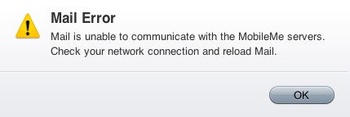
Not only has it been a rough two weeks since the disastrous introduction of MobileMe July 10-11, it’s been a miserable last three days for Apple and its “Exchange for the rest of us” product.
Well-known personal technology columnist Walt Mossberg, a big fan of Apple products and services about 99.99 percent of the time, said in his first complete review of MobileMe on Wednesday:
“Unfortunately, after a week of intense testing of the service, I can’t recommend it, at least not in its current state. It’s a great idea, but, as of now, MobileMe has too many flaws to keep its promises.”
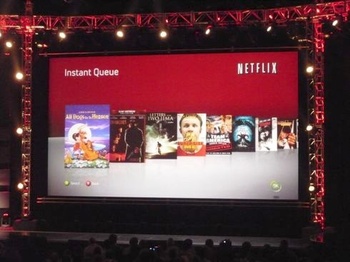
Xbox 360 owners and Live Gold members who are also Netflix subscribers will be able to stream online movies to their consoles at no extra cost. Netflix is the world’s largest DVD rental service.
The Xbox becomes the only game system that lets users immediately watch movies and TV shows steamed from Netflix. Along with the existing Xbox LIVE Marketplace Video Store, the Xbox 360 has more access to movies and TV shows on demand than any other device connected to the TV, according to Microsoft.
Xbox owners can also share Netflix movies with friends via Xbox LIVE party so you can watch “Super Bad” together. This will require an Xbox Gold LIVE account however.
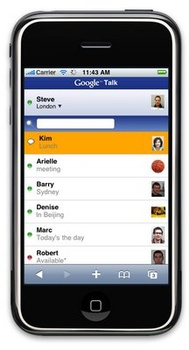
Google announced Thursday that it has developed a new Web app version of Gtalk for the iPhone and iPod Touch. Just point Safari to http://www.google.com/talk and you’ll be launched into a much improved, albeit stripped down, interface. From there you can view contacts, send instant messages, update your status, and “go off the record” if you don’t want to store your chats in Gmail.
That’s fine and dandy. But in all honesty, Gtalk users — and users of any chat service — have wanted native chat clients for the iPhone since it debuted a little more than a year ago. More importantly, they don’t want to lose a chat connection when they switch from chat to answer the phone, to send a Tweet on Twitter, or browse the Web using Safari.
This is due to the fact that the iPhone cannot run more than one application at once, other than playing the iPod. Running more than one app at once also drains the battery.
Even so, many iPhone users have hoped that Apple will have solved this dilemma with the upcoming release of the iPhone 3G. For months they’ve been holding out that native chat applications are coming once the App Store opens in a week or two.
But is the new Gtalk Web app an indication that a dedicated client isn’t coming anytime soon — not just for Google Talk but for other chat services on the iPhone? Why would Google spend the time, money, and energy revamping its Web-based chat app if a native client is coming out in a week or two?
As it stands now, the new Gtalk Web app could be the slickest, greatest, most unbelievable chat solution for the iPhone and it still would be pretty useless. Nothing is more frustrating than engaging in a chat, answering the phone, losing the chat connection, then having to log in to chat all over again.
Do this more than a couple of times and you give up. No matter how good Gtalk for the iPhone is.
AT&T announced pricing details today for the iPhone 3G, which goes on sale at 8 a.m., July 11. There’s been a little grousing here and there, but for the most part the No. 1 carrier in the U.S. — and its accomplice, Apple — have received a free criticism pass.
Now that official pricing is here, we should be disappointed in AT&T and Apple. The iPhone 3G is going to be a heck of a lot more expensive to own.
In fact, the whole iPhone 3G pricing scheme smacks of corporate America — a product hits it big, so the next time out let’s milk it for every penny possible.
That’s what it feels like.
Here’s a quick review of what it will cost to own a brand-spanking new, faster, sexier iPhone 3G.
Buried in Bob Iannucci’s discussion at Supernova 2008 last week was this comment: “Connecting people only through voice communications is limited,” the Nokia chief technical officer said.
To me, that sums up everything Nokia is doing, including today’s announcement. Nokia, the world’s largest handset manufacturer, is purchasing Plazes, the location-based social networking service that’s based in Berlin with all of 13 employees.
Plazes, founded in 2005, lets people alert their friends about what they are doing and where they are — sort of Twitter and Loopt rolled into one. Users can subscribe to their friends, a group of friends, or to specific locations known as “Plazes.”
Updates can be done via plazes.com, by mobile phone and text messaging, or by a number of third-party applications using the Plazes’ API. And, we can expect, Plazes will be on millions of Nokia phones worldwide as soon as possible.
“Nokia is a perfect partner for us because they share our product vision and have the muscle to bring locative presence to hundreds of millions of people all over the world,” the Plazes team writes on its blog. “What better partner than Nokia for exploring innovative ways of connecting people?”
With Plazes and other recent acquisitions, Nokia is clearly connecting people through location-based services, maps, music communities, gaming, and — almost forgot — voice.
There’s a lot to like about Seesmic, the so-called video equivalent of Twitter, besides the charismatic founder Loic Le Meur, “in cloud” talent like Sukhjit and Giselle, and the people you meet “face-to-face” through video posting and commenting.
But there is one thing not to like: the lack of take-it-with-you mobility. To use Seesmic you’re mostly tethered to a desktop or laptop computer with a Webcam. You can use a cell-phone workaround like Shozu, but it can be cumbersome, working for some, not for others. Many people are hyper-mobile and participating in Seesmic is difficult, at least during the day.
This is all about to change. Over the next four to six weeks, Le Meur said following the Supernova conference, Seesmic will release its own bi-directional client for the Nokia series-60 phones including the N95. A hack for the iPhone 3G (jailbreaking it) will soon follow, as will a client for phones running Windows Mobile (and, it can be assumed, Android when they become available).
“In a few weeks we will have our own mobile client, which will let you have a full Seesmic experience,” Le Meur said.
The full Seesmic experience includes a two-way conversation. You record and upload video posts to the Seesmic Website (as well as other leading video sharing sites like YouTube and social network sites like MySpace and Facebook) that others can follow like Twitter. The community, including friends and strangers from all around the world, can comment on your post, and you on their’s.
June 18th, 2008 | Posted in Comms, Mobile | Comments Off
While the Supernova conference is mostly about the future of the network, a part of that network is mobile. And if you listen to most attendees, the two most important mobile players right now are Apple and the iPhone and Google and Android.
Oddly, it’s as if two other established players — Nokia and Research in Motion — have been relegated to the sideline as also-rans. One conference attendee even asked during a discussion about the future of mobile, “Is Blackberry dead?”
The mobile buzzwords at Supernova 2008 are plentiful: location, social networks, iPhone, Android, the cloud. But these are so . . . now.
At Supernova on Monday we got a glimpse of what’s next for mobile and our digital lifestyles and quite frankly, it has squat to do with hardware like the iPhone, software like Google’s open-source operating system Android, mobile platforms put forth by Apple, Google, Nokia, Research in Motion, and the carriers.
What’s coming is life profound: Put billions of sensors in cell phones, regardless of hardware, operating system, or carrier, and affect the way we understand traffic or the weather. With continued advances in chipsets, accelerometers, compasses, we can change the way we interact virtually with the physical world around us. We can turn monthly cell phone bills, which are difficult to use beyond paying, into living information integrated into our working and personal lives and social networks.
“We’re just getting started,” said Bob iannucci, Nokia’s chief technology officer.
As with everything else iPhone, there’s been a great deal of speculation following the Worldwide Developers Conference regarding the App Store, where Apple intends to sell and distribute third-party applications.
There’s been talk of the grand opening being in July and at the end of June. Details continue to trickle out about how the store will operate. And “overnight” polls indicate the App Store will mean hundreds of millions of dollars in revenue, perhaps even a billion, for Apple by the end of 2009.
One thing puzzles me, though: How can Apple potentially make $1 billion from the App Store by the end of 2009 when it’s estimated by some that 70 percent of the third-party applications will be free?
Go figure.
For now, here’s a quick look back at some of the App Store news following the WWDC keynote.