
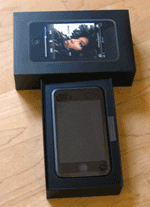
 When details of the iPhone’s UK launch were unveiled at a special press event in London last month, Apple CEO Steve Jobs and O2 UK boss Matthew Key both had to field a question about the recently announced iPod Touch. Since the Touch has many of the iPhone’s key features — multi-touch interface, widescreen display, mobile browser, WiFi support — and would go on sale in the UK before the iPhone, would it not eat into iPhone sales?
“You always know Apple will be on the front foot”, replied Key to the amusement of reporters, since O2 wouldn’t have been privy to Apple’s plans for an iPod Touch before they decided to go into partnership. The Touch and iPhone are “a different segment of the market”, argued Key, and both will sell well.
“One is a phone, one isn’t. One has email, one doesn’t”, explained Jobs. Then, exercising his famous Reality Distortion Field, he went on to claim that the iPod Touch would actually help drive iPhone sales, as people who experience the cut-down functionality of the Touch will realize that with the iPhone “they can have it all.”
After months of iPhone-envy from across the pond, and in light of the iPod Touch’s UK release, I made the decision that I didn’t want or rather need it all. At least not yet, anyway.
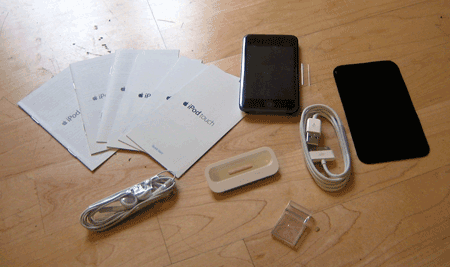
Just over two weeks ago my 16 GB iPod Touch arrived. Here are my initial impressions and why I opted for a Touch over an iPhone.
A video-capable iPod
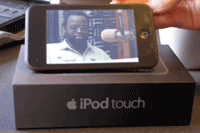 Although previous iPods were capable of playing back video, I consider the iPhone to be the first true video iPod because of its large “wide-screen” display. To that end, the subsequently released iPod Touch is indistinguishable from the iPhone, and since video-playback (mainly podcasts) was a priority, for this purpose, the Touch would do just fine.
Used as a portable video device, my experience with the Touch has been nearly flawless, albeit with a few caveats. The most obvious being the lack of DivX or xVid support; instead video files must use specific MPEG4 or H.264 settings. To make this manageable, I’ve been using Handbrake (Mac, Windows and Linux) to rip DVDs to my iPod, and iSquint (Mac-only) to convert DivX videos to an iPod-compatible format.
Video files take up a lot more storage than music, and since the iPod Touch uses solid state memory it only comes in 8GB or 16GB versions, priced accordingly. Even though 16GB won’t be sufficient for some people, the iPhone is even more limited (8GB-only), which was a major consideration when opting for a Touch.
I quite like my existing phone
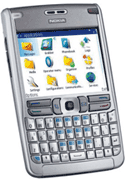 Despite Apple CEO Steve Jobs’ assertion that nobody likes their cell phone, I’m quite fond of mine — a Nokia e61. Prior to my Nokia, I used a Treo 650, which, in many respects, I liked even more. Both handsets feature a full QWERTY thumb-board, and for the most part can be operated one-handed. The Nokia e61 also features WiFi support and a very capable web browser (based on Apple’s own WebKit source code).
The iPhone lacks a thumb-board — instead a virtual keyboard is provided — and the multi-touch interface often requires the use of two hands: one to support the device, and the other hand to manipulate the screen.
Additionally, I have my Nokia e61 set up to work seamlessly with mobile versions of Gmail and Google Reader, my two main productivity apps. If it ain’t broke, don’t fix it.
The iPhone’s lack of 3G
If you’re going to have a mobile Internet device, especially in the UK, 3G support is a given. WiFi connections here are far from ubiquitous, and with carriers spending billions to build out 3G cell networks a few years ago, it seems almost criminal to launch an iPhone in the UK without 3G support — another reason to stick with my 3G-based Nokia e61, and opt to carry an additional device in the iPod Touch.
Battery life
Despite its large and bright screen, as well as WiFi capability, I’ve found the battery life on the iPod Touch to be excellent. Having said that, I’m skeptical of any device’s ability to juggle the demands of cell-phone usage, web surfing and media playback — which is what the iPhone has to contend with. As Jobs himself is fond of saying, you don’t want your cell phone to give up just because you’ve watched too much video.
The multi-touch UI
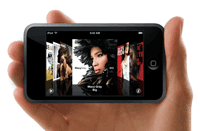
Perhaps the most compelling reason to switch to an iPhone is to get your hands on the device’s multi-touch interface. In a product demo, Apple’s new UI has the “wow” factor but how will it stand up in everyday use? Since the iPod Touch runs the very same UI, I wouldn’t need to sign a new cell phone contract, just to find out.
For the most part, the multi-touch UI raises the bar significantly. I’ve seen people pick up the iPod Touch for the first time and navigate the device with virtually no learning curve. This is practically unheard of for a device that offers as much functionality as the Touch. However, I’m not convinced that its the “multi” (gestures) aspect of the touchscreen UI that makes it so intuitive, but rather just good usability in general, with clear and consistently labeled buttons and the minimum of on-screen options (usually just one) offered at any one time.
The Safari web browser
Another reason I considered purchasing an iPhone was to test first-hand the device’s version of Apple’s Safari web browser, especially with the launch of so many iPhone-optimized web applications. Again, the iPod Touch, to my surprise and delight, carries the same browser, and along with it, access to all those gorgeous web apps.
Hacking the iPod Touch
Having seen the iPhone “jail breaked” to run third-party applications, I knew the same would happen to the Touch — and indeed it has. While it’s dangerous to buy any device based on future software updates or hacks, I’m convinced that the best is yet to come for the iPhone and iPod Touch. With news that Apple will release a full SDK for both devices in February, this is now a certainty.
Verdict
Although I’d never argue that the iPhone makes for a bad purchase (50% of Web 2.0 Summit attendees can’t be wrong, can they?), for me personally, the iPod Touch made more sense — and I’m generally very pleased with my decision.
Of note, one potential deal breaker for those considering switching to an iPhone in the UK, is the terms and conditions associated with O2’s inclusive data usage plan. The iPhone contract claims “unlimited” mobile Internet data, and access to WiFi hotspots through The Cloud. However, in this case, “unlimited” could mean a measly 200MB of data on O2’s network, and 60 hours of WiFi access, per-month.

Great post Steve. I just bought an iPhone while in the US, but have yet to (cough) unlock it for use in my home country. Personally I bought it mostly to see for myself what the fuss is all about, and because the Mobile Web is becoming more important each day. But you certainly raised some great points for the iPod Touch in this article!
Excellent post Steve! I’ve been trapped in this dilemma myself, so this post certainly helps me make the decision. I will now go ahead and purchase an iPod Touch. Thanks!
– Jawad
Thanks for the great review. I can’t wait to receive my ipod touch, it sounds awesome 🙂
When I got my iPod Touch, I was asked why didn’t I just get an iPhone and jailbreak it? If that were the case, for $100 more, I’d have the camera, extra apps, Bluetooth, etc…
I was beginning to question my purchase. My main reason for buying it was to write non-phone apps for it. I think I made the right choice after all. I don’t have the time to go jailbreaking and play the cat & mouse, have I bricked my iPhone game. The Touch is smaller, lighter and cheaper. Battery life isn’t as good, but power is not directed towards phone calls.
Off topic, but I’m surprised no one made a big deal about the flywheel. Or at least mentioned that it was missing. What’s an iPod without the flywheel? When you think about it, it is there. The whole screen is the flywheel, straightened out.
The other thing I noticed is that it takes some practice to get the whateverthingameter to revert to the screen orientation you want. I have found that a light tap does the trick
All around I like the iPod Touch more. It is an all around cool gadget and small enough that it doesn’t annoy me.
Great Post..
Some of the same reasons here…
Have ordered my iPod Touch 8GB
Can’t wait to get it..
Your post made me stronger on my decision,
why i wanted the ipod instead of the phone.
wow this is so awesome,
I cant wait to get my touch!
I love my Ipod Touch.
I got mine for Christmas and its totally worth it.
it doesnt take long to charge and the battery doesent really die fast.
unless your watching alot of Videos on youtube.
but i love how it fits perfect in my small hands and the weight at first shocked me cause im used to a cheap plastic MP3 and i had never own an ipod untill now.
But its not THAT Heavy. after you have it for a few days you dont even notice it.
the screen is easy to clean.
just everything about it is amazing
plus im glad i didnt get the iphine because if im out and about i dont want people annoying me with phone calls.
: D
lacey
I’ve been really struggling on this one, but in the end, I agree with you. I love my simple pay-as-you-go phone, and I don’t use it for anything except phone calls. I am looking for a device to do everything else! Looks like an iTouch for me. Thanks for a balanced review.
hi thank you for this post..
you really helped me to make the right dicision..i am getting the itouch tomorrow..
thanks again
The post is great. I asked myself too. Should I had gotten an iphone instead of an ipod touch?
I got my 32 gb for valentines day.
I didn’t wanna get an iphone because i have my sony ericsson ultraslim w880i.
It takes ok pics. I tried the iphone at the apple store and the camera quality is not super at all.
It plays music too my SE phone but sometimes it drains my battery and it dies on me.
I like the phone to be just a phone so i have the battery when needed.
Ipod touch is then reserved for music and video and other stuffs.
does anyone know if when you set the iphone free (unlock it) will it affect the updates and apps when you sync to your computer. I want to be able to put foreign sim card in it when i go overseas.
cheers Nick
Ipod touch is the future phone or should I say the Future “Personal Device”.
1) Wi-FI Expanding rapidly; soon enough we wont have any blind spots.
2) Applications like skype offer far more than any Phone company would ever dream of offering.
3) Skype offers phone number, voice mail (and a lot more Im just mentioning the basics)
4) An Ipod-touch Gps enabled will replace your car’s GPS.
Lets just turn our back to all those phone companies that’ve been taking advantage of us. Just see through guys. Its the personal future device. You get in your car, you put it in your dock, its your Gps device its your media device, its your tv, its your “Personal Device”.
Cool post Steve.
Just bought an 8GB iPod Touch while am in US. The reason behind going for an iPod Touch rather than the iPhone is a question I have to answer repeatedly. There are many forces behind the same…
1st I already own a N70 Music Edition for personal use. Although music sucks on Nokia, the 2MP camera does its job pretty well.
2nd a (forced) SmartPhone from the company with ActiveSync is all I need for office.
3rd For a high-end uses I have got a Canon SX100 with 8MP+10x.
4th Of course iPod Touch, without the hassles of unlocking in my home country.
5th last and the least, iPhone is yet to be officially released for most of the Asian market.
🙂
Hello people,
I bought the Ipod touch 32 GB recently. I haven’t yet received it, but I have been reading reports of the audio and video performance of the touch being abysmal and those of the iphone being “glorious” !
I’d really hate to find out that this is true ’cause if so, it defeats the very purpose of buying an ipod touch!
Could someone who already owns a ipod touch please clarify this aspect?
“The post is great. I asked myself too. Should I had gotten an iphone instead of an ipod touch?
I got my 32 gb for valentines day.
I didn’t wanna get an iphone because i have my sony ericsson ultraslim w880i.
It takes ok pics. I tried the iphone at the apple store and the camera quality is not super at all.
It plays music too my SE phone but sometimes it drains my battery and it dies on me.
I like the phone to be just a phone so i have the battery when needed.
Ipod touch is then reserved for music and video and other stuffs.
– JENNY”
I had the exact same thoughts Jenny. Also noting that I don’t have a high end phone ( Nokia 6300) I was sick with worry that I had thrown away a good $499! More so, because the iphone is camera+phone+ipod (16 GB) at $499.
Is the quality of the images really that bad? Heck, are you happy with the ipod touch seeing that you’ve had it for a little over a month now?
@Anirudh
The audio and video performance is great. Not sure what the fuss is about. They both use the same screen, and video and audio chip as far as I’m aware.
Thanks Steve – the review from CNET.com states otherwise: Apparently the editors aren’t too happy with the audio performance considering the mega bucks one shells out for the ipod touch (Mega bucks indeed if you pit it against the Zune or other popular mp3 players).
Hell, your word is good enough for me 🙂 Thanks for the immediate post!
I guess I’m the only one that realized that the iPhone is a revolutionary cell phone, and an iPod Touch. THE IPHONE PWNS!!! I can’t really say anythingn bad about iTouch, though, It is a pretty intriguing device for anyone who doesn’t want to terminate a contract or pay 100$ a month for enough minutes. But all in all i thing the iPhone is better
I was considering buying an iPod touch a few weeks ago then somehow forgot about the idea haha. Anyways I am a big fan of apple so I visit the apple site each day to see what is new and I saw the new keynote so I watched it. Turns out lucky I forgot the idea of iPod touch since the 2nd gen just got released and is thinner again with an internal speaker! So yah after watching the keynote I went ahead and purchased it online received it the next day lol.
The main thing that I chose iPod touch over iPhone was the iPod touch is basically the iPhone without a camera and phone capabilities. I already have a phone so the phone side is solved and I already have a really really good camera (graphic designer) so that issue is also solved. Thinner, cool, fraction of the price and looks similar so I can call it my iPhone and people will dig me hahaha jk 🙂
I’ll my own tomorrow.
Im gonna buy one 2day
A bit late coming on to this thread but hopefully someone can still advise: I’m looking to buy a device for my other half which would let her access internet (full internet, or as much as possible: at the very least, gmail, youtube and facebook), ideally whilst travelling to and from work, and then around the house (we have wifi at home) and at the office. She has a very basic phone (pay-as-you-go) and is not that bothered about upgrading, doesn’t need a camera, is only mildly bothered about having a music player…
Is the iPod touch the right device for her? Or the iPhone even? Or something else? This is all a bit beyond me – what does the iPod touch need to access internet? The contract tie-in requirement on the iPhone is a bit off-putting, as it seems a bit of a rip-off and she’s not much of a one for phone contracts anyway.
Also, I’ve read that the iPod touch might be useable as a wireless phone, with the new headphones and microphone – anyone know anything about this?
Thanks!
@ Donkey
The iPod touch needs a WiFi connection, so that rules it out for use while traveling. The only phone that can really access the full web without too much pain is the iPhone (aside from the G1 possibly). The iPhone’s Facebook app is fantastic, as is the YouTube and Gmail access. Having said that, battery life on the iPhone might be a problem if your other half uses voice a lot too.
But to try to answer the question, the iPod touch can be safely ruled out.
@Donkey
I disagree with Steve – i believe the iPod touch would very much suite the needs of your wife/girlfriend. as long as she understands that she can only surf the itnernet at home or at the office or at a coffee shop that has wireless internet.
I am considering buying an iPod Touch because i dont want to sign a contract with the cell company. i too use pay as you go which is the main reason i want an iPod Touch over the iPhone. if she doesn’t like being locked into a contract then the Touch is for her. i think the Touch is an AMAZING device for Facebook (no other device can compare) and great for surfing the web. Facebook is what actually got me interested in the Touch and iPhone. i just think that for some people cell phone contracts are a big deal and we dont want to lock ourselves into paying 80 dollars a month for 2 years – or maybe even more.
you should consider the touch for her. thats my opinion
Arhh its nearly Christmas and I had to make a quick decision on wether to get the iTouch or the iPhone and I chose iTouch! It’s perfect in my opinion. You dont need anything else. And most people already own a mobile that they are happy with! Why would you want to sign up for a rubbish contract that you dont want when you have a price plan you already like.
iPod Touch pease santa. (A)
I do in fact own an ipod touch 16 G (2 gen) and really appreciate it as an entertainment device. So far, iphone has not been authorized in the country I live in, but be so soon in next month. I currently use nokia E71 as a business device. It had served me for entertainment as well before coming of ipod touch. After experiencing with Touch for while, I strongly helps me decide not to get iphone3G after launch for some following reasons:
1. I can’t really adapt to the soft keyboard provided. It is real amazing to see that the pretty same level of smart text correct is found on my E71, but with real keyboard.
2. The way I can’t attach files to the email client is unacceptable. This truly break my outdoor life in debris where I still need to carry out my laptop all the time I left the office.
3. Iphone can’t be tethered to my laptop for online purposes . Again I need discard installed to it.
4. BT is not work for making file transfer.
I finally decide to stick with my tiny powerful E71 in companion with Ipod touch rather than go iphone.
Greetings new year
Excellent justification! I agree with just about everything you’ve said, especially about how I can “have it all” with an iPhone. I’m so glad my parents bought me an iPod Touch instead of an iPhone. iPod Touch is such a great gadget! I absolutely love it!
thanks i think you helped me decide. i was kinda gonna go 4 the ipod 2. besides i 2 am content w/ my current phone wich also has a radio(nextel) that i would lose if i got the iphone. not 2 mention the monthly rate for it is off limits. a bit pricey 4 a cell. so ipod it is. thanks.
The NUMBER ONE MAIN REASON for me NOT to buy an iphone is because you have to be stuck with ATT”s ultra sub-standard customer service and ATT coverage sucks. My Verizon blackberry surfs the web 100 times faster than ATT’s “3G” joke of an offering.
When I was an ATT customer, I made the mistake of falling for thier so called 3G laptop connect card. ATT / Cingular claimed it boasted 3G speeds and ultra fast connections…what a load of crap! I hardly ever received a decent signal in the heart of NYC where the coverage was supposed to be excellent.
I might have went for an iphone if it were offered to other carriers, but no way in hell am I going to go with ATT, I don’t care what devices they have. The decision from Apple, Jobs or whoever to make the iphone available to just one carrier reminds me of why Apple/McIntosh missed the boat back in the days of the home computer wars when the PC and it’s software were readily available throught the market and Apple/Mac were left behind. Hey Jobs…lightining does strike twice.
Panduanjudi Login
Panduanjudi is a trusted and ascribed poker site
from PKV games server. We meet the expense of 9 types of well along games that can be
played using just one ID. The games we present add
up poker, domino99, bandarq, aduq, sakong, bandar66 and
plus capsa susun. In addition to having a large variety of games, http://www.Panduanjudi.com furthermore has
several attractive promos that can be enjoyed directly after living
thing registered as a member. when fixed idea weekly
cashback promos that are calculated from the sum
turnover, both winning and losing. moreover Panduanjudi
in point of fact appreciate if there are members who invite friends or relatives to produce an effect upon our site by
giving a referral added of 10% to 20% of the
number of turnover downline invited to play.
To be the best poker site, Panduanjudi is always a pain to improve our services to be able to provide the best experience in playing poker
at our place. One of the ways is the Gambling lead provides a means
of payment that reaches all elements of Indonesian society.
By full of zip with leading banks and obliging Simpati and XL bill deposits.
As competently as which players can create deposits using E-wallets such as GoPay,
OVO and Funds. additional than those mentioned above, of course there are still advantages in Panduanjudi to torture yourself to become the best poker sites such as: