Author Archive

MovieBeam closes. Bad news for Vudu, AppleTV?

MovieBeam closes - bad news for Vudu, AppleTV?MovieBeam, an early attempt at creating a consumer facing set-top box and accompanying movie service, has closed its doors after fours years in business.

Originally founded by The Walt Disney Company and later sold to U.S. video rental chain Movie Gallery, MovieBeam was designed to bypass Cable and Satelite providers by beaming movies wireless into the home. The set-top box came with dozens of movies already stored and ready for rental (at $5 a pop), with forty new titles refreshed each month. In total the device could store around a hundred movies at any one time.

Meaghan Repko, a spokeswoman for Movie Gallery, told Reuters that MovieBeam had 30 employees and 1,800 subscribers when it shut down, and that subscribers who joined the service in March or later were being refunded the cost of the set-top box.

Continue reading »

Internet TV: 2007 year in review

From YouTube’s continued dominance, the television networks’ newfound willingness to experiment online, the rise of the desktop Internet TV application, and a number of new PC-to-TV devices and set-top boxes — it’s been a big year for Internet TV in all shapes and forms. In this post we look back at 2007 through the lens of last100’s coverage, highlighting some of the important stories and trends, and how they point to what we might expect for Internet TV in 2008.

Also see: Digital music: 2007 year in review

YouTube dominates

YouTube logoWhile the market for Internet TV is growing steadily — survey after survey shows that people are consuming more video online than ever before — as 2007 draws to an end, Google-owned YouTube is still the number one video destination site.

This isn’t just true in terms of traffic but also in terms of “mind share”; when people talk about online video they often refer only to YouTube. As a result, a number of hardware companies have added YouTube support to their devices in 2007, such as YouTube-compatible cameras and mobile phones capable of viewing and publishing video to YouTube.

And then there’s the strong relationship between Google and Apple, which this year has led to YouTube support being added to both the AppleTV and iPhone, with a change in the video format to boot. Apple successfully persuaded YouTube to start re-encoding its video catalog to the much higher quality (and Apple-preferred) H.264 codec.

Not one to rest on its laurels, YouTube introduced a number of new features of their own, including a redesiged player, the introduction of interactive overlay ads, better copyright filtering, and — like many Google properties — improvements to its mobile offering.

Continue reading »

Weekly wrapup, 10 – 14 December 2007

Here’s a summary of the week’s digital lifestyle action on last100. Note that you can subscribe to the weekly wrapups, either via the special weekly wrapup RSS feed or by email.

Enter your email address:

Top digital lifestyle news

Radiohead have ended their pay-what-you-want experiment. Fans can no longer purchase “In Rainbows” as a digital download from the band’s website as they gear up for a general CD release of their new album.

The pay-what-you-want model lives on, however, as comedian Steve Hofstetter is asking fans to name their own price for his latest album “The Dark Side of the Room”.

In Internet TV-related news, providing more evidence of their anybody-but-iTunes strategy, shows from NBC will be available on Fanfare, SanDisk’s newly launched Windows-only video download service. The initial content lineup will include “The Office”, “Heroes” and “30 Rock.” Meanwhile, Vudu’s set-top box (see our review) has landed some television content of its own. TV episodes from Fox are now available for purchase priced at $1.99 each (the same price as TV shows on Apple’s iTunes Store). The lineup covers twelve shows including “24″, “Buffy the Vampire Slayer”, “Family Guy”, and “My Name is Earl”.

Continue reading »

NBC episodes lands on SanDisk's Fanfare service; Vudu adds TV shows from Fox

NBC episodes lands on SanDisk's Fanfare serviceMore evidence of NBC Universal’s anybody-but-iTunes strategy comes with news that the company is partnering with SanDisk. Reuters reports that as of January new shows from NBC’s broadcast network and cable channels will be available on Fanfare, SanDisk’s newly launched Windows-only video download service. The initial content lineup will include “The Office”, “Heroes” and “30 Rock.”

Fanfare, in combination with SanDisk’s TakeTV device, offers a way of getting paid-for video content downloaded via a PC onto a television. We’ve previously covered TakeTV, where we described it as taking a much simpler approach compared to the many media extenders on the market by negating the need for a home network. “Instead, content is physically shuttled from a PC to a TV via a dedicated USB stick and docking station.”

Fox on VuduMeanwhile, Vudu’s set-top box (see our review) has landed some television content of its own. Crave reports that, as of today, TV episodes from Fox are available for purchase priced at $1.99 each, the same price as TV shows on Apple’s iTunes Store. The lineup covers twelve shows including “24”, “Buffy the Vampire Slayer”, “Family Guy”, and “My Name is Earl”.

Weekly wrapup, 3 – 7 December 2007

Here’s a summary of the week’s digital lifestyle action on last100. Note that you can subscribe to the weekly wrapups, either via the special weekly wrapup RSS feed or by email.

Enter your email address:

Top digital lifestyle news

The big story on last100 this week was Nokia and Universal’s announcement of “Comes With Music” devices. Unveiled at the annual Nokia World conference, “Comes With Music” will enable customers to buy a Nokia device with a year of unlimited access to “millions of tracks”, and, rather surprisingly, get to keep those tracks once the twelve month period ends. Of the four major labels, however, Universal Music is the only one to have signed on. In a follow up post, last100 editor Steve O’Hear noted that “Comes With Music” service will employ Windows DRM.

More digital lifestyle news:

Poll

Apple has more cash in the bank than IBM, Hewlett-Packard, Intel and Google. “Apple’s $15.4 billion stash is indeed the biggest of the group, putting the iPod maker in the elite ranks of well-heeled Fortune 500 tech companies.”, writes Fortune’s Jon Fortt.

Fortt then goes on to ask the billion dollar question: “So what does CEO Steve Jobs have in mind for all those greenbacks?” A number of options are suggested, including sharing some of the fruits of Apple’s labor with shareholders or making strategic purchases.

Take our poll: How should Apple spend its $15 billion cash reserve?

That’s a wrap for the week! 

Poll: How should Apple spend its $15 billion cash reserve?

How would you spend Apple’s 15 Billion cash reserve?Apple has more cash in the bank than IBM, Hewlett-Packard, Intel and Google. “Apple’s $15.4 billion stash is indeed the biggest of the group, putting the iPod maker in the elite ranks of well-heeled Fortune 500 tech companies.”, writes Fortune’s Jon Fortt. While the company’s coffers can’t quite match those of Microsoft and Cisco, unlike the latter two, Apple doesn’t pay a dividend to its stockholders, nor does the company buy back much stock or make major acquisitions.

Fortt then goes on to ask the billion dollar question: “So what does CEO Steve Jobs have in mind for all those greenbacks?” A number of options are suggested, including sharing some of the fruits of Apple’s labor with shareholders or making strategic purchases.

How would you spend Apple’s dosh? Take our poll or leave a comment below.

[poll=8]

XBox 360 adds DivX playback; video downloads coming to Europe on Dec 11

Microsoft to Sony: anything you can do, we can do faster.

XBox 360 adds DivX playback; video downloads coming to Europe on Dec 11After we got over excited about the PlayStation 3’s forthcoming support for DivX video, Microsoft’s XBox 360 has beaten Sony to the punch. The console’s latest software update adds DivX (and Xvid) video playback, which, after extensive testing, Gizmodo happily reports that in terms of DivX-compatibility, the 360 can now “play back pretty much anything”. Technically speaking, however, only DivX 5.0 and above is supported, which luckily should cover all but the oldest of DivX files floating around the web.

Continue reading »

More details on Nokia, Universal's "Comes With Music" offering, and why Total Music is doomed from the start

More details on Nokia, Universal’s “Comes With Music” offering, and why TotalMusic is doomed from the startArs Technica has dug up a few of the missing details on Nokia’s new “Comes With Music” offering, whereby customers who purchase a qualifying Nokia phone (due to go on sale in the second half of 2008) will have twelve month’s unlimited access to Universal’s entire music catalog.

According to Ars:

  • While customers will be able to keep any downloaded tracks even after the “free” subscription period ends, the service employs Windows DRM, meaning that music can only be played on a PC or, presumably, a compatible Nokia device. If you own an iPod or Zune, you’re out of luck.
  • Tracks can only be transfered to one PC and one registered Nokia device at a time.
  • Music can be burned to CD but only after paying an additional upgrade fee per-track.
  • As we suspected, Universal’s participation in Nokia’s “Comes With Music” offering is part of the label’s Total Music plan, whereby the cost of a music subscription is absorbed into the price of a supported device.
  • One the twelve-month period ends, the only way to continue subscribing is to purchase a new “Comes With Music” Nokia device.

Ars Technica makes a big song and dance out of the fact that Nokia’s “Comes With Music” service will employ Windows DRM. But frankly, what did they expect? Despite a very welcome industry move away from DRM for download-to-own (DTO) music sales, there is no way on earth Universal (or any other major label) would offer unlimited DTO access to its entire catalog, in one go, and without any technological restrictions on how those tracks might be shared.

And for Nokia, the idea of going DRM-free also makes little sense. If users can transfer their “Comes With Music” collection to an iPod (or other competing device), then there seems little incentive to purchase a new Nokia phone as a way of renewing their subscription.

In fact, trying to work through the conflict of interests between the major labels, device manufacturers, ISPs/carriers, and, of course, consumers, that are inherent in Universal’s Total Music model, and I’m becoming increasingly convinced that the idea is doomed from the start.


Nokia, Universal announce "Comes With Music" devices

Nokia/Universal announce “The single biggest issue that’s facing the music industry is there are huge waves of devices being sold and shipped to consumers on a daily basis. Very few of these devices are then subsequently used to subscribe [to] legitimate downloads,” says Universal Music executive Rob Wells.

Enter Nokia’s new “Comes With Music” devices.

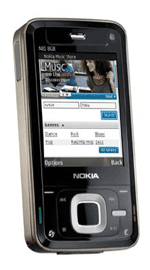
Announced at the annual Nokia World conference today, “Comes With Music” will enable customers to buy a Nokia device with a year of unlimited access to “millions of tracks”, and, rather surprisingly, get to keep those tracks once the twelve month period ends. Of the four major labels, however, Universal Music is the only one to have signed on. Nokia gave no further details, such as the type of DRM employed (if any?), and the likely cost of “Comes With Music”-ready handsets. Nor in which regions the service will eventually be made available.

Continue reading »

Flash Media Server 3 announced; "Moviestar" Flash Player leaves public beta

Flash Media Server 3 announced; Adobe have announced the release of Flash Media Server 3, the latest version of its delivery platform for the company’s near ubiquitous Flash technology. Over at our sister blog, Read/WriteWeb, Josh Catone has the scoop, and says that “the most striking change to Flash Media Server is the drastically reduced price”.

Because in the past Flash Media Server has cost so much (upwards of $45,000 per license), streaming flash media has long been a very cost-prohibitive endeavor. The high price, commonly referred to as the “Flash tax,” led many to seek out alternative media servers like the open source Red 5. The latest version of Flash Media Sever, which will ship in January 2008, will be come in three versions, ranging from free to $4,500 — a price drop of 90%.

The Flash Media Interactive Server 3, the most expensive of the offerings, will provide more scalability and a robust new plugin architecture that its lower priced counterparts don’t offer. But for single server deployments, the $995 Flash Media Streaming Server, should be sufficient and could be attractive for smaller media publishers. Adobe will also offer a developer version for free that supports up to 10 concurrent users.

Other important developments in Flash Media Server 3: the debut of streaming HD video. FMS3 will offer H.264 video streaming, as well as support for High Efficiency AAC (HE-AAC) audio that can be streamed to Flash player, AIR applications, or Adobe’s Media Player app.

In addition to the Flash Media Server 3, Adobe also announced that Flash Player 9 Update 3 (codenamed “Moviestar”) has left public Beta and is available for general download as of today. We’ve previously written about “Moviestar”, noting its support for the more efficient H.264 codec, which is capable of delivering much higher quality video using the same bandwidth as the legacy Flash video format.