
 Walter S. Mossberg, The Wall Street Journal technology reporter known by many as Uncle Walt, got his hands and ears on a prototype of the once-again-delayed Slacker Personal Radio. His verdict: buggy.
Bugginess is a part of any Version 1 product release, and the bugs explain why the Slacker portable player — due this month — has been moved back to a January 31 release date. (Slacker info.)
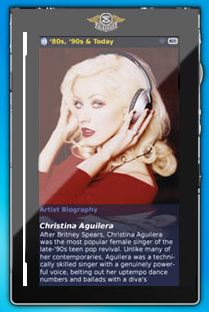
Mossberg describes the player as “chunky, black plastic” and “dominated” by a four-inch color screen. It provides a rich listening experience: the sound is good, the Wi-Fi connection worked in both Walt’s home and office, and included were album art, other photos, artist bios, and album reviews.
These were overshadowed by the bugs detailed in Walt’s review. “The two prototype Slacker units I tried, however, were hobbled by bugs and glitches that the company must expunge by the release date.” Mossberg notes that Slacker is aware of the glitches and is working to fix them.
What caught my eye — over and above the bugginess — was how Mossberg characterized Slacker’s positioning of the product. He notes that 100 million music fans know the joys of owning portable digital music players, but to get the most out of these products he says takes too much effort or money for some people.
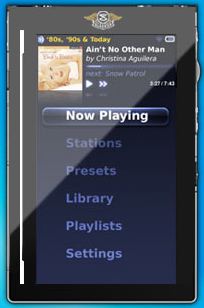 Slacker, Mossberg writes, is a device for the more passive, budget-minded music listener. It contains preprogrammed Internet radio stations instead of the songs and albums you select. The music is “free”, unless you pay for a $7.50/month premium account. The player costs between $199 and $299, depending on storage capacity.
Additionally, Slacker is based on Internet radio standards, meaning that there are limitations imposed on the listener. You can’t specify a song, or skip back to repeat a song. You can only fast forward ahead six times per station per hour. And the songs by the artists you’ve selected will be played four times every three hours.
That sure seems to go against the trend of personalization and customization we see today in consumer products, especially digital music players like the iPod or Zune.
Granted it takes time to hook up the device to a computer, purchase and download songs, rip your own CDs, transfer music to the portable player, and make playlists. But it’s the music you want to hear and how you want to hear it, not some preprogrammed Digital DJ.
Slacker may fix the bugs Uncle Walt talks about, but I am not sure it can fix its business model. Are there really that many people who want to take a passive role in the music they listen to?

Not for $199 to $299 just for the device that’s for sure. I mostly like the radio concept because of talk radio, or the commentary on the jazz track that was just selected by a knowledgeable person. I turn off my own personal music and flip to radio to get some sort of personal touch not to listen to a ‘Digital DJ’.
“Are there really that many people who want to take a passive role in the music they listen to?”
The stats on this are pretty clear. People listen to radio. Music radio. Terrestrial music radio. Internet radio, In big numbers. In fact the stats are also clear that after people buy iPods and the initial honeymoon wears off, people listen to it far less because of playlist fatigue. Most people are too busy to keep playlists fresh. They need help with music discovery. Your argument would suggest that you think Pandora, Last.fm, etc are all a bad idea. Do you really think all those pandora and last.fm users are imaginary or dying off or something? All this does is make the experience portable.
@ Decklane
Nice insight into why you tune into the radio. I used to do that too, but the jazz around here is horrible, and unless you like pop punk and candyland radio, there are no knowledgeable DJs. Our public radio station gave up music for talk years ago.
@Hank Williams
I’m glad you responded. I hoped people would. You note about people needing help discovering new music is important. That’s what I use Pandora and Last.fm for. In fact, I’ve bought quite a bit of music after hearing it played on Pandora. And for that reason, I like the portable idea, but I also like the intelligence behind what is being played. As @Decklane says, he listens to the radio to hear a knowledgeable person, not a Digital DJ. Pandora’s Digital DJ are hundreds of volunteers who break down each song based on the music, its style, and so on. I feel better knowing that there is some reasoning and logic behind what’s being played — even if I don’t agree with it — than some algorithm spitting out what it thinks I want to hear based on some basic criteria I provide.