
 3UK’s CEO talks about how the network is planning to address its ‘legacy perception problem’ and why bidding for the iPad would be like trying to sign a premiership footballer
I’ve just got back from a fascinating press briefing with mobile carrier 3UK’s CEO Kevin Russell and CTO Graham Baxter, billed as a discussion of the “themes, trends and challenges that will shape the mobile industry in the UK in 2010.” Although the subtext was something more along the lines of: how is 3 addressing what was described as its legacy perception problem.
People still, wrongly or rightly, often associate the network with poor coverage and/or service. This despite the fact that the network’s coverage and capacity has and is improving and that in my view 3 is one of the most, if not the most, innovative of the UK networks, especially on pricing, data services and positioning.
Here’s what I learnt during two presentations and the very frank Q&A that took place afterwards:
3 has an image problem that needs be addressed.
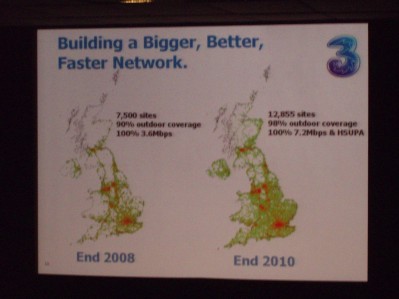 Despite investing heavily in its network and seeing the benefits in terms of coverage, speed and capacity, the number one issue facing the network is how to shake off what was described as its ‘legacy perception’ problem. If I remember correctly, it’s the one thing that keeps Russell up at night. Two ways 3 can address this.
1) Organically by letting the network speak for itself as 3 attracts and retains subscribers who can experience the improvements for themselves
2) Try to create a big ‘catalyst’ moment, perhaps through acquiring a ‘hero’ handset or device as O2 did with the iPhone. Russell suggested that it could be a combination of both but wouldn’t go into specific details with regards to 3’s marketing strategy.
In terms of reality, 3 has been on a steep learning curve with regards to huge increases in mobile data usage by its customers, says Russell. But that the network has steadily improved its data coverage and capacity, in part through its network share with T-Mobile, and that 3 is on track to have over 12,000 base stations up from just over 7,000 by the end of October 2010.
It was also pressed home by CTO Graham Baxter that in the end all of the carriers faced the same challenge. The only real way to increase capacity is to acquire more sites (base stations/cells) and more spectrum. 3 is making great strides with the former but the latter is in the hands of the government/regulator. That’s why 3 is particularly worried about the Orange/T-Mobile merger.
Apple iPad maybe?
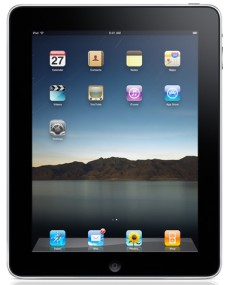 While Russell didn’t appear to totally rule out 3 offering a subsidised iPad (or perhaps a SIM-only offering that targets owners of Apple’s device) he acquainted bidding for an exclusive to trying to sign a top premiership footballer. Not only does everyone want the same player, but as a result there is a hefty price to play. A price that Russell suggested wasn’t usually worth playing. And besides, 3 likes to ‘swim in the opposite direction’ to the rest of the industry.
See also: People keep asking… what do I make of Apple’s iPad?
He also wasn’t familiar with the new microSIM ‘standard’ that the iPad requires, which provided a slightly awkward moment.
Spotify’s ‘soft launch’
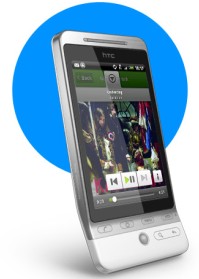 3 began offering the music streaming service Spotify with a single handset – the HTC Hero – in November of last year. It was a relatively soft launch, conceded Russell, and that the network was waiting till it could offer Spotify on more than one device before giving the service a much greater push. He also said that 3’s retail bricks ‘n’ mortar stores were the best channel to promote offerings like Spotify.
See also: 3 and Spotify point to the future of music purchasing
As for more handsets that support the service, Russell talked of a half-dozen rather than one or two more. Not surprising since Spotify has clients for Symbian, Android and the iPhone.
YouTube not iPlayer is the bandwidth hog
 It’s YouTube not the iPlayer which stands out as 3’s biggest bandwidth hog. Although Baxter explained that in some ways the problem takes care of itself. YouTube throttles its own bandwidth at peak times so it’s often out of 3’s control anyway. In comparison, iPlayer hardly registers. Why?
No reason was offered but I think it could be to do with the way 3’s handsets support iPlayer. All of the Symbian devices support downloads not just streaming. Perhaps users are grabbing content over WiFi before leaving the house. Also worth noting: there’s currently no official iPlayer client for Android.
As you’d expect, Facebook has been a big driver of data usage on handsets too, though obviously nowhere near as bandwidth intensive as streaming video.
3’s been surprised by the Terminate The Rate campaign’s support
 Russell said he’d been surprised by how well the carrier’s Terminate The Rate campaign had resonated with the public and members of parliament. The campaign is attempting to influence the decision Ofcom makes on reducing the charge of Mobile Termination Rates (MTRs). From the campaign website:
MTRs are charged when you call somebody on a different mobile network, or call a mobile from your land-line. Their network will charge yours a fee for receiving (or ‘carrying’) the call. This is a Mobile Termination Rate. The current charge is around 4.7p or more for every minute you’re connected – charges we think are excessive and distort competition.
Of course, 3 is particularly exposed to MTRs since it has less subscribers than its competitors so, inevitably, will have to pay out a lot more than it gets in.
Data roaming charges are “stupid”
Somewhat related to MTRs is the charge levied on customers when they consume data in other parts of the EU or elsewhere abroad. Russell highlighted the difference in price domestically and internationally.
Typically, 5GB of mobile broadband will cost £15 here in the UK, while it’s something like £6,000 when roaming. Russell said this is “stupid” and that the issue needs to be addressed now not sometime in the future as has been argued by others in the industry.

I joined 3 right from the start and had the (in)famous NEC313 handset. What I really liked was that not only was the service good in the areas I travelled in, it also offered quality, affordable content and I downloaded many of the short video clips for my long train journeys. I recently rejoined 3 when they started offering mobile broadband dongles, and recently upgraded to the MiFi, supplementing this with the new INQ Mini 3G which I bought as a cheap PAYG for an upcoming trip to Australia. Actually, the INQ has become my main phone now and I use it for mobile blogging, especially as the camera's very good.
The key to 3's success, and to my continued patronage is their ability to offer the right product at the right price, backed up by a *decent network*: many other Telcos offer the right product but seem to be clueless at what price to offer it at and I get the impression that many of them are struggling with serving data on legacy networks. Whether 3's current plan will continue I don't know, but it seems to work for me.
As regards prior reputation, this is an ongoing problem. I remember a conversation at a 3G expo between a Telco who'd recently rebranded and a journalist, who “remembered them as 1-2-none”: I'm not sure how the conversation went after that but it can't have helped. I feel that 3's “problem” comes from the fact that they were pushing a leading-edge technology at a time when most other operators were still only thinking about the Mobile Internet: kudos to them for doing that, but being an early adopter can be fraught with problems. I wish 3 every success in the future, and if they can continue to offer the same “user experience” then I'll stay with them and I'm sure I'll be joined by many others.
Good article Steve, interesting to hear from the horse's mouth what 3 are planning for 2010.
I joined the network in 2003 (I think that's around when they launched in the UK) and have been a mostly satisfied customer ever since. I'm currently using an E71, which I've had ever since it launched on the network. I liked that 3 had the E71 relatively soon after it launched. I use a relatively inexpensive package with an unlimited data add-on which cater to its strengths, i.e. push email, skype, msn are all easy to use and the free skype and msn via 3G is a big plus.
Where I feel 3 sometimes let themselves down is in areas like offering firmware upgrades in a timely fashion. I had to debrand and change my product code back and forth to get to my current firmware, which was a hassle.
The other problem I'm facing is that I'm now eligible for an upgrade, but there isn't really a phone available which appeals to me. I don't know if 3 have any plans to offer it, but I'd really like to see something like the Nokia N900 offered on Three. Currently, my only options are to take it on Vodafone at minimum £35/month for 24 months or buy it SIM free for in the region of £500 (!). Neither option really appeals to me.
I'm not sure whether 3 are simply too small to consider paying for and distributing a brand new model like the n900 (although they did it with the E71, which no-one had really seen before I got it on 3), but I think it would be the kind of phone that appeals to their customers.
Anyway, just my random Wednesday afternoon rantings, but I'd be interested to hear your thoughts.
By the way, what I was trying to say in my point below about the N900, was that I do agree that 3 should aim for a 'hero' handset. Whether they can afford to do so is another question.
Any suggestions on what phone I should get next then?!
I agree that the N900 would be an interesting fit but perhaps a little too geeky or high end for 3. Though if they want to go in the opposite direction as the other networks, being first to offer a Maemo device would have done that. I'd hold off upgrading as I'm sure 3 will refresh soon, more Android is certainly on its way.
I also had the E71 on 3 as soon as it came out. It was a funny story cos I'd bought it 3 days before SIM-free at a cost of £300. Called 3 to leave and they asked why. I told them it was because they didn't offer the E71. They said, yes we do but we haven't updated the website yet. I then sold my SIM-free E71 and upgraded.
As for firmware upgades – all the networks are slow doing this. It's as if the aftercare cost isn't worth it. I think with iPhone/Android, customers are going to demand speedy firmware upgrades more and more.
“1-2-none”, that's funny. Nothing like a T-Mobile re-branding to sort that one out. I was on Orange at the time and perceived 1-2-1 as cheap and nasty with limited coverage outside London.
Thanks, Steve. I think you might be right re the N900 being too geeky, etc for 3. This WOMWorld/Nokia article has some good points and links to more posts on the debate. http://www.womworld.com/nokia/13196/the-n900-ma….
Re firmware, I think that over-the-air updates could make a big difference, at least for users. It's a real pain having to connect up the E71 via usb and then it takes ages, plus you run the risk of spending hours reinstalling everything if you don't back up and restore correctly. Whether networks will sort out how promptly they make them available I'm not sure, although what you say about Iphone and Android phones is interesting.
Will take your advice and see what 3 come up with. Fingers crossed for something really good!
stays on topic and states valid points. Thank you.