
by Steve O'Hear
December 17th, 2007 | Posted in Net TV |
View Comments
From YouTube’s continued dominance, the television networks’ newfound willingness to experiment online, the rise of the desktop Internet TV application, and a number of new PC-to-TV devices and set-top boxes — it’s been a big year for Internet TV in all shapes and forms. In this post we look back at 2007 through the lens of last100’s coverage, highlighting some of the important stories and trends, and how they point to what we might expect for Internet TV in 2008.
Also see: Digital music: 2007 year in review
YouTube dominates
While the market for Internet TV is growing steadily — survey after survey shows that people are consuming more video online than ever before — as 2007 draws to an end, Google-owned YouTube is still the number one video destination site.
This isn’t just true in terms of traffic but also in terms of “mind share”; when people talk about online video they often refer only to YouTube. As a result, a number of hardware companies have added YouTube support to their devices in 2007, such as YouTube-compatible cameras and mobile phones capable of viewing and publishing video to YouTube.
And then there’s the strong relationship between Google and Apple, which this year has led to YouTube support being added to both the AppleTV and iPhone, with a change in the video format to boot. Apple successfully persuaded YouTube to start re-encoding its video catalog to the much higher quality (and Apple-preferred) H.264 codec.
Not one to rest on its laurels, YouTube introduced a number of new features of their own, including a redesiged player, the introduction of interactive overlay ads, better copyright filtering, and — like many Google properties — improvements to its mobile offering.
Continue reading »
by Steve O'Hear
December 15th, 2007 | Posted in last100 weekly wrapup |
Comments Off
Here’s a summary of the week’s digital lifestyle action on last100. Note that you can subscribe to the weekly wrapups, either via the special weekly wrapup RSS feed or by email.
Top digital lifestyle news
Radiohead have ended their pay-what-you-want experiment. Fans can no longer purchase “In Rainbows” as a digital download from the band’s website as they gear up for a general CD release of their new album.
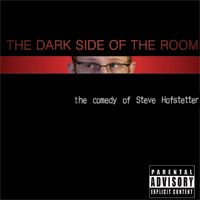
The pay-what-you-want model lives on, however, as comedian Steve Hofstetter is asking fans to name their own price for his latest album “The Dark Side of the Room”.
In Internet TV-related news, providing more evidence of their anybody-but-iTunes strategy, shows from NBC will be available on Fanfare, SanDisk’s newly launched Windows-only video download service. The initial content lineup will include “The Office”, “Heroes” and “30 Rock.” Meanwhile, Vudu’s set-top box (see our review) has landed some television content of its own. TV episodes from Fox are now available for purchase priced at $1.99 each (the same price as TV shows on Apple’s iTunes Store). The lineup covers twelve shows including “24″, “Buffy the Vampire Slayer”, “Family Guy”, and “My Name is Earl”.
Continue reading »
by Daniel Langendorf
December 14th, 2007 | Posted in Audio |
View Comments
One frustrating aspect of the Radiohead pay-what-you-want experiment is the lack of definitive numbers — yet. ComScore says this, Radiohead says that, the record industry says this, the artists say that.

The Radiohead experiment is now old news, but that doesn’t mean others will not attempt their own experiments. Following in the footsteps of Radiohead, Steve Hofstetter, an up and coming comedian with a strong Internet following among high school and college-age kids, has released his latest album “The Dark Side of the Room” on his Website. He’s believed to be the first comedian to take a pay-what-you-want approach.
Hofstetter’s last CD, “Cure For the Cable Guy”, reached No. 20 on the Billboard comedy charts, and he’s performed on VH1, Showtime, ESPN, and others, as well as his work being available at his Website and on YouTube. He’s extremely popular on MySpace and Facebook with hundreds of thousands of friends.
Hofstetter is no Radiohead, mind you, but it’s interesting to see all sorts of known, somewhat-known, and unknown artists experiment with the pay-what-you-want model. What’s nice is that Hofstetter has provided real numbers:
Continue reading »
by Daniel Langendorf
December 13th, 2007 | Posted in Net TV |
Comments Off
Steven Soderbergh is being followed by a Jackass.

Soderbergh, the acclaimed director of such hits as “Erin Brockovich”, “Ocean’s Eleven”, and “Traffic”, tested the traditional delivery method of Hollywood films by debuting the low-budget 2006 movie “Bubble” simultaneously in theaters, on HDNet, and four days later on DVD.
Soderbergh’s experiment was a far cry from the usual practice of debuting a major film in theaters first. One slight deviation has been films released straight to DVD, but those are usually low-budget, low-brow entertainment.
Now Paramount Pictures is releasing what it says is the first studio-backed feature film to premier online. On Dec. 19, the studio will make the latest installment in the “Jackass” franchise — the cleverly-named “Jackass 2.5” — available through Blockbuster’s Movielink service (The New York Times).
“Jackass 2.5” will include footage left over from “Jackass 2”, which earned more than $70 million at the box office, and new antics before “Jackass 3” is released in 2008. “There’s more vomiting, nudity, and defecation,” one executive told The NYT. “The stuff that consumers really want.”
Continue reading »
by Guinevere Orvis
December 13th, 2007 | Posted in Net TV |
View Comments
This is a guest post by Guinevere Orvis. Guinevere is a Web Producer in Toronto, Canada working both freelance and in the broadcast industry for Alliance Atlantis, CTVglobemedia and currently CBC. She has 10 years experience in the online space and specializes in social media, online marketing and content production.
If you’re a TV exec, there’s a magical number that you worship to measure your show’s success… those digits handed down on high from Neilsen ratings. Traditionally, little else mattered, but the television landscape is drastically changing. Is it time our success measurement tools change too?

Our online audience numbers have grown to a level where they’re demanding serious attention. Show promotions, trailers and clips that broadcasters are pushing on YouTube and other video sharing sites are getting more views than some shows do. Television is reaching a milestone where online is veritably driving on air viewership. Neilsen TV isn’t the only game in town anymore. If we are going to understand what our audience wants, we have to consider a bigger picture.
So, if YouTube numbers matter, what about members on a Facebook fan group? What about mashups and fan art? How about BitTorrent downloads? Yeah you heard me: maybe we should use unsanctioned downloads of our shows as a measurement of legitimate demand.
Continue reading »
by Daniel Langendorf
December 12th, 2007 | Posted in Mobile, Net TV |
View Comments
Everything is progressing just fine for Apple’s iPhone, as it was named Time Magazine’s Gadget of the Year and two reports state it’s on schedule for an expected update in 2008 with the possibility of overtaking the venerable iPod in sales by 2009.

Time, however, underestimates the impact of the iPhone. It says, “The iPhone changed the way we think about how mobile media devices should look, feel, and perform.”
No argument there.
But as we’ve said all along, the significance of the iPhone is greater than the device itself. It, along with Google’s mobile effort and Nokia’s activities, will change the face of the U.S. mobile-phone industry as early as 2008. No other device on Time’s list — from the Nikon Coolpix to the Belkin N1Vision Wi-Fi Router — even comes close to having that kind of impact.
Continue reading »
by Daniel Langendorf
December 11th, 2007 | Posted in Audio |
View Comments
Radiohead’s grand “In Rainbows” experiment ended this week. Whether it has been a success, only Radiohead and its management knows. Everybody else can argue about it.
But one thing is for certain: Radiohead put in motion, as The New York Times notes, “the most audacious experiment in years.”
Radiohead is no longer selling the album as a download from the Web site inrainbows.com.
“It’s been the most positive thing we’ve done,” Radiohead’s frontman Thom Yorke said. “We hope you shared the experience with others.”
Continue reading »
by Steve O'Hear
December 11th, 2007 | Posted in Net TV |
View Comments
More evidence of NBC Universal’s anybody-but-iTunes strategy comes with news that the company is partnering with SanDisk. Reuters reports that as of January new shows from NBC’s broadcast network and cable channels will be available on Fanfare, SanDisk’s newly launched Windows-only video download service. The initial content lineup will include “The Office”, “Heroes” and “30 Rock.”
Fanfare, in combination with SanDisk’s TakeTV device, offers a way of getting paid-for video content downloaded via a PC onto a television. We’ve previously covered TakeTV, where we described it as taking a much simpler approach compared to the many media extenders on the market by negating the need for a home network. “Instead, content is physically shuttled from a PC to a TV via a dedicated USB stick and docking station.”
Meanwhile, Vudu’s set-top box (see our review) has landed some television content of its own. Crave reports that, as of today, TV episodes from Fox are available for purchase priced at $1.99 each, the same price as TV shows on Apple’s iTunes Store. The lineup covers twelve shows including “24″, “Buffy the Vampire Slayer”, “Family Guy”, and “My Name is Earl”.
by Daniel Langendorf
December 10th, 2007 | Posted in Mobile, Net TV |
View Comments
The Internet is not just a place to get the latest scores and follow your favorite team in the standings. The Web has evolved so well that it has displaced traditional media as the first-stop source for all your major-sports needs.
Except for local coverage, there’s no need to watch TV sportscasts anymore. Pardon the sports pun, but the Internet has all the bases covered — from providing the usual scores, standings, and statistics to rich, always-available highlights, interviews, streaming games, downloadable games, podcasts, extensive season and historical archives, and a host of mobile solutions from wallpapers and ringtones to live GameCasts with Audio. Best of all, there are no timetables.
The Big 4 professional sports leagues in the U.S. — the NFL, MLB, NBA, and NHL — have leveraged existing footage (usually developed through their “official” networks) to create their own unique content. The leagues flood their Web sites with an overwhelming array of branded digital content so fans can stream games, download ones they missed, and watch clips packaged in so many ways the head spins.
We at last100, being the sports fans we are, decided to take a look at the Big 4 — plus the top “amateur” league in the U.S., the NCAA — to see where their Internet and new media strategies have evolved. Without a doubt, the major sports leagues are using the Internet so thoroughly to feed information-hungry fans that, except for the beat guys covering the local teams for television, radio, and newspapers, there’s little reason to watch nightly sportscasts or read the morning sports section.
Continue reading »
by Guest Writer
December 10th, 2007 | Posted in Net TV |
View Comments
This is a guest post by Muhammad Saleem, a social media consultant and a top-ranked community member on multiple social news sites.
It was called a stupid idea at first and then ridiculed for its name. But once people had a chance to look at the site’s lineup of shows and try it out, it was praised as a worthy competitor. The service I’m talking about is of course Hulu, the multi-million dollar online television streaming (video on demand) venture between NBC Universal and News Corp. Most people haven’t had the chance to try the service yet because of the highly exclusive closed private beta but today we are talking with Matt, who has found a way to get around the “closed private beta” problem without breaking any rules.
Most online video services allow you to embed the videos into blogs and websites in an effort to increase their branding and in the hopes of driving traffic back to the originating site. But what would happen if someone took all your embeds and called it a day? Let’s find out.
Continue reading »
by Steve O'Hear
December 9th, 2007 | Posted in last100 weekly wrapup |
Comments Off
Here’s a summary of the week’s digital lifestyle action on last100. Note that you can subscribe to the weekly wrapups, either via the special weekly wrapup RSS feed or by email.
Top digital lifestyle news
The big story on last100 this week was Nokia and Universal’s announcement of “Comes With Music” devices. Unveiled at the annual Nokia World conference, “Comes With Music” will enable customers to buy a Nokia device with a year of unlimited access to “millions of tracks”, and, rather surprisingly, get to keep those tracks once the twelve month period ends. Of the four major labels, however, Universal Music is the only one to have signed on. In a follow up post, last100 editor Steve O’Hear noted that “Comes With Music” service will employ Windows DRM.
More digital lifestyle news:
Poll
Apple has more cash in the bank than IBM, Hewlett-Packard, Intel and Google. “Apple’s $15.4 billion stash is indeed the biggest of the group, putting the iPod maker in the elite ranks of well-heeled Fortune 500 tech companies.”, writes Fortune’s Jon Fortt.
Fortt then goes on to ask the billion dollar question: “So what does CEO Steve Jobs have in mind for all those greenbacks?” A number of options are suggested, including sharing some of the fruits of Apple’s labor with shareholders or making strategic purchases.
Take our poll: How should Apple spend its $15 billion cash reserve?
That’s a wrap for the week!
by Daniel Langendorf
December 7th, 2007 | Posted in Audio |
View Comments
Walter S. Mossberg, The Wall Street Journal technology reporter known by many as Uncle Walt, got his hands and ears on a prototype of the once-again-delayed Slacker Personal Radio. His verdict: buggy.
Bugginess is a part of any Version 1 product release, and the bugs explain why the Slacker portable player — due this month — has been moved back to a January 31 release date. (Slacker info.)
Mossberg describes the player as “chunky, black plastic” and “dominated” by a four-inch color screen. It provides a rich listening experience: the sound is good, the Wi-Fi connection worked in both Walt’s home and office, and included were album art, other photos, artist bios, and album reviews.
These were overshadowed by the bugs detailed in Walt’s review. “The two prototype Slacker units I tried, however, were hobbled by bugs and glitches that the company must expunge by the release date.” Mossberg notes that Slacker is aware of the glitches and is working to fix them.
What caught my eye — over and above the bugginess — was how Mossberg characterized Slacker’s positioning of the product. He notes that 100 million music fans know the joys of owning portable digital music players, but to get the most out of these products he says takes too much effort or money for some people.
Continue reading »