Archive for the ‘Mobile’ Category

How DivX delivered DRM into the living room and finally won Hollywood's blessing

I’ve written before about DivX being the video format of choice for ‘grey’ (read: pirated) content, but now it seems that the near ubiquitous standard is finally on the road to legitimacy with relation to content owners.

Download-to-own movie site Film Fresh (U.S.-only), in partnership with DivX, has secured content from Hollywood studios Lionsgate, Paramount Pictures, Sony and Warner Bros. The deal marks the first time that major studio content has been offered for sale in the DivX format in the U.S., according to Film Fresh.

But what made this possible?

Continue reading »

Why is Nokia entering the crowded Netbook market? Answer: the mobile carrier subsidy merry-go-round

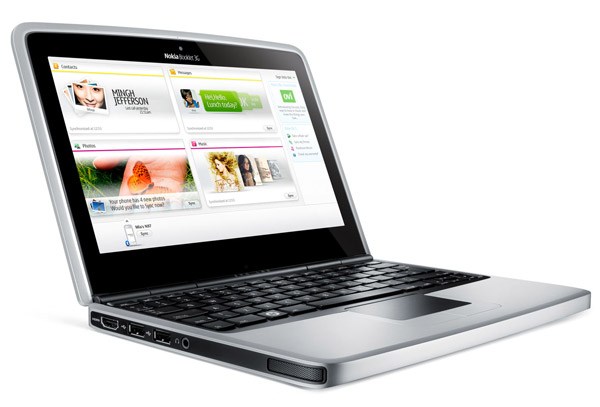
nokia-booklet-3gIn a move that might leave many a tech analyst scratching their head, Nokia have announced their own Windows Netbook, albeit a high-end one.
Why the world’s largest mobile phone maker would enter the crowded and low margin market of Netbooks, when it should be focusing on how to restore its lead in the much higher margin ‘smartphone’ category, is a very good question. The answer, however, is simple.

Carrier subsidy.

Here in the UK, we lead the way in the carrier-subsidy merry-go-round where Nokia does very well indeed out of the whole facade.

Continue reading »

Real's Rhapsody enters App Store submission hell, could bode well for Spotify?

Adopting a similar PR strategy to Spotify, U.S.-only music subscription service Rhapsody ($14.99-a-month) has published details of its iPhone app, mid submission process to Apple’s App Store. While submitting an app alone far from guarantees that it will ever see the light of day through Cupertino’s official channel, by showing off the app now, including a video demo (below), it does ensure that any dirty linen on Apple’s part is aired in public. It also helps to build consumer demand from existing Rhapsody subscribers who also own an iPhone in preparation for a backlash should the app be rejected.

And rejection is certainly a possibility.

Continue reading »

Blockbuster VOD service to land on Motorola handsets sometime in the future

This one feels a lot like a non-announcement, although technically it’s actually a pre-announcement.
Bricks ‘n’ mortar video rental chain Blockbuster is teaming up with Motorola in the U.S. to deliver its video-on-demand service to the handset maker’s future devices. Future being the operative word here as we don’t yet know when or on what phones, although it’s likely that the service will utilize Blockbuster’s recent partnership with Sonic Solutions, owners of the video download store CinemaNow, whose technology is already compatible with a range of mobile devices.

See also: Dan Rayburn: 10 years on Blockbuster still lacks a digital strategy

The fact that both Blockbuster and Motorola aren’t in the best of shape with regards to their respective markets won’t been lost on many, with Gizmodo’s Joanna Stern summing it up nicely: “I think it is romantic when two companies can hold each other in tough times.” Tough times indeed, although I’m skeptical that this partnership will do much for either companies’ bottom line.

Palm invites developers to begin submitting their paid-for WebOS apps

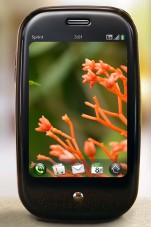
I’m finding it increasingly hard to comment on the Palm Pre and supporting WebOS, since I’ve yet to get my hands on the company’s ‘second coming‘ smartphone. The device is due to launch here in the UK exclusively on carrier 02 (strangely sharing the limelight with Apple’s iPhone) sometime in Q4.
Nonetheless, news comes today that Palm is to begin accepting applications from developers who want to charge for their Palm Pre WebOS apps, with the pending launch of the company’s Palm App Catalog e-commerce beta program in mid-September. Attracting developers to Palm’s new platform will be key to the Pre’s success and future handsets released by the company running on its shiny new WebOS.

On that note, on par with Apple and Google (Android), developers who charge for their apps will get the better part of a 70/30 split with Palm. More information about the developer program can be found here.

Samsung opens up its TouchWhiz homescreen; widgets let developers target all three screens

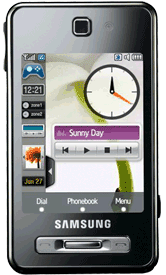
When I reviewed Samsung’s touch screen feature phone, the Tocco SGH-F480, I described the home screen widgets, part of the company’s “TouchWhiz” user interface, as “a fun but under developed feature”. At the time, the Tocco only offered seven widgets, including a clock, calendar, birthday reminder, photo browser and music player, and I bemoaned the fact that third-party developers were unable to create more.

That was almost a year ago, and today Samsung announced that it’s finally opening up the TouchWhiz widget platform, which exists across many of the company’s touch screen phones running Symbian, Windows Mobile, and the handset maker’s proprietary operating system. Third party developers will be able to build their own home screen widgets using familiar web standards – HTML, JavaScript and CSS – similar to Nokia’s WRT or, on a more ambitious scale, the Palm Pre’s WebOS, or indeed any widget platform whether it be targeting mobile, the PC or the television.

Continue reading »

Can I survive on half a QWERTY? Nokia E55 in the house

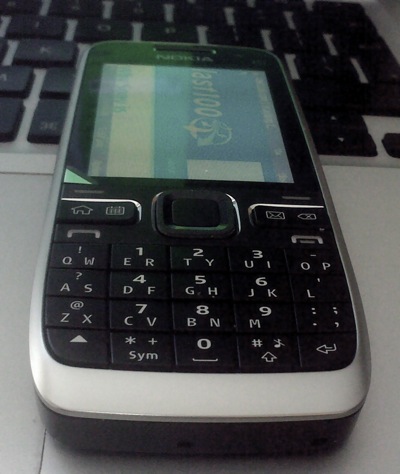
Nokia E55Regular readers of this blog – and anybody who’ll listen – will know that I’m a big fan of physical QWERTY keyboards on mobile phones. I’m much less fond of virtual ones, such as that found on the iPhone or my Android-powered HTC Magic.
My current day-to-day phone is a Nokia E71, which I’ve found to have the best QWERTY to-date, but my love affair with mobile QWERTYs started way back when I bought my first Palm Treo (see my GDGT profile, if you’re interested in my gadget history).

I was therefore intrigued when Nokia announced the E55 with a keyboard that the company describes as a compact-QWERTY. Similar to BackBerry’s sure-type layout, each key houses two letters. The option of predictive text helps to smooth over this obvious compromise but then on the other hand you get the advantage of a candy bar form factor, and in the E55’s case, a very slender one too.

Over the next few weeks I intend to put the Nokia E55 through its paces and see how well I do on half a QWERTY. Watch this space.

Why Sony is embracing the 'open' ePub eBook standard (Hint: Amazon)

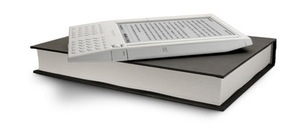
I’ve argued before that with regards to eBooks and the Kindle, Amazon doesn’t view itself as a hardware company. Unlike the iTunes ecosystem designed to shift more iPods and iPhones, for Amazon it’s actually about selling digital content — the eBooks themselves — as demonstrated by the release of the iPhone ‘Kindle’ eBook reader and the company’s work-around to keep Apple away from any iPhone-generated eBook revenue.
The Kindle hardware exists to kick start and accelerate the uptake of eBooks, and as well as creating Kindle reader software for other mobile platforms, similar to what the company has already done on the iPhone, I wouldn’t be surprised to see Amazon one day license its Kindle platform to competing hardware eBook readers. As I said, it’s clearly about shifting content, and to achieve this, owning the eBook ‘standard’ and therefore default store.

Continue reading »

INQ's mass market 'Twitter phone' takes aim at overpriced QWERTY touting smartphones

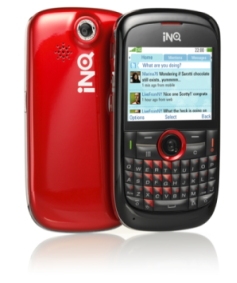
inq-chat-3gI pretty much had this one pegged. Hutchison-owned INQ have announced the follow up to the award winning INQ1 — dubbed the Facebook phone — with a QWERTY-touting handset that, amongst other things, targets users of Twitter.

The BlackBerry-esque device, called the INQ Chat 3G, pitches a host of messaging capabilities to end users, including ‘push’ email (via Gmail), Facebook access, Instant Messaging through Windows Live Messenger, Skype, and a Twitter client that provides ‘always-on’ connectivity to the micro-messaging social network so that updates are pushed ‘straight to the homescreen’.

“Consumers can send tweets and retweet via the internet rather than using SMS”, boasts the press release.

Continue reading »

SugarSync comes to Android phones (it's very good)

ss_android

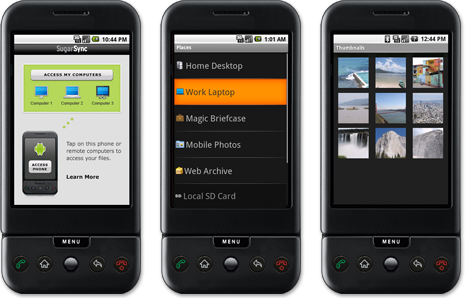
SugarSync is my backup to the Cloud and sync service of choice (see How I replaced Apple’s MobileMe at half the price) and today the company added Android to its range of supported mobile phones. SugarSync was previously only available on iPhone, Windows Mobile and BlackBerry.

As readers will know, I recently jumped on the Google Phone bandwagon with the purchase of a HTC Magic (also also known as the T-Mobile myTouch in the USA) and so it’s pretty good timing to see SugarSync pushed out for Android shortly thereafter, although I’m still waiting for a S60 (Nokia) compatible version.

Continue reading »