Archive for the ‘Mobile’ Category

First impressions of the HTC Hero (widgets, web browser, and social networking)

Yesterday I wrote a rant about a few of Android’s shortcomings but my faith in the Google-led OS has already been somewhat restored (not that it had waned completely). A few minutes after hitting publish, a helpful courier dropped off a review loan of the HTC Hero, courtesy of mobile carrier Orange. The Hero is the first Android-powered device to be heavily customized in terms of User Interface, with HTC’s Sense UI, something that we’re going to increasingly see handset makers do. Just last week, Motorola unveiled its own social networking-driven take on Android, and INQ, makers of the so-called ‘Facebook’ phone, have revealed plans to do the same.

But back to the Hero. A few notable improvements over the standard ‘out-of-the-box’ Android include…

Continue reading »
Three things that I hate about Android #fail

Let me preface this by saying that there is a lot to like about Android and that the smartphones being powered by the Google-led OS are going to get better and better. I’m especially excited by the UI customization that HTC and Motorola, for example, have been developing on top of Android, testament to the mobile OS’s overall potential and, of course, openness.
(I’m expecting a loan of the social networking savvy HTC Hero later today, thanks to UK carrier Orange. A full review of the Hero should follow shortly.)

However, having lived with the Vodafone HTC Magic for a few months now, there are a few things that really bug me about the standard version of Android. Yes, this is going to be a bit of rant.

Continue reading »

Hands-on with the Nokia E55 (or how I learned to live with half a QWERTY)

e55_newI’m generally a fan of Nokia’s business focused Eseries smartphones, while for day-to-day use I require a device with a QWERTY keyboard (preferably a portrait one). Combine the two and the Nokia E71, released around 18 months ago here in the UK, is as close as I’ve got yet to the “perfect” smartphone — I even named it in my top ten Digital Lifestyle products of 08 — although, obviously, it’s far from perfect. Perfection is, of course, a moving target in the world of smartphones.
The subsequently released Nokia E75, which features both a traditional numeric keyboard and a generously large landscape slide-out QWERTY, came in at a close second and even offers a few of improvements over the E71, such as a faster processor, updated software, better camera and a 3.5mm headphone jack.

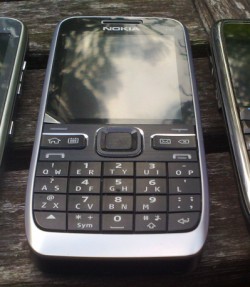
I was therefore keen to try out Nokia’s attempt at a third QWERTY touting form factor, with the announcement of the E55. As you can see from the photo above, the device adopts the traditional candy bar shape by featuring something the handset maker is calling a “compact QWERTY”. Essentially housing two QWERTY letters per key (can I say half a QWERTY?) and utilizing predictive text to bridge the gap. But, in everyday use, how does the E55’s keyboard perform?

Continue reading »

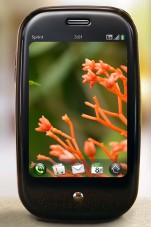
PlayBite: Hands-on with the UK/GSM Palm Pre

I’ve just got back from PlayBite in London, a press event organized by PR agency Bite. The mini press-only expo showcased products from a number of consumer tech brands, including Palm. In fact, the event was in part billed as the first chance for UK journalists to get a hands-on with the Palm Pre, and I got to do just that. 

Continue reading »

Motorola just bet the house on Android and social networking

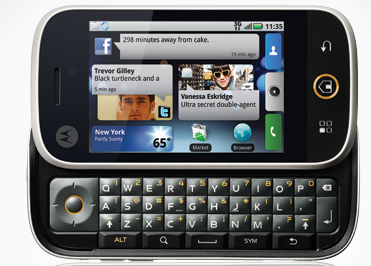
motorola-cliqOn stage live at GigaOm’s Mobilize 09 conference, Motorola just unveiled a large part of its comeback strategy (there seems to be a lot of “comebacks” in the handset market at the moment) based on a new smartphone powered by Android, the Google-led mobile OS, featuring a custom UI that puts social networking at its heart.

The phone, to be called the Motorola Cliq and offered exclusively on T-Mobile in the US, and the Motorola Dext in Europe, features 3G, WiFi, a 3.1 inch touch screen, slide-out landscape keyboard, and 5 megapixel camera, amongst its specs.

Continue reading »

Spotify hits the iPhone and Android app stores

The stars were already aligned: a preemptive PR strike, a premium business model, and regulators questioning anti-competitive practices with relation to the iPhone’s app store — making it less and less surprising that Apple should give Spotify the green light.

See also: How Spotify can beat Microsoft [music streaming]

As of today, the iPhone version of the music streaming service is available for download from Apple’s official App Store — UK, Sweden, Spain, France, Norway and Finland only (with the U.S. debut planned for sometime next year) — while a mobile client for the Google-led Android has also launched. The app is free for either platform but you’ll need to be a Spotify premium subscriber — £10 per month in the UK — to access the service.

Continue reading »

Nokia's all-you-can eat music service now "comes with" its own flagship touch screen phone – Nokia X6

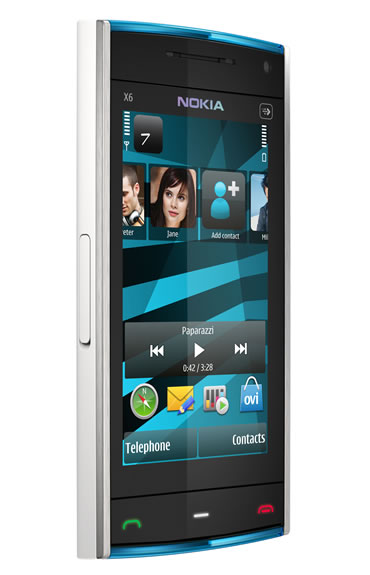
Nokia_X6_white_blue_homescreenAlthough I’d put poor marketing, carrier resistance, and possibly DRM, ahead of the lack of a flagship device to explain why Comes With Music, Nokia’s all-you-can-eat music service, hasn’t been the hit the handset maker had hoped for, the company’s newly announced X6 music phone is encouraging.
The device, unveiled at Nokia World today, is to be a Comes With Music exclusive offering, and sports a 3.2-inch touch screen display (16:9 ratio at 360 x 640 pixels), 32 GB of built-in storage, a 5 megapixel camera with Carl Zeiss optics and dual LED flash, A-GPS and WiFi, amongst its impressive stats. And in a first for Nokia, that touch screen is capacitive (not resistive), meaning that its should be a lot more responsive to the touch of a finger. Regular readers will know I’m not a fan of old skool stylus optimized resistive screens.

A quick recap of how Comes With Music works: you purchase a qualifying Nokia handset and then get access to the entire library of the Nokia Music Store for 12 – 18 months and get to keep any downloaded tracks once the subscription ends. For that privilege, the Nokia X6 has an estimated retail price of EUR 450, although the handset maker is stressing that ‘in many, many markets’, thanks to carrier subsidy, the device should be closer to “free”.

Nokia dumps location-based service Friend View, falls in love with Facebook

During the opening keynote at Nokia World, which kicked off today, CEO Olli-Pekka Kallasvuo was at pains to point out that the handset maker didn’t view Internet “services” as an interesting side business but that it was still the future of the company.
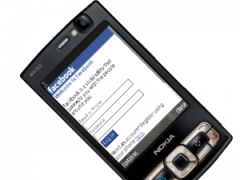
And along with music, messaging and turn-by-turn navigation, location-aware social networking, which the company calls SoLo, and other types of location-based services are key to this future. After all, Nokia has invested heavily in GPS-related technologies and applications, the boldest example being the $8.1 billion purchase of Navteq in late 2007.

What was and still is unclear is how much of Nokia’s SoLo strategy involves building out its own social networking offerings or partnering with and supporting established social networks. With today’s announcement of a tie up with Facebook and with it the death of the company’s own ‘Friend View’, with regards to the simplest of ‘SoLo’ applications — share my current location with friends — the handset maker has seen sense and decided to do the latter.

Continue reading »

Spotify on iPhone approved by Apple

With Apple stuck between the FCC, Eurpean Union regulators and a hard place, I’m not that surprised to see the approval of music streaming service Spotify’s iPhone app. Apple today confirmed to paidContent that Spotify (currently Europe-only) has been given the green light and will be available in the App Store “very soon”.

While many had speculated that the app might be rejected by Cupertino on the grounds of ‘duplicating’ (read: competing with) the iPhone’s built in functionality — iTunes — I was confident that, especially in the current climate, Spotify would be approved.

I predict that Apple will in the end give Spotify the green light based on several factors. Avoiding monopoly accusations being one. Spotify’s pricing model being another (the iPhone app will only be available to premium subscribers so it’s far from a free-for-all). And then there’s Apple’s kludgy multitasking solution. The latter of which means that Spotify on iPhone will be unable to run in the background. Switch to a different app and the music stops.

One thing we don’t yet know, however, is if Apple has in anyway restricted any of the features of the Spotify iPhone app, in particular the ability to cache playlists for off-line playback. This feature alone means that Spotify competes more heavily with iTunes than other streaming music apps that already exist for the iPhone.

Overall though it looks like great news for Spotify and bodes well for the future of Rhapsody’s iPhone app, which is currently pending Apple’s approval.

Nokia can do UI design after all, Linux-based N900 unveiled

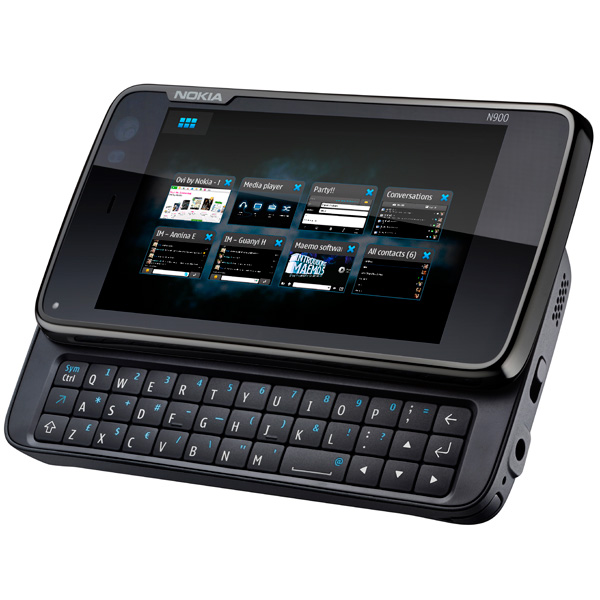
Nokia-N900-8It had already been leaked to death, but frankly, if the walk-through video that’s been published today is anything to go by, I don’t think any of the previous pics or screen shots do this thing justice.

I’m referring to Nokia’s new Linux-based smartphone come Internet tablet, the N900, which the handset maker officially unveiled today. The device is powered by the company’s Maemo 5 OS, of which previous versions were used for its non-phone Mobile Internet Devices (MIDs), such as the N810 that I reviewed all the way back in February 2008.

And boy has Maemo come a long way. Best of all (shock, horror), it looks like Nokia can design User Interfaces after all.

Continue reading »