Adobe has long talked up its ambition to have Flash running on all manner of screens, not just the humble PC, and today the company got a lot closer to walking the walk not just talking.
Through the Open Screen Project, Adobe was already known to be working with smartphone platforms from Palm (WebOS), Nokia (Symbian) and Microsoft (Windows Mobile), along with a raft of content providers, chip makers and consumer electronics companies. Today, the company added Google and Research In Motion to the list, with relation to Android and Blackberry-powered smartphones respectively, leaving Apple’s iPhone as the odd one out regarding planned support for full Flash (or any Flash support at all).
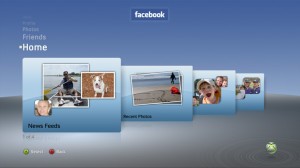
For a long time now, Microsoft has made the rather lofty claim that the company’s XBox 360 was the biggest social network on TV. For the most part that was in reference to XBox Live – the games console’s online service – and its integration with Windows Live Messenger, Microsoft’s cross platform Instant Messaging service (Windows, Mac and mobile). Yesterday, however, Microsoft announced at E3 that the XBox 360 will soon be adding support for two competing social networks – Twitter and Facebook – making the XBox 360 undoubtedly the most socially networked set-top box, but not necessarily a Microsoft-owned social network the biggest one on the television. I’m not sure how Windows Live Messenger user numbers and Facebook’s compare in terms of cross-over with XBox Live membership but it’s nonetheless significant that Microsoft has chosen to embrace two competitors.
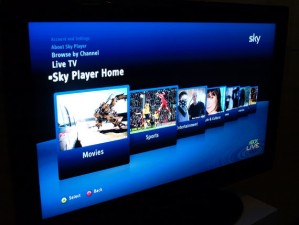
One of the advantages of the company’s connected vision was supposed to be the advent of interactive television based on what the Internet could bring to the table. Think: live instant messaging through the TV with friends while watching the same channel or accessing additional information pulled in from the web, for example. With yesterday’s announcement that satellite broadcaster BSkyB’s broadband TV service ‘Sky Player’ is coming to XBox 360 users in the UK and Ireland, that vision is now a lot more tangible.
May 27th, 2009 | Posted in Audio, Mobile | Comments Off
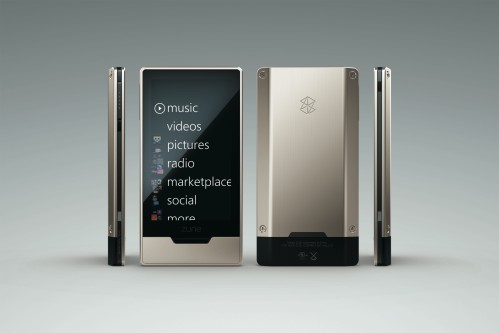
New Zune HD
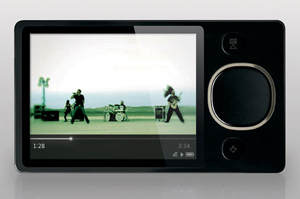
Microsoft today announced its latest Zune portable media player designed to go head to head with Apple’s iPod touch. Dubbed the Zune HD, the device features a 3.3″ 16:9 widescreen capacitive OLED with multitouch, WiFi, and a built-in web browser, along with existing Zune media playback features. Talking of which, the “HD” moniker refers to both HD Radio (offering higher quality audio and additional track and station data), along with support for 720p HD video playback. Interestingly, the device itself only offers a screen resolution of 480 x 272, meaning that High Def videos played back on the device are downscaled, which shouldn’t matter all that much on such a small screen. To view content in its full HD glory, the Zune HD features a HDMI-compatible docking station for plugging into a high definition television.
Of course to really take on the iPod touch, not only will the Zune HD’s web browsing experience need to up its game compared to existing Windows Mobile devices, but it would need to foster its own third-party software eco-system. Something that Microsoft hasn’t yet announced and it’s unclear if the company plans to do so, although I’m not ruling it out. Remember Apple doesn’t call the iPod touch a media player, instead referring to the device as the “first mainstream Wi-Fi mobile platform, running all kinds of mobile applications.”
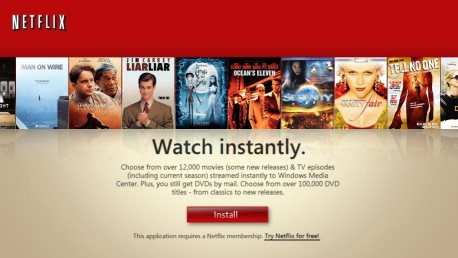
It’s not the first time that Netflix functionality has been added to Microsoft’s Media Center software, but today the two companies released an official plug-in for the PC to TV platform.
Through a formal partnership, users of the Vista edition of Microsoft Media Center (not XP) can now access almost all of Netflix’s online features via the software’s TV-friendly “10-foot” User Interface, including browsing Netflix’s DVD library, editing their DVD and Watch Instantly queues, as well as stream movies and TV episodes from the company’s 12,000 strong library.
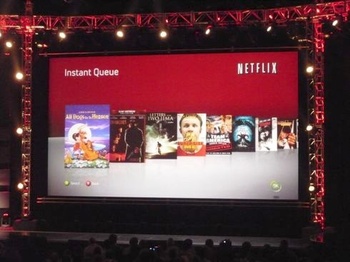
In a joint announcement, Microsoft and Netflix have put out some numbers on the success of Netflix’s ‘Watch Instantly’ Internet TV service on Microsoft’s XBox 360 games console. 1.5 billion minutes of Netflix content has been streamed, with a total of one million Xbox Live Gold Members activating Netflix on their accounts. Considering that Netflix on XBox only went live three months or so ago, that’s pretty impressive by anybody’s measure.
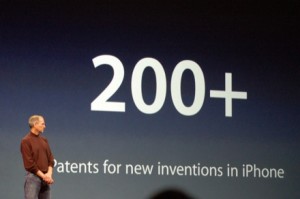
When the iPhone first launched at Macworld in 2007, I distinctly remember Apple CEO Steve Jobs boasting that the company had over 200 patents on this thing. At the time, that boast stuck out like a sore thumb as I couldn’t recall Apple making such a fuss over patents before.

Attempting to ‘protect’ one’s intellectual property through patent applications is something that large tech companies do every day. But the fact that Jobs felt the need to highlight this in relation to the iPhone told its own story: Apple was onto something big and it fully expected others to copy many of the iPhone’s ‘innovations’, such as the device’s multi-touch User Interface and related gestures to manipulate content.
Two years on and although we’ve seen many so-called iPhone “killers” from the likes of Google, Nokia, Samsung, HTC and RIM, none of them have dared to go as far as implementing a multi-touch UI.
Until just over a week ago, that is, when Palm unveiled its new Pre smartphone and accompanying webOS, which includes a capacative multi-touch display and relies heavily on gestures for navigation. None of which has gone unnoticed by Apple.
January 15th, 2009 | Posted in Mobile | Comments Off
Pandora CTO Tom Conrad put it best: “I can’t think of much that’s harder in the world than building a modern, mobile operating system and integrating it with a fantastic piece of hardware”, he tells Palm Info Center.
“We see companies take a swing and miss at this time after time – I really think Palm has hit a home run on this one.”
And Conrad should know.
Not only has his company ported its music streaming and discovery service to over 40 different handsets, “everything from J2ME and Windows Mobile to the iPhone”, but Pandora was also chosen by Palm to get an early hands-on peak at the webOS and Pre and begin bringing their app over to the company’s new platform.
At the same time, Conrad rightfully reminds us that Palm is still very much the underdog. Of course, underdogs should rarely be underestimated.
On that note, who should have the most to fear from Palm’s “New-ness”?
Last February when Microsoft announced it had purchased Danger, makers of T-Mobile’s consumer friendly smartphone the Sidekick, I suggested that rumors of a Zune-branded phone would quickly resurface. Today, CNBC’s Jim Goldman claims that a new device from Microsoft, codenamed ‘pink’, is indeed in the works and that it will combine the company’s Zune with technology from Danger, with an end goal to develop a viable competitor to Apple’s iPhone.
All of which seems perfectly plausible. Both the Zune and Danger teams fall under the company’s Entertainment and Devices Division, which also overseas the XBox 360 — Microsoft’s most successful foray into the consumer electronics space — and is all about what the company calls “connected experiences”. As I wrote at the time, it’s in this context where the Danger acquisition made most sense, with Microsoft citing Danger’s mobile Web browsing, instant messaging, games, multimedia, and social networking applications, which in combination with MSN, Xbox, Zune, Windows Live and Windows Mobile technologies, would help it deliver “industry-leading entertainment and communication experiences”.
Do you like to rent your music collection or own it outright? With the updated Zune Pass, Microsoft’s subscription service for its Zune line of portable media players, you can now have the best of both worlds. Sort of.
For a monthly fee of $14.99, Zune Pass subscribers get access to millions of tracks on a rental basis — once the subscription ends, access is shuttered — but with today’s changes they can also keep ten DRM-free tracks on a to-own basis to add permanently to their music collections.
November 3rd, 2008 | Posted in Net TV | Comments Off
Last week Engadget reported that the XBox 360’s support for Netflix streaming would include a limited amount of HD content too – initially around 300 titles – prompting many to ask if High Def content would also make its way onto Roku’s Netflix set-top box.
Dan Rayburn quickly followed up to confirm that, despite the lack of an official company announcement, Roku’s hardware was at least technically capable of streaming Netflix in HD, leading to speculation that Netflix HD streaming could be a Microsoft exclusive, for the time being anyway.
October 27th, 2008 | Posted in Mobile, Net TV | Comments Off
Oh the irony
Netflix has finally began rolling out a version of its video streaming service for Mac users, and it comes courtesy of Microsoft. Although only available initially to “a small percentage of new Netflix subscribers”, with a full roll-out anticipated by the end of the year, the new PC-based version of the company’s ‘Watch Now’ service is powered by Microsoft’s Flash competitor Silverlight, a technology that crucially includes its own cross-platform ’studio approved’ DRM solution, thus enabling Netflix to support both Windows-based PCs and now those running MacOS (Intel only).
Along with adding Mac support, Netflix says the adoption of Silverlight delivers a number of usability improvements too, including “a faster, easier connection” and “a breakthrough in timeline navigation that vastly improves the use of fast-forwarding and rewinding.” Yes you read that right, fast-forwarding and rewinding. Who said the revolution wouldn’t be televised?
In the future, it’s very possible that Neflix’s use of Silverlight could see its streaming service reach even more devices beyond PCs and set-top boxes currectly supported. In particular I’m thinking of mobile phones and Internet tablets from Nokia. The Finnish handset maker has already announced that it plans to support Silverlight on future handsets, starting with those powered by S60, with S40 and Maemo devices to follow. And from a marketing perspective, a partnership with Netflix would make a lot of sense as it would surely help the company shift more handsets in the US. In this regard, Nokia has previous form too. The company’s flagship smartphone, the N96, is in part being sold in the UK based on its support for the BBC’s iPlayer service.