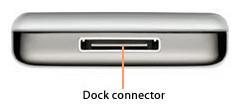
When news first hit that three of the leading mobile phone industry organizations had agreed on micro-USB as a mobile phone charging standard, Apple was notably absent. The iPhone maker is particularly fond of its proprietary Universal Dock Connector, you know the one that enables all sorts of third-party after market device goodness and also generates the company a nice little revenue stream through its ‘Made for iPod’ program. Today, however, the European Union (EU), after applying pressure to the industry, announced that Apple had joined competitors, Nokia, Sony Ericsson, Motorola, LG, Research in Motion, Samsung and others, in agreeing to switch to the micro-USB standard from next year.
Posts Tagged ‘iPhone’
After pressure from EU, Apple dumping iPhone’s Universal Dock Connector? (microUSB)
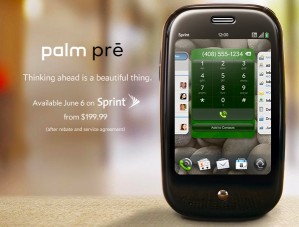
Official: Palm Pre to go on sale June 6th, just two days before Apple’s WWDC – $200 with 2 year contract

Palm Pre to go on sale June 6
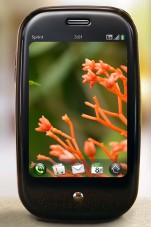
After weeks and weeks of speculation, the cat is finally — and I mean finally — out of the bag. The Palm Pre will go on sale in the US on June the 6th, with the Sprint exclusive, for now at least, costing $200 after a $100 mail in rebate with a 2 year contract. If you’re lucky enough to be based in the states, you’ll be able to purchase a Pre at Sprint stores, Best Buy, Radioshack, select Wal-Mart stores and through Sprint’s own website. That’s a pretty decent lineup of distributors and should give the device plenty of shopping mall exposure, presuming of course that Palm can meet the initial demand. And then there’s iPhone.
Continue reading »
Amazon to Apple: keep your hands off our iPhone Kindle eBook revenue

iPhone Kindle app
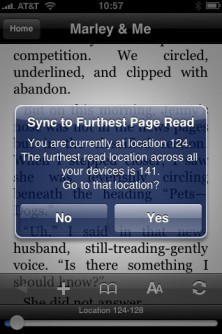
At first glance it seems innocuous enough: Amazon has launched a version of its Kindle eBook store optimized for the iPhone’s web browser to make it easier for users of Apple’s device to purchase new eBooks for the iPhone’s Kindle application. “The most common feedback we heard from customers was that they wanted a better experience for purchasing new Kindle books from their iPhones”, says Ian Freed, vice president of Amazon Kindle operations.
In the updated iPhone Kindle app, a “Get Books” button opens the phone’s Safari web browser and takes users straight to the new iPhone-friendly site. Any new purchases made then show up in and are downloadable from the iPhone Kindle app itself.
See also: What Kindle on iPhone says about Amazon’s eBook strategy
The result of which is that Amazon has made it relatively simple for users to purchase Kindle content in a way that replicates the iPhone’s upcoming ‘in-app purchases’ feature, all without giving Apple its 30% cut or, presumably, breaking any terms of service.
Apple bans iPhone apps related to BitTorrent

Drivetrain for iPhone
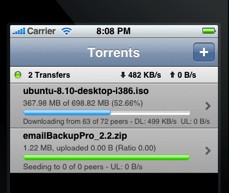
It’s not a fully fledged BitTorrent client, but Apple has rejected Drivetrain from the iPhone App Store nonetheless. The software, developed by Maza Digital, turns the iPhone/iPod touch into a remote control for the popular PC BitTorrent client Transmission (Mac and Windows). After a slightly longer review process than other iPhone apps, Apple turned down Drivetrain on the grounds that anything BitTorrent related “is often used for the purpose of infringing third party rights.” Of course, while the P2P protocol can be used for downloading pirated content, such as the latest DVD releases, it’s also a legitimate way for copyright holders to distribute large files, while sharing the bandwidth ‘costs’ with users.
In terms of functionality, Drivetrain enables the monitoring of BitTorrent downloads, including being able to pause, resume or cancel them altogether, as well as providing a web browser so that new torrents can be searched for and remotely downloaded. It’s the latter feature that probably set off the red light at the iTunes Store HQ.
PR wars: Palm Pre could go on sale 24 hours before next gen iPhone unveiled
The latest rumored release date for Palm’s comeback device, the Palm Pre, is June 7th, one day before Apple’s World Wide Developer Conference (WWDC). If true, this would be an audacious move from the handset maker, and one that, at first glance, carries a lot of risk. WWDC is thought to be the venue at which Apple will announce the next generation iPhone – and possibly a new category of mobile device – therefore completely overshadowing the Palm Pre’s one day old availability.
Or would it?
iPhone app is no big deal but Skype’s ubiquity is
The tech blogosphere is buzzing with the news that an official Skype application for Apple’s iPhone will be made available tomorrow. But, as the BBC’s Rory Cellan-Jones rightly asks, is it such a big deal?
Firstly, it isn’t the first time Skype on iPhone (or iPod touch) has been possible, with a number of third-party apps already filling the void.
Secondly, while Skype calling is available to mobiles and landlines not just other devices running Skype, they’re only possible over WiFi not 3G, so as to appease Apple’s carrier partners.
Continue reading »
iPhone’s ‘In App’ purchases will be a boon to micro-payments
If it wasn’t already clear who owns the customer – Apple or its mobile carrier partners – yesterday’s announcement that ‘In App’ purchases will be a prominent feature of the next version of the iPhone’s OS suggests, once again, that power resides very much with Steve Jobs and co. in Cupertino.
When iPhone OS 3.0 is rolled out this summer, developers will be able to charge for additional content within their applications – so that, for example, an iPhone game could at anytime prompt a player to purchase additional levels or other in-game content, such as maps, without the user having to leave the app and billed through their existing iTunes account. For the privilege, Apple takes its standard 30% cut, once again bypassing the carriers. That in itself is disruptive enough. However, there’s another force at play.
Micro-payments. Or more broadly, in an era of free and ad-supported, getting consumers used to the idea once again of actually paying for content, albeit online.
Continue reading »
iPhone 3.0’s dichotomy: playing catch-up while pushing the envelope
At a special press event in Cupertino today, Apple previewed the next version — 3.0 — of the iPhone’s OS. And in doing so, the company showed once again how on one level it’s playing catch-up by delivering features that all other existing smartphones (and some feature phones) already have, while at the same time pushing the envelope further than its competitors.
In the catch-up camp is copy and paste, support for MMS and stereo Bluetooth (A2DP), media library access for third-party apps, and the previously announced ‘push notification’ system, Apple’s alternative solution to true multitasking and background apps.
Continue reading »
Boxee releases remote control iPhone app

Another ‘remote control’ app has landed on iPhone, this time for media center software Boxee. The Boxee Remote app works over WiFi and operates in two modes: ‘Gesture’ and ‘Buttons’. In Gesture mode users drag the Boxee logo around the screen to trigger up, down, left and right and clicking on the logo activates play/pause. Alternatively, Button mode offers up a virtual version of Apple’s own hardware-based remote control, which although less imaginative is probably more practical. Either way, the free app is very bare bones, making it all the more baffling that, according to Boxee, Apple took such a long time to approve it.
See also: iPhone remote control app for VLC Media Player AND Sonos delivers touchscreen controller via iPhone
CBS to stream NCAA’s March Madness on iPhone and iPod touch
Buoyed by the success of last year’s March Madness on Demand and, presumably, its experiment with live streaming on Joost, CBS is making video coverage of the college basketball tournament available to owners of Apple’s iPhone and iPod touch. Available through a dedicated iPhone app, users will be able to view live games (WiFi only) and access real-time scores, stats, and other related content. Interestingly, the app isn’t free but costs $4.99 available through iTunes and the iPhone’s App Store, another example of media companies using Apple’s mobile software store as a way of charging for content.
What Kindle on iPhone says about Amazon’s eBook strategy
The news today that Amazon has released a Kindle client for Apple’s iPhone and iPod touch says a lot about the company’s eBook strategy. Amazon’s Kindle device has often been described as wanting to become the iPod of books, but unlike Apple it’s clear that the e-tailer sees itself in the business of selling content and not just to drive sales of hardware.
In terms of music and video sales, Apple’s iTunes Store exists purely to add value to and increase uptake of the company’s iPod and AppleTV devices, with the major record labels and Hollywood studios receiving the majority of revenue from any content sold. Until fairly recently, content from iTunes could only play back on Apple’s hardware – for movies and TV shows this is still the case – helping to lock customers into the iTunes/iPod ecosystem. In contrast, eBooks bought from the Kindle store are now able to be read on at least one non-Kindle device, Apple’s iPhone, with more to come. This suggests to me that Amazon is taking a large enough cut from each eBook sold to justify potentially diluting sales of the Kindle device itself.
Continue reading »