Author Archive

Zatz Not Funny: Internet TV widgets, iPhone shortcomings, Boxee set-top box and more

A periodic roundup of relevant news from our friends at Zatz Not Funny

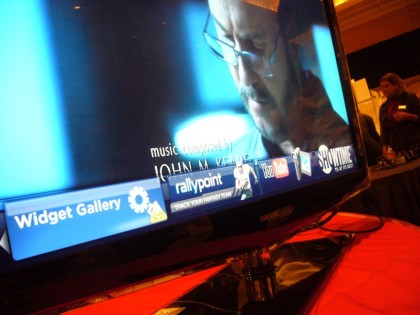
Yahoo’s Internet TV widget platform

Dave Zatz: The biggest story of CES, given our focus here at ZNF, was the unveiling of Yahoo’s Internet TV platform. Of course, just as meaningful as the technology itself, are the multiple heavy hitting partners signed to deploy it beginning this spring.

iPhone shortcomings?

Dave Zatz: The Boy Genius is out with his top ten iPhone annoyances. While several can be filed as minutiae that won’t bother most folks to any great extent, I’ve yet to meet the perfect handset. The iPhone is no different, possessing a variety of quirks and limitations.

Boxee, finally living up to square name?

Dave Zatz: The Boxee team, flush with cash and excellent exposure, is seeking feedback on the prospect of directly embedding their experience into a hardware platform.

Evolution of the Verizon Hub

Mari Silbey: Tech specs are still fuzzy, but what we do know is that this is a POTS-based cordless phone system with a touchscreen for Internet access and integration with Verizon wireless and VoIP phone services. It’s meant to act as a digital photo frame, note board, family calendar, and widget station all at once.

What if Apple sued Palm, would Microsoft come to the rescue?

When the iPhone first launched at Macworld in 2007, I distinctly remember Apple CEO Steve Jobs boasting that the company had over 200 patents on this thing. At the time, that boast stuck out like a sore thumb as I couldn’t recall Apple making such a fuss over patents before.

Attempting to ‘protect’ one’s intellectual property through patent applications is something that large tech companies do every day. But the fact that Jobs felt the need to highlight this in relation to the iPhone told its own story: Apple was onto something big and it fully expected others to copy many of the iPhone’s ‘innovations’, such as the device’s multi-touch User Interface and related gestures to manipulate content.

Two years on and although we’ve seen many so-called iPhone “killers” from the likes of Google, Nokia, Samsung, HTC and RIM, none of them have dared to go as far as implementing a multi-touch UI.

Until just over a week ago, that is, when Palm unveiled its new Pre smartphone and accompanying webOS, which includes a capacative multi-touch display and relies heavily on gestures for navigation. None of which has gone unnoticed by Apple.

Continue reading »

Will audio ads on Pandora help it swim back across the pond?

It won’t be popular, yet Pandora’s decision to introduce audio ads is almost certainly necessary to keep the service running and, therefore, something I welcome. Especially if it helps bring the service back to the UK.
Rolled out with little fanfare, besides an acknowledgment on the company’s Twitter feed, the music streaming service has started serving audio ads, reports TechCrunch. While they do interrupt the music, the ads are “fairly sparse”, says Jason Kincaid. And I’ll have to take his word for it.

Continue reading »

Mike Arrington's CrunchPad web tablet reaches prototype but should it go into production?

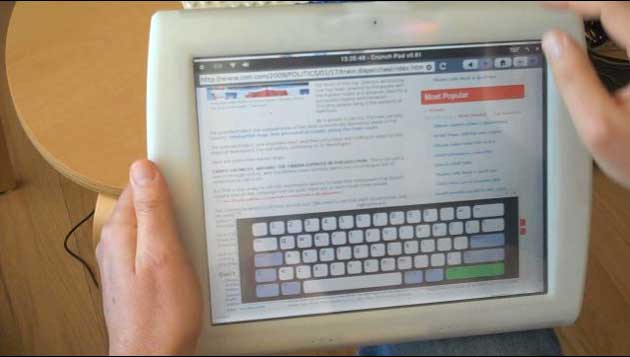
Six months on from TechCrunch editor Mike Arrington’s stated mission to create a “dead simple and dirt cheap touch screen web tablet to surf the web” and the first fully working prototype has been unveiled.

The device, which is now being called the ‘CrunchPad’, sports a 12 inch resistive 4:3 touchscreen, Via processor and 4GB of storage, virtual on-screen keyboard and is powered by a version of Linux and a custom WebKit browser. It’s primary use is for surfing the web, perhaps while watching TV “so you can look up stuff on Wikipedia or IMDB as you channel surf”, writes Arrington. Or as another means to consume online video (“on Hulu or Joost or wherever”) and other content, as well as check email or access other web services such as Google Docs.

See also: How do you use your Netbook?

In other words, just like existing Netbooks, the CrunchPad is designed for the Cloud, in which our data and applications increasingly reside on remote servers, accessible through a standard web browser.

Continue reading »

Weekly wrapup: YouTube on PS3 and Wii, DivX 7, Blockbuster/CinemaNow, Palm and more

Here’s a summary of the last week’s digital lifestyle action on last100. Note that you can subscribe to the weekly wrapups, either via the special weekly wrapup RSS feed or by email.

Enter your email address:  


Internet TV

10 feet away: YouTube lands on PS3 and Wii

Perhaps taking a leaf out of the BBC iPlayer’s book, Google-owned YouTube have launched a version of the video sharing site designed specifically for viewing on a television.

DivX 7 adds support for Blu-ray rips

DivX looks set to continue to be the video format of choice for ‘grey’ content, with the company announcing that version 7 adds support for H.264 video and, more significantly, the Matroska (MKV) container.

Continue reading »

Zatz Not Funny: Moxi, Sling Media, Wi-Fi photo frame trojan horse, missing at CES

A periodic roundup of relevant news from our friends at Zatz Not Funny

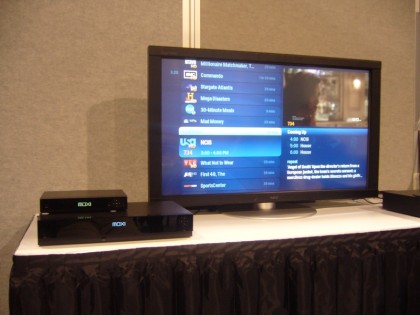
Digeo takes on TiVo with Moxi

Dave Zatz: Although units began shipping in mid-December (with little fanfare), Digeo CEO Greg Gudorf officially unveiled their long delayed and re-imagined retail Moxi HD DVR ($800) last week at CES. I’ve previously been critical of Digeo’s go-to-market and press/blogger outreach strategies, but I’ve never had a problem with their tech – in fact, the Moxi OS was ahead of it’s time.

The Slingified WiFi LCD

Dave Zatz: The Sling booth was my first stop at CES, yet I managed to walk right by the one real surprise. Sling’s 15″ WiFi monitor displays (only) streamed video from a “SlingLoaded” DISH ViP 922 DVR within the home. Sort of a SlingCatcher, without additional media adapter functionality.

Wi-Fi photo frame the new Trojan Horse?

Mari Silbey: While gaming consoles are still attempting to make good on their role as Trojan Horse in the living room , I have a new candidate for the job: Wi-Fi photo frames. As ridiculous as that sounds, a WI-Fi photo frame is really nothing more than an IP-based display, capable of receiving IP-based content.

What we didn’t see At CES

Dave Zatz: Not only did we witness a temporary cease fire in the “World’s Largest” flat panel CES showdown, a few other technologies played it low-key in Vegas…

10 feet away: YouTube lands on PS3 and Wii

Perhaps taking a leaf out of the BBC iPlayer’s book, Google-owned YouTube have launched a version of the video sharing site designed specifically for viewing on a television.

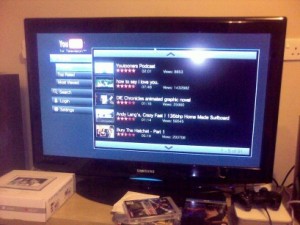
Currently in Beta, the TV-friendly YouTube initially targets Sony’s PlayStation 3 and the Nintendo Wii. That’s because both games consoles feature a built-in web browser compatible with Flash video, making it relatively easy to port over any browser-based video offering. From the US version of the official YouTube blog:

… the TV Website offers a dynamic, lean-back, 10-foot television viewing experience through a streamlined interface that enables you to discover, watch and share YouTube videos on any TV screen with just a few quick clicks of your remote control. With enlarged text and simplified navigation, it makes watching YouTube on your TV as easy and intuitive as possible. Optional auto-play capability enables users to view related videos sequentially, emulating a traditional television experience.

Google also reminds us that, through partnerships with set-top box makers such as Apple, combined with the YouTube API, it’s not the first time that viewers have been able to watch YouTube on the TV, although progress hasn’t been as fast as the company would have liked.

See also: TiVo continues expansion, adds YouTube to “television services” lineup

“Our hope is that this site may help to accelerate an industry evolution towards open television access to Web video. Over time, we plan to add support for additional TV devices that provide Web browsers.”

You can access the new TV-friendly version of YouTube by pointing your PS3 or Wii’s web browser to www.youtube.com/tv

Who has the most to fear from Palm's "New-ness"?

Pandora CTO Tom Conrad put it best: “I can’t think of much that’s harder in the world than building a modern, mobile operating system and integrating it with a fantastic piece of hardware”, he tells Palm Info Center.

We see companies take a swing and miss at this time after time – I really think Palm has hit a home run on this one.”

And Conrad should know.

Not only has his company ported its music streaming and discovery service to over 40 different handsets, “everything from J2ME and Windows Mobile to the iPhone”, but Pandora was also chosen by Palm to get an early hands-on peak at the webOS and Pre and begin bringing their app over to the company’s new platform.

At the same time, Conrad rightfully reminds us that Palm is still very much the underdog. Of course, underdogs should rarely be underestimated.

On that note, who should have the most to fear from Palm’s “New-ness”?

Continue reading »

Playing catch up, Blockbuster partners with CinemaNow

If you can’t compete then partner

In a bid to play catch up with the likes of Apple, Netflix, Sony and Microsoft, video rental chain Blockbuster has signed a strategic partnership with Sonic Solutions, owners of the video download store CinemaNow. The move is designed to accelerate the company’s move into online video by pooling the two companies’ digital movie libraries, as well as tapping into CinemaNow’s existing ecosystem of supported devices, which includes portable media players, Blu-ray Disc players, personal video recorders (PVRs), set-top boxes, mobile phones and Web-connected television sets.

Continue reading »

Why you may never see Firefox, Opera or Chrome on the iPhone

A report on Macrumors (my favourite Apple rumor site) observes that the company appears to have relaxed its iPhone App Store policy in relation to third-party web browsers. It was thought that, until now, competitors to Apple’s own Mobile Safari weren’t being approved on the basis that they “duplicate functionality” or compete with Apple’s own offering. That may no longer be the case.

“Over the past 24 hours, Apple has begun to approve 3rd party web browsing applications for the iPhone. A number of new web browsing apps have suddenly appeared with original submission dates ranging as far back as October”, writes Macrumors.

A partial list of these new applications include:

Edge Browser (Free) – No loss of screen real estate to the address or navigation bars.
Incognito ($1.99) – Now you can browse without leaving a history of any kind.
WebMate:Tabbed Browser ($0.99) – Web Mate simplifies browsing by queuing up all the links you click on, then allowing you to view them one by one when you’re ready.
Shaking Web ($1.99) – adds a sophisticated algorithm to compensate for small hand shaking to allow for easier reading.

This has led to many speculating that heavyweight competitors, such as Firefox, Opera or Google’s Chrome, could be next to land on the iPhone.

Not so fast.

Continue reading »