Archive for February, 2008

Omnifone introduces MusicStation Max, continues push for new music-industry business model

omnifoneU.K. music download provider Omnifone has expanded its MusicStation program by offering a new service, aptly named MusicStation Max, where cell phone buyers can download an unlimited amount of music from all four major labels for “free.”

Free, of course, means handset manufacturers will build the cost of the MusicStation Max plan into their devices, sell them to the carriers, who will resell them to consumers along with a special music, voice, and data plan. We can assume that “special” means more expensive as music is added to voice and data.

Continue reading »

Update: Android has landed, but it’s months away from a Hollywood debut

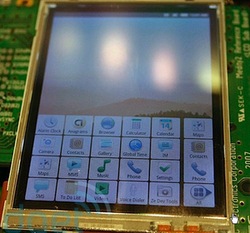
ti androidAndroid has landed. And it looks like, well, some sort of space alien.

Several companies at this week’s Mobile World Congress unveiled prototypes of Android, Google’s highly anticipated, open-source operating system. But rather than showing off sleek, sexy cell phones, with a super-fast OS running groundbreaking applications, attendees were treated to reality.

Android, for now, is mostly a bunch of circuit boards, displays, solder, prototype “phones”, and “alpha” applications intended to show the mobile world that yes, in fact, Android and the so-called Gphones do exist and, to some degree, work. They’re not vaporware.

“It’s not fair to laugh at the huge circuit boards: These are design prototypes and will of course be shrunk down to a fraction of this size,” Charlie Sorrel writes for the Wired’s gadget lab.

“But despite the fugly appearance, these Android phones are the buzz of the show. At the NEC booth, the guy pointed me straight past the other boards saying, ‘This one is the Android. That’s the only one anybody is interested in.’”

So, without further ado, here’s Android in all its, uh, splendor.

Continue reading »

Netflix lands on Windows Media Center

Netfix lands on Windows Media CenterNetflix likes to boast its hybrid offering — DVDs by post and Internet streaming — so it seems appropriate that someone would develop a Windows Media Center add-on to manage both.

Andrew Park has done just that. His MyNetFlix plugin for the Vista version of Media Center enables many aspects of a Netflix account to be accessed from within Media Center’s “10-foot” User Interface (suitable for viewing on a television) including browsing Netflix’s DVD library, editing your Netflix queue and viewing your rental history and DVD recommendations.

The ability to access Netflix’s Internet TV service “Watch Now”, however, will be of most interest to users who have a Vista Windows Media Center hooked up to their television or are using a PC as part of a home theater setup.

Continue reading »

Microsoft buys Sidekick maker Danger; Zune phone rumors to resurface?

Microsoft buys Sidekick maker Danger; Zune phone rumors to resurface?Long before Apple’s iPhone, another Silicon Valley-based company pioneered the consumer-friendly smart phone. That company was Danger Inc. best known for its T-mobile branded Sidekick (the Paris Hilton smart phone of choice) and its user friendly mobile OS and Internet applications.
As of today, Danger is no more. Instead, the company is being gobbled up by Microsoft’s Entertainment and Devices Division, responsible for overseeing the Zune, XBox, Windows Mobile and Microsoft TV product lines. Of note, Danger was founded by Andy Rubin, Google’s recently appointed Director of Mobile Platforms, following the search giant’s acquisition of Android.

Continue reading »

GPhone prototype expected at Mobile World Congress

It’s a big week coming up in the Mobile Web world. The annual Mobile World Congress is being held in Barcelona, 11-14 February. The early buzz is around Google’s much (and oft) rumored GPhone. According to the Times Online, Google “is expected to produce a prototype mobile handset” at the show. Even if Google itself doesn’t unveil a phone, there will be plenty of Android prototypes on display (Google’s open source Mobile Operating System).

CNN is reporting that “as many as one dozen handset makers and chip companies are expected next week to unveil mobile phone prototypes designed to operate with Google Inc.’s (GOOG) new Android software platform”.

Continue reading »

CBS, NCAA end “blackout” of tournament games streamed via March Madness on Demand

ncaa march madness on demandOne of my favorite times of the year are the first two days of the annual NCAA Men’s Basketball Championships, better known as March Madness. I sit on the sofa in a stupor, watching games from morning till midnight.

This year, not only can I watch the games on television but I can also sit with my laptop and watch any game on the ad-supported March Madness on Demand — with no blackouts, according to paidcontent.org. (FAQ.)

Until now, CBS Sports has protected local affiliates by maintaining similar blackout rules online as it has on air, keeping the “local” games TV-only. It also stopped coverage after the first 56 games, focusing all attention on the TV broadcast.

Continue reading »

Microsoft, Sony Ericsson team up to bring Windows Mobile to sexy new smart phone

Microsoft Sony EricssonMicrosoft and Sony Ericsson shout “Enough is enough!”

For much of the past eight months, the world’s mobile attention has focused on Apple’s iPhone, Google’s Android open-source mobile operating system, Blackberry’s continued success, and Nokia claiming 40 percent of the world’s cell phone market.

Microsoft and Sony Ericsson haven’t been left out, per se, but they certainly are not gaining much attention. In fact, the Windows Mobile OS has been much maligned lately, especially as the iPhone has taken over the No. 2 spot behind Blackberry in the sale of smart phones in the U.S.

Today at the Mobile World Congress in Barcelona, Microsoft and Sony Ericsson announced — somewhat surprisingly — they are teaming up to put Windows Mobile on a new premium phone, the XPERIA X1.

Continue reading »

Weekly wrapup, 4-8 Feb 2008

Here’s a summary of the week’s digital lifestyle action on last100. Note that you can subscribe to the weekly wrapups, either via the special weekly wrapup RSS feed or by email.

Enter your email address:

Top digital lifestyle news

The biggest headlines were in mobile this week on last100.

The release of Software Developer Kits for Google’s mobile-OS known as Android have been delayed till April. Meanwhile the iPhone, which should see its own SDK released later this month, is now the No.2 smart phone in the U.S. but still trails significantly worldwide.

In an update on the 700 MHZ spectrum auction we reported that Verizon is rumored to be in the lead ahead of Google.

This week also saw a number of new mobile products being announced or finally seeing the light of day. Opera Mobile 9.5 was revealed, trumping the iPhone’s mobile browser on a number of features including Flash video support; Nokia relaunched its mobile gaming service N-Gage; and stealth startup Modu made public their product offering: an interesting looking ‘modular’ cellphone:

… that can be slipped into different “jackets” to give the base phone additional features and functions depending on the user’s needs.

Basic “jackets” may include an MP3 sleeve, turning the phone into a digital music player. Or a GPS device. Or a digital camera for wireless image transfers. Or an alarm clock interface. Or with a larger screen, a video playback device. The possibilities are plentiful.

More digital lifestyle news:

Features

In a post titled ‘Yokia! Why Nokia should buy Yahoo‘, last100 editor Steve O’Hear explains how Nokia could benefit from acquiring the dot com giant:

If Nokia is repositioning itself as a Web services company, to combat falling profit margins on its hardware, then acquiring Yahoo would help to give the company a much needed presence on the desktop (not just mobile), as well as beef up its Web offerings and Internet brand recognition in general.

—-

Alternatively, a nightmare scenario exists for both Microsoft and Yahoo: Yahoo sells it ad business to Google in return for an ad-revenue partnership. Meanwhile, the Open Handset Alliance starts to produce real results and Google’s Android becomes a widely adopted mobile OS. The result? Google dominates the mobile Web (i.e. mobile ads) as it does on the desktop.

That’s a wrap for the week. Enjoy the rest of the weekend!

Rumor: Microsoft interested in purchasing startup Ustream.tv

ustream logoIt doesn’t make much sense: According to Valleywag, Microsoft is in “advanced discussions” with lifecasting startup Ustream.tv for more than $50 million.

Why would the venerable Microsoft want upstart Ustream now, particularly with the whole Yahoo! purchase thing going on? Valleywag says Microsoft would use Ustream “as a way to promote its Adobe Flash competitor, Silverlight.”

Again, we ask why?

But when you take a closer look at what Ustream has been doing lately, it makes more sense for a major buyer like Microsoft to become involved. Ustream is more into eventcasting than lifecasting these days, and eventcasting has greater potential in the long run.

Continue reading »

Through patent filing, Apple hints at rich future of AppleTV

appletvWhile we’re waiting for that AppleTV update . . .

Apple is teasing us with a patent filing that hints at a rosy future for the AppleTV. It includes everything from widgets appearing on the screen, to a new widget-enhanced remote control, to iChat instant messaging, to — get this — broadcast television.

Yep. The AppleTV could become an actual set-top box capable of receiving broadcast television signals and recording to a hard drive like digital video recorders (DVRs).

Wow.

Continue reading »

It’s an interesting idea: Modu to introduce modular cell phones

basic moduThe Modu modular cell phone is a really interesting idea. Its timing may be perfect, or not. It may spawn its own ecosystem, or not. It’s design, interface, and support products may hit the bulls-eye, or be total cheese.

But you’ve got to give Israeli startup Modu credit for trying something different. Modu is introducing a tiny modular phone that can be slipped into different “jackets” to give the base phone additional features and functions depending on the user’s needs.

Basic “jackets” may include an MP3 sleeve, turning the phone into a digital music player. Or a GPS device. Or a digital camera for wireless image transfers. Or an alarm clock interface. Or with a larger screen, a video playback device. The possibilities are plentiful.

The phone module weights just 1.3 ounces and is smaller than a credit card. It will launch Oct. 1 with mobile carriers in Russia, Italy, and Israel, but not in the U.S. or elsewhere in Europe at this time. It will be on display next week at the Mobile World Congress in Barcelona.

Continue reading »

Yokia! Why Nokia should buy Yahoo

Yokia! Why Nokia should buy YahooForget Microsoft, News Corp. or even Apple. Nokia, the world’s no.1 mobile handset maker, should buy Yahoo. Or so says Information Week’s Stephen Wellman.

Wellman puts forward a compelling argument: If Nokia is repositioning itself as a Web services company, to combat falling profit margins on its hardware, then acquiring Yahoo would help to give the company a much needed presence on the desktop (not just mobile), as well as beef up its Web offerings and Internet brand recognition in general.

Continue reading »