
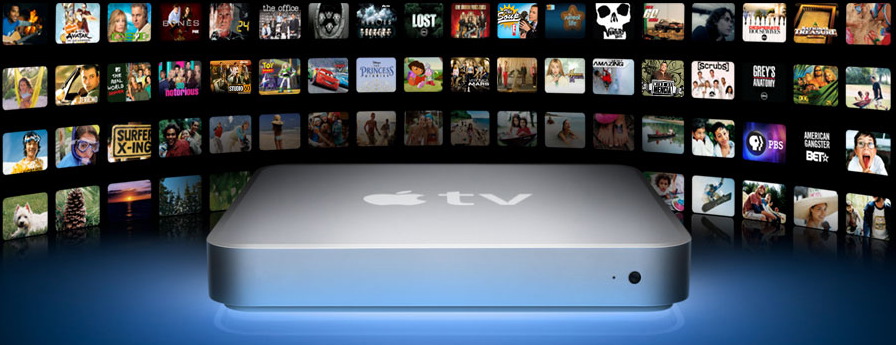
 Whenever I think of the AppleTV, I squeeze my eyes shut, click my heels three times, and say, “There’s no place like home. There’s no place like home. There’s no place like home.”
Where I go in my mind’s eye is the living room. I’m laying on the sofa watching television or a movie on a modest but impressive 42-inch plasma display. At the heart of my home theater, the device running the whole operation, is the AppleTV. I download from the Internet the TV shows or movies I buy, rent, or request on demand in high-definition. I record one show while watching another. I watch Internet TV programs on “stations” like Joost, YouTube, or MySpace.
Then I wake up. This is no Oz.
The elegantly designed, low-profile AppleTV sits unobtrusively next to my Samsung display. To the right of it is the incredibly ugly, obtrusive set-top box given to me by my service provider, Verizon. Right now, I need both devices — and the DVD player in the cabinet below.
I wish I needed only one. The reality — my Kansas — is that Generation One of the AppleTV falls short of meeting my needs and expectations and those of many other home entertainment enthusiasts. We still need all these devices in our living rooms, or we plunge down the rabbit hole of buying media servers or building our own. To me, the AppleTV is wonderfully simple to use but deliberately crippled, underperforms, and overall is a disappointment, all things considered.
And yet it drips with potential and promise. This is what interests me. I believe that Apple — the company that brought us the iPod, iTunes, the iTunes Music Store, and the iPhone, not the company that gave us Lisa or the Newton — has a plan and roadmap for AppleTV. What we are seeing here is Generation One, just like there was an initial release of the iPod, which led to the iPod and iTunes for Windows computers, to color displays, photographs, video, and some might argue the iPhone.
Where will AppleTV go next?
But first, Generation One.
Out of the Box
One of the things that attracted me to the AppleTV was the promise of ease of setup, ease of use, and convenience. I had been researching Windows Media Center computers, buying an off-brand media center, or building my own by using an old laptop or a Mac Mini. Ultimately, I decided I just didn’t want to mess with the hassle of buying and setting up a Media Center computer or building my own. I just don’t have the time (or money).
Another consideration was important. I am not the only one who uses the home entertainment equipment in the living room. My wife and kid control the clicker, and unless the user experience for the DIY media center was butt simple they’d never use it or would complain until my ears bled.
We already purchase TV shows from the iTMS that we missed recording on the DVR, and I previously had bought season passes for “Bones,” “Eureka”, and “Psych” when I got sucked into the whole video-on-the-iPod-thing. I’d transfer these to the iPod and hook it up to the TV to watch on the larger screen.
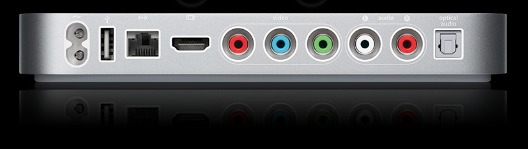 So it made sense to try the $299 AppleTV. As promised, the AppleTV was amazingly simple to hook up to my television and network. I provided the network security information as requested, fired up iTunes, and began transferring or streaming content within 15 minutes without reading the instructions. It does, however, take a while to move gigabytes of data over a wireless network (I use both an 802.11g and n network).
Do note as well that you will need the right kind of television — either an HDTV or a fairly-new standard television that uses Component video cables. Also, you will need to purchase, or have on hand, the needed cables to hook up the AppleTV to your set. (See Macworld’s AppleTV coverage for assistance.)
Months of Use
After months of use I am reasonably satisfied with what the AppleTV delivers, but I am probably more forgiving than most home entertainment aficionados. A few observations:
Ease of use: stunningly simple. The AppleTV’s main interface is clutter-free: You have a choice of Movies, TV Shows, YouTube (new to version 1.1), Music, Podcasts, Settings, and Sources. As I had hoped would happen, my wife and kid use the AppleTV without pestering me with questions and criticisms, although I am the one who manages the content.
Quality: for me, acceptable; for you, I’m not so sure. One of the biggest issues of the AppleTV is it’s capable of playing HD content, there’s just little of it on the iTMS. This is a deal-breaker for many who want to buy an AppleTV but won’t because the quality isn’t up to their HD standards.
Even so, I was surprised by the overall quality of the AppleTV. The shows I downloaded from the iTMS were a bit fuzzy, especially the ones encoded at 320 by 240 before Apple began encoding content at 640 by 480. But after spending years with a standard television I didn’t care that the show quality was not high-definition. I’ll watch HD on the HD channels and near HD quality on an up-converted DVD player. For now.
Additionally, the TV shows and movies I ripped and prepared for the AppleTV were surprisingly good, even though there was some loss of quality during the encoding process. The only content of questionable, borderline unwatchable quality for me were TV shows and movies I downloaded from the Internet and YouTube.
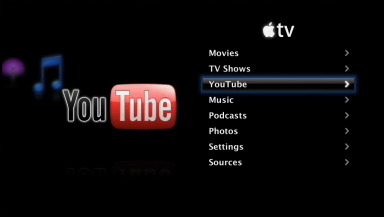 YouTube: Speaking of YouTube, I find Apple’s inclusion of it profoundly important, depending on what the company does with it. For the first time, non-network, non-commercial content is delivered into my living room. The quality is much like YouTube itself: most of the content is decent, although not spectacular. I expect this will improve over time.
Photography: One AppleTV feature that’s a big hit with me, and many others, is the photo capabilities. I created a Photo Album in iPhoto for all the images I wanted displayed on the AppleTV — I don’t want to eat up precious had drive space with 10,000 photos, when 500 will do. I select Photos from the main interface and all of the images are displayed in the slideshow format I designate.
Older TVs: Many people have older TVs and cannot use an AppleTV. This sucks. But I believe Apple put a stake in the ground and is out front on this issue. Most TVs being sold are digital now, and television itself is expected to go to digital broadcasting in 2009. So why should Apple look backward?
Not much HD content: Yes, agreed. But I cannot believe that Apple would introduce the Apple TV without high-definition content in mind. If not, the AppleTV flops.
No downloading of content: This is another annoying non-feature of the AppleTV. For now, I cannot download the movie of the trailer I am watching from the iTMS. I cannot download directly to the AppleTV the most recent episode of “Lost” without going through iTunes on my computer. I’m certain that this is a complex process, involving many components, and over time it will be solved and made available to consumers.
No downloading of rentals: Add this to the annoying non-feature list as well. While many people buy and collect DVDs, just as many if not more rent TV shows and movies from services such as Netflix. It’s been long rumored that the iTMS will eventually offer movie rentals once, I suspect, when the support systems are in place and functioning.
No DVR capabilities: This is a tricky one as Apple would face a slew of DRM issues, not to mention wrath of the studios. Add dual tuner capabilities (allowing you to watch one show while recording another) and AppleTV could be the big winner. Smaller companies are nibbling around the edges of this, but no major player has taken the step fully. Sony is rumored to be thinking about adding such capability to the PlayStation 3.
Encoding: Third-party software exists that allows you to rip the TV shows and movies you own on DVD to formats compatible with the AppleTV, but these are time consuming to use and manage. It would make life so much easier if we could just download the most popular shows and movies we watch from iTunes and the Internet.
Generation Two
So we’re back to the original question: What’s next? It’s been long rumored that Apple will take care of some, if not all, of the above issues. But no one except for Steve Jobs and his Apple Gang can really answer this, although there are a few clues out there:
 The Apple home: Apple has dropped “Computer” from its name. Not only does it manufacturer Mac desktop and laptop computers, but it also gains more than 50 percent of its revenue now from iPods and iPod accessories, and this does not include AppleTV or the iPhone. Apple now has a variety of well-designed products positioned in homes to truly deliver the digital lifestyle in a coordinated, systematic manner.
Google influence: Adding Google’s YouTube to the AppleTV and the iPhone is just a start. Google CEO Eric Schmidt and Google advisor Al Gore are on Apple’s board of directors. There’s a history of collaboration between the two companies. What are they working on now? Can Google help store, deliver, and provide the tools such as search for downloadable video into the living room?
Are the numbers soft on purpose? Many Apple fans are concerned that the AppleTV has been overshadowed by the introduction of the iPhone and that Jobs once referred to the AppleTV as a “hobby.” There’s little doubt that the speculated numbers of units sold — ranging between 200,000 and 300,000 — seems soft and unimpressive.
But I get the feeling that Apple has not unleashed the full potential of the AppleTV because its ecosystem, like the one developed for the iPod, isn’t fully in place.

Thanks, very interesting and elaborate review.
Another great article Daniel. Really enjoyed it. I hope that some engineers over at Apple will take the time to read this review and wishlist – as it highlights a lot of my thoughts on the unit as well.
Hi Daniel,
You observation about Apple TV are certainly interesting and I particularly like your comments about the nurturing of an Apple ecosystem. This is certainly the thinking over at Apple as creating a single media interface in the living room is the holy grail for an eclectic and sometimes surprising variety of companies. This is evidence of that tired old, but true cliche; digital convergence,and is part of their long term ambition to connect all Apple devices together in a symbiotic relationship across all platforms. This would create a very strong combination of services that follows a successful trend of selling media and communication services in bundles. However, there are a number of obstacles that will need to negotiate around if they are going to be a major media network of the future. One of those obstacles is that Apple has committed much of its future to turning out outstanding and almost revolutionary devices. This is a tricky path as whilst Apple has transformed itself by creating the iPod and iTunes to feed it with, the pressure to keep producing outstanding products and sell them in meaningful volumes in a very competitive market is gargantuan.
The future of ‘television’ on the internet will be shaped by the inclusive and agnostic nature of the network which is the opposite direction to that chosen by Apple. The direction of internet TV is towards creating the most amount of quality connections between content providers and consumers. This means operating on the most widely adopted common standards which is never going to be Apple. The company has been catapulted back in to pole position in many ways but it can never dominate the wider internet television market globally. That position is reserved for a revolutionary move by a pure play operator and not a device retailer. Sorry Steve!
The future you describe may not be possible on a current Apple TV but it sure is on a Mac Mini – I’m living it right now!
With a Mac Mini attached to a 42″ LCD TV via HDMI, I can watch any downloaded content, via FrontRow, iTunes, Miro, Joost, YouTube, in Quicktime, DivX, Windows Media, whatever really. It has a player for standard DVDs, and coupled with a USB Elgato TV tuner I can get HDTV and PVR functions. Most of this is driveable via the Apple Remote, although a wireless keyboard with built-in trackball is a lovely complement to the remote.
It can also rip CDs/DVDs, encode to other formats, act as a NAS and streaming server for all the other machines in the house, sync the iPod and so much more. Did I mention web browsing at 1920×1080?
The Apple TV is great, but when I thought of what I could achieve on the Mini, I just started saving, saving, saving those extra pennies, and now I have skipped straight to the end of the yellow brick road instead of having to wait for the Apple TV to mature over the next 3-5 years.
If people are looking for good HD content for their Apple TVs, there is a fairly long list of free vidcasts and the links to download them over at the Apple TV and HD Podcasts site http://atvhd.blogspot.com/
Well first things first, let it also play our existing content for a more minimal AV home set-up; http://farm2.static.flickr.com/1401/783814490_986cdf248b_o.png
Daniel, I just wanted to let you know that though there are no HD content available on iTunes yet, there are HD podcasts available for download.
My site, http://appletvsource.com, has an extensive compilation of HD podcasts available on iTunes. You can check it out under the Downloads menu.
How about better integration with the Internet, as in support for more filetypes. Does it support flash video (flv)?
I guess I am the only one here who cares about audio. As it stands, Apple TV is not capable of discrete surround sound (without resorting to funky hacks anyway… I like to keep my Apple TV pure). And there is also the issue of missing subtitle support.
Daniel,
Good stuff!
Turns out a few months back we built a fake roadmap (we call it “Faux’dmap”) for the future of AppleTV that takes into consideration a lot of the things you’d like to see (high def video on iTunes, rentals on iTunes) and a few other features like DVR and auto-sync to iPod/iPhone through an integrated dock, and eventually the ability to legally rip DVDs and play them on future AppleTVs.
Link: http://packetswitchedpress.com/2007/03/fauxdmaps-appletv-and-itunes.html
Enjoy!
1080p, the ability to play MPEG2 natively without transcoding, and the ability to play DivX/XviD. Presto! Winner.
Why? I can rip my DVDs to my Mac without transcoding, and stream them to the AppleTV. This is the functional equivalent of ripping CDs in iTunes for the iPod.
Great article. I would love for Itunes to offer HD movie rentals, it would be great.
My problem with the AppleTV is that it can’t playback 1080/30p video. It goes only up to 720/24p and that’s just not good enough for my home videos, as my consumer Canon HV20 camcorder is able to record in 1080p and so it’s a shame to not be able to view my own videos in full HD (I export as 1920×1080 progressive, 30 fps).
Nice Read. I thought about getting an Apple TV for about 3 seconds. I ended up building my own Media Center PC using a barebone Shuttle kit and an old AMD X2 CPU. I absolutely LOVE IT! I have been using Magic DVD Ripper to rip my DVDs into Mpeg 2 Format. Takes about 5 to 10 minutes per DVD. Now I have a huge on Demand Library of Movies, I can look at photos, I can download content from the net, I even watched some Apple Movie Trailers in HD using Itunes. My next upgrade will be a Blue-Ray Drive for true HD Videos. I have 2 500 GB Drives, so storage is not a problem. You never hear this, but Apple should look at MCE, and take a few notes.
Apple TV will be the sleeper product
People buy technology or even non tecbnology products for their use and functionality
Apple products have always stood out for their functionality and intuitive nature
Perhaps it is to steve jobs
Perhaps it is for the whole Apple Computer mindset and philosphy of the Apple culture
Regardless Apple products are the popular standards in their area both for ease of use and proper marketing
Look at the ipod and the overwhelming ipod market share in the lucrative mp3 player market as an example[
a very informative piece. nice to see some-one constructively criticising a product instead of just ripping it apart. well written, with good insight.
One HUGE, glaring horrible flaw in the AppleTV and iTunes (and virtually ALL online video sources) is that they do not include closed captions or subtitles for the hearing impaired. It is true that MOST people in the US can hear just fine and do not need captions, but without them a portion of the population is shut out. Apple uses the argument that it is difficult to do subtitles. That is absolute BS. Do you really believe that TVs made in the 80’s are technically capable of something that Apple can’t do today? Their argument is actually that it would be hard to show captions on an iPod screen. Wow. Brilliant. Can’t put text on an iPod screen so they refuse to do it on the AppleTV which is hooked to a TV.
Sadly, it will require government action to force the industry (not just Apple) to add closed captioning. That’s what happened with televisions. Like 20 years ago…
As much as I hate to give credit to Microsoft for anything, I have to give credit where credit is due… Media Center handles Closed Captions very well. My beef with them is that they lose the captions if you burn a recorded show to DVD.
Like Rich I evaluated the AppleTV and went with a PC based Vista Home Premium (with Media Center). I got a refurbished Compaq from Frys for $299. Doesn’t have a great video card, but it does play standard def recorded television great. For a remote I use an XBox 360 controller and plan to add the thumbpad keyboard attachment when it is released next month. Bottom line is I have an upgradeable system that does closed captions.
Like I said MOST people are fine without closed captions, but SOME people are lost without them…
@Jeffa good point re: closed captions. Though not all content would add them, the option should exist.
There is a huge community working to make the AppleTV better and they have released instructions for the rest of us. I am able to watch avi, divx/xvid, on my AppleTV. 5.1 sound has also been implemented, USB disk to extend the capacity although I prefer to access the hard drive through my wireless network (works perfectly on the Apple Extreme Base Station), just google appleTV wiki and your investment will increase its worth…
Has anyone noticed the new wireless keyboard is rather small and doesn’t make much since for desktop use. It seems to scream couch surfer. I believe the future of AppleTV is in that keyboard which could open all kinds of opportunies(email, web browsing….entering password for itunes?).
Alfa, now that you mentioned the new Bluetooth keyboard, I just couldn’t help but write a reply.
I just got a new aluminum iMac for work on my web site, (gadgetaholic.com) and I don’t like the feel of the chicklet keyboard at all. Go down to the Apple Store and see if you like the feel of it.
Another thing, there is no Bluetooth functionality on the Apple TV. So I don’t think it will be of any use on the Apple TV.
No one has mentioned it, & I’m totally surprised, but the thing that I miss the most is the ability to set up playlists. Viewing one show & then being forced to go through the freaking menu again to select another show I want to watch is stupid. I should be able to schedule several tv shows or movies..
@Lancelot9201
I completely agree. This is even worse for short 3-4 minute video podcasts. Just *play all* please!
Mr. Langendorf,
You have made some very good and interesting points regarding the Apple TV. But, I have found that using a MAC Mini was much more rewarding, portable, and versatile. Not to mention the ease and affordability to work with digital photos, movies, music, the web, and it costs as little as $599.00.
While the Apple Mac has a ways to go before becoming a mainstream product, we can agree, our intent is to integrate our computer systems to our first love, the television.
Mp
http://www.gonzophoto.com/weblog/
I totally agree with the comments regarding the preferred MacMini configuration. My living room setup has one connected to my 42″ and surround sound system.
I recently got an Apple TV for my bedroom as I was tired of not being able to access the Mini’s content. Played iTunes music brilliantly straight out of the box and after installing the various plugins I had it playing back my DivXs. I definitely wouldn’t use it as a main entertainment hub but for a seperate room it’s perfectly suitable (albeit following tweaking).
Alfa, now that you mentioned the new Bluetooth keyboard, I just couldn't help but write a reply.
I just got a new aluminum iMac for work on my web site, (gadgetaholic.com) and I don't like the feel of the chicklet keyboard at all. Go down to the Apple Store and see if you like the feel of it.
Another thing, there is no Bluetooth functionality on the Apple TV. So I don't think it will be of any use on the Apple TV.
Alfa, now that you mentioned the new Bluetooth keyboard, I just couldn't help but write a reply.
I just got a new aluminum iMac for work on my web site, (gadgetaholic.com) and I don't like the feel of the chicklet keyboard at all. Go down to the Apple Store and see if you like the feel of it.
Another thing, there is no Bluetooth functionality on the Apple TV. So I don't think it will be of any use on the Apple TV.
Alfa, now that you mentioned the new Bluetooth keyboard, I just couldn't help but write a reply.
I just got a new aluminum iMac for work on my web site, (gadgetaholic.com) and I don't like the feel of the chicklet keyboard at all. Go down to the Apple Store and see if you like the feel of it.
Another thing, there is no Bluetooth functionality on the Apple TV. So I don't think it will be of any use on the Apple TV.
Ke mana saya pergi dalam mata pikiran saya adalah ruang tamu. Saya berbaring di sofa menonton televisi atau menonton film sederhana namun mengesankan slot deposit pulsa.