Posts Tagged ‘Google’

Free Sat Nav! Google Android 2.0 sticks it to TomTom, Garmin, Navigon and others

The next version of the Googe-led mobile OS – Android 2.0 – is already encroaching on the work of HTC, INQ, Palm, Motorola and others in the universal address book space, and now we learn that the search giant has an even bigger target in its sights: Satellite Navigation systems.

TechCrunch has published a short video of Google showing off the upcoming Google Maps Navigation, which offers free turn-by-turn navigation, along with other features such as text search, voice search, and sat nav versions of Street View and Satellite View. The app will only be available on phones running Android 2.0 or at least that’s what Google tells TechCrunch.

Update: Much more info over at the official Google Mobile blog.

Adobe Flash seen running on Palm Pre – Netbooks, MIDs, and other smartphones also set to win (iPhone aside)

Adobe has long talked up its ambition to have Flash running on all manner of screens, not just the humble PC, and today the company got a lot closer to walking the walk not just talking.
Through the Open Screen Project, Adobe was already known to be working with smartphone platforms from Palm (WebOS), Nokia (Symbian) and Microsoft (Windows Mobile), along with a raft of content providers, chip makers and consumer electronics companies. Today, the company added Google and Research In Motion to the list, with relation to Android and Blackberry-powered smartphones respectively, leaving Apple’s iPhone as the odd one out regarding planned support for full Flash (or any Flash support at all).

Continue reading »

Three things that I hate about Android #fail

Let me preface this by saying that there is a lot to like about Android and that the smartphones being powered by the Google-led OS are going to get better and better. I’m especially excited by the UI customization that HTC and Motorola, for example, have been developing on top of Android, testament to the mobile OS’s overall potential and, of course, openness.
(I’m expecting a loan of the social networking savvy HTC Hero later today, thanks to UK carrier Orange. A full review of the Hero should follow shortly.)

However, having lived with the Vodafone HTC Magic for a few months now, there are a few things that really bug me about the standard version of Android. Yes, this is going to be a bit of rant.

Continue reading »

Nokia dumps location-based service Friend View, falls in love with Facebook

During the opening keynote at Nokia World, which kicked off today, CEO Olli-Pekka Kallasvuo was at pains to point out that the handset maker didn’t view Internet “services” as an interesting side business but that it was still the future of the company.

And along with music, messaging and turn-by-turn navigation, location-aware social networking, which the company calls SoLo, and other types of location-based services are key to this future. After all, Nokia has invested heavily in GPS-related technologies and applications, the boldest example being the $8.1 billion purchase of Navteq in late 2007.

What was and still is unclear is how much of Nokia’s SoLo strategy involves building out its own social networking offerings or partnering with and supporting established social networks. With today’s announcement of a tie up with Facebook and with it the death of the company’s own ‘Friend View’, with regards to the simplest of ‘SoLo’ applications — share my current location with friends — the handset maker has seen sense and decided to do the latter.

Continue reading »

Thoughts on Google Chrome OS

chromeThe big news this week, of course, is that Google is developing its own Operating System dubbed Chrome OS. Cue the headlines about the search giant, once again, taking aim at Microsoft. And of course, on one level that’s absolutely correct. Just like any other newly launched OS needs to take market share away from Redmond in order to succeed. But it won’t be easy.
See also: Linux on a Netbook? Intel thinks its all about the User Interface

While Google says it wants to build an OS from the ground up in order to make it easier for users to get on the web and utilize web-based applications – and view more Google ads – managing user expectations will likely be the bigger challenge. For all the technical hurdles that Google will undoubtedly overcome – faster boot up times, greater security, support for next gen web standards (HTML 5 etc.) – weaning users off of Windows will be no easy task. The failure of existing Linux distros to become the defacto OS for Netbooks, despite getting a head start and backing from OEMs, doesn’t bode well for Chrome’s chances unless Google is able to redefine not just the OS but what users expect from their PCs.

Continue reading »

Review: HTC Magic (Google Ion, T-Mobile myTouch 3G)

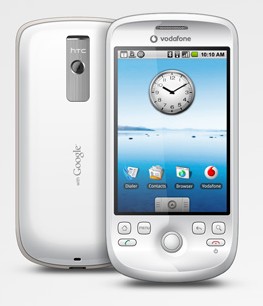
htc-magic-bothIt goes by many names. The HTC Magic on Vodafone here in the UK, Google Ion, when handed out as a freebie at the search giant’s developer conference, and the myTouch 3G on T-Mobile in the states. But, whichever way you slice it, the second Android-powered Google phone, manufactured by HTC, is an improvement over the original T-Mobile G1 in almost every way.
Where the original G1 is clunky, in part due to its death-trap of a slide-out keyboard – OK I exaggerate but only slightly – the HTC Magic is relatively slim with subtle curves and a much reduced “chin”, which is a universal complaint of the G1.

Continue reading »

Google, Android and the future of Netbooks

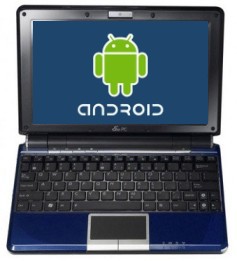
According to a flurry of reports, a number of established PC manufacturers – and new entrants – are planning to release a Netbook running Google’s Android operating system. However, recent comments made by the search giant’s CEO Eric Schmidt, suggest that Google isn’t particularly interested in seeing Android running on a Netbook – at least not yet, anyway – but is excited by the opportunities that these low-cost sub notebooks present.
Not only are Netbooks sales making Google take notice, their primary use case – surfing the web and accessing other Internet applications – fits perfectly with the company’s own ‘cloud computing’ vision (think Google Docs, Gmail and other Google services). “Keep an eye on this space”, attendees at a recent Google press event were told by Schmidt. So if not Android, what exactly does the company plan to bring to the Netbook experience?

Continue reading »

Google Latitude shows what’s wrong with Nokia’s social location (SoLo) strategy

If the next frontier is mobile, a key battle ground is going to be location-based services. And, drilling down further, location-based social networking, such as the ability to share your current location with friends. Yesterday, Google went head-to-head with Nokia and a plethora of startups with such an application. Called Latitude, the Google Map-powered software enables users to keep track of where their friends are and what they’re up to. Sort of like Twitter, IM and GPS rolled into one.

If that sounds a lot like Nokia’s Friend View and, more broadly, the handset maker’s social location strategy (SoLo), that’s because it is. But there’s one significant difference: despite investing heavily in its own mobile operating system, Google Latitude has launched simultaneously on multiple mobile platforms: Blackberry, S60, Windows Mobile, and Google’s own Android. iPhone support should also arrive soon, says the company. In comparison, like other Nokia web services, Friend View is only available on S60 and targeted solely at Nokia’s own cell phones.

Continue reading »

Hands on with the Google phone: a solid device that won’t unseat the iPhone

I kind of felt like I was cheating on my wife — in this case an iPhone — when I checked out the new Google phone the other day at a T-Mobile store. I must admit I was seduced.

After more than a year of writing about the so-called Google phone and the Android mobile operating system, I actually held one in my hands. The G1, as it is known, called to me. It wasn’t as poorly manufactured as I feared it might be; its display was bright, crisp and intoxicating; its operating system seemed fun and promising.

At first blush, I was smitten. But as in any relationship, the more time you spend with someone — or in this case something — the more you learn.

What I learned about the G1 I’m sharing with you. Like the wise Om Malik, I prefer a less formal review format because there are many fine reviewers out there who’ve been testing the G1 for weeks. Like Uncle Walt from the Wall Street Journal. Or David Pogue at The New York Times. And all the usual gadget and mobile blogs.

I tend to focus on the user experience of any product, which in this case is important as the G1’s chief competitor, Apple’s iPhone, seemingly has cornered the market on usability and consumer imagination. Since the release of the iPhone 3G in July, Apple has sold nearly seven million phones this quarter.

For the so-called Google phone to reach that kind of success, it must complete with Apple on the user experience battlefield, not just over features and functions. This will be harder for the G1 because it has three parents, not one like the iPhone.

There’s Google, developer of Android.

There’s HTC, the manufacturer.

And there’s T-Mobile, the carrier.

In the near future, other manufacturers and carriers will be involved with the development of Google phones. All of them will provide different interpretations of Android with new features and functions and user experiences. Will they rival that of the iPhone? Or will they become another, albeit solid, contender?

We have our first answer.

Continue reading »

Google’s big bet: Android beyond the cellphone

Much of the iPod’s success, says Steve Jobs, is down to the fact that Japanese consumer electronics companies don’t produce elegant software. He makes the same accusation of handset makers too. They can do hardware but they “just can’t seem to get the software right.” Enter Android, Google’s open source OS, which although explicitly designed to deliver better software for Internet-connected cellphones, will also soon find its way onto all manner of devices.

“Over the last few weeks I have learned that numerous companies are tinkering with Android in an attempt to get the OS to power a whole slew of gadgets — everything from set-top boxes to navigation systems to mobile Internet devices to smart picture frames”, reports Om Malik.

Motorola have already confirmed that it has at least one Android-powered handset in the pipeline, but the company is also a major player in the television set-top box space and is said to be exploring the potential of Android in the living room too. Malik also says he’s heard from “fairly reliable sources” that two large PC makers are experimenting with Android-based Internet devices. None of which I find surprising. From both a technical and business point of view, Google has laid the foundations for Android to move quickly beyond its cellphone roots and, the company hopes, eventually become a ubiquitous platform.

Continue reading »

YouTube adds select TV shows from CBS; takes aim at Hulu for long-form video content

We wouldn’t call YouTube a sleeping giant necessarily, but when it comes to long-form video the world’s dominant video-sharing site certainly seems to be cat-napping.

Other sites such as Hulu, the joint venture between Fox and NBC, have been getting much of the long-form video attention and name recognition, whereas YouTube remains known for short-form content that lasts 10 minutes or less.

Google, YouTube’s parent, is seeking to change this as it has added select full-length content from CBS in an attempt to take on Hulu and attract other network content to YouTube. [YouTube blog]

Available full-length shows include 20- to 48-minute episodes from CBS’s past and present lineup, including “Star Trek,” “MacGyver,” and “Beverly Hills 90210.” The season premiers of “Dexter” and “Californication” and current episodes of “Young and Restless” will also be shown on YouTube.

Continue reading »

First look: YouTube’s e-commerce leaves lots of room for improvement

In an effort to make money from YouTube, Google introduced this week an e-commerce component to the popular video-sharing site that allows users to click buttons to buy music, video, and games from iTunes or Amazon.

The idea has merit, but its execution — at least in this early stage — is in need of improvement. It’s not unlike other Google initial-release products.

Here’s how it works: The Good

Say you’re messing around on YouTube and you watch a video from an artist you like — Katy Perry or Raphael Saadiq. Just underneath the video, below the ratings and the sharing and social network links, there are two buttons to download the song or video from Amazon’s MP3 store or iTunes.

Clicking on either one takes  you directly to the song at either store. The purchase process is exactly what you’re used to at AmazonMP3 or iTunes.

“If you like the song,  you don’t need to leave Google or leave the site to buy it,” Bakari Brock, business affairs counsel at  YouTube, told The New York Times. [See also Advertising Age]

That’s not exactly true. Clicking on Amazon, of course, takes you to AmazonMP3, while clicking on iTunes takes you to, naturally, iTunes. But you still leave YouTube, although the page you were viewing remains intact.

Continue reading »