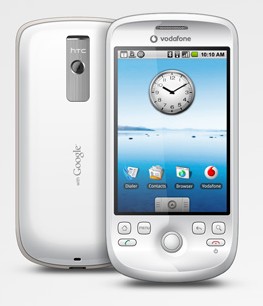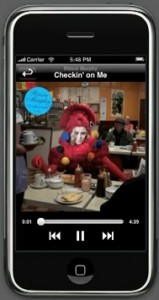
It seems that Adobe is well on track to deliver a version of Flash 10 for smartphones, with the first beta release due this October. Adobe President and CEO Shantanu Naraye said as much during the company’s latest earnings call, as well as revealing that “multiple partners have already received early versions of this release…”.
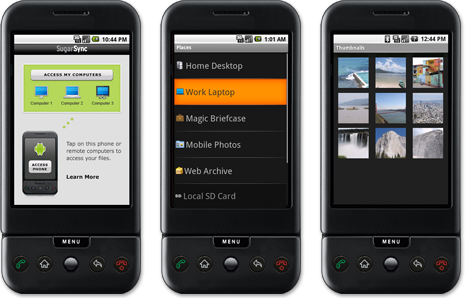
Naraye then goes on to name names, citing Android, Nokia’s Symbian, Windows Mobile and Palm’s WebOS as among the first smartphones to “support web browsing with the newsest Flash player.”
On the day that Intel secured the right from Psion to legally use the trademarked term Netbook, rival chip designer Qualcomm is pushing a “new” category of mobile device, which the company is calling a Smartbook. As a marketing term, like the Netbook before it, the Smartbook definitely has legs. It’s new, catchy and yet derivative enough of existing product categories so as not to scare off consumers. But beyond marketing, what exactly separates a Smartbook from a Netbook and other ultra-mobile laptops before it?
Here’s Qualcomm’s own definition:
Smartbooks are a new class of devices running mobile operating systems that bridge the functional divide between smartphones and laptops, delivering the best aspects of a smartphone experience on a larger-display form factor. Constantly connected via 3G, Wi-Fi and GPS , smartbooks are ultra-portable, personalizable, easy-to-use and last all day on a single battery charge.
In other words a Smartbook is similar to a Netbook, except it runs a mobile operating system rather than a conventional desktop OS, such as Windows or one of the various desktop flavors of Linux.
May 29th, 2009 | Posted in Mobile, Net TV | Comments Off
Here are few links for some Friday/weekend reading. All Internet TV-related.
Next-gen HDMI Turns your TV into an Internet Hub. New HDMI standard to carry Ethernet connectivity meaning that an Internet-connected TV could act as a hub: “Instead of a having tangled mess of cables behind your TV, the HDTV itself will act as an Internet hub for all those wired goodies in your living room.” (PC World)
Video recording on G1 (Cupcake update). New version of Google’s Android mobile OS adds video recording capability, paving the way for support for live video streaming services, such as Qik. (Digitalwerks)
Sony Ericsson’s PlayNow Arena movie download service ready for June launch. “Direct on-phone downloads over WiFi or 3G would be awesome, but as most of these services tend to operate, PlayNow Arena will require that users select and download movies on their PCs, cable up their phones, and transfer the media the old-fashioned way…” (Engadget Mobile)
The Streaming Content Is There, Just Not Enough People Watching It — Yet. Dan Rayburn gives a great overview of the limited penetration of Internet TV services and hardware. (GigaOm)
D7 Video: Pure Digital Demo. Pure Digital (Flip) have demoed a new online video sharing site that aims to be easier to use than YouTube for sharing and viewing home videos with friends and family. A range of playback devices are said to be supported not just a PC. (AllThingsD)
May 28th, 2009 | Posted in Audio, Mobile | Comments Off
Spotify on the Google phone
Music streaming service Spotify already offers a very compelling desktop experience. The Mac and Windows client features the familiar iTunes-esque User Interface, a fast growing music catalogue and the ad-supported free-ness that is so popular with users who otherwise might source their music from P2P filesharing networks. That’s all well and good but ad revenue alone is unlikely to generate enough revenue for Spotify to stay in business. Instead, the company is hoping that over time enough users will opt for the monthly paid-for subscription version and it’s here that mobile could be key.
Although it hasn’t been confirmed as such, Archos is hinting that it will unveil its first Android powered Mobile Internet Device (MID) at press event to be held in Paris on June the 11th. The company isn’t actually using the MID moniker and instead refers to said device as an Internet Media Tablet, emphasizing its support for a range of audio and video codecs, including High Definition video playback, along with the ability to surf the web and access other Internet-based content.
Perhaps unsurprisingly, the use of Android brings telephony support to the table and, presumably, third-party applications downloadable from the Android Market app store.
Other than that, the device is said to sport a 5 inch touch screen, use TI’s OMAP 3 processor (the chip used to power Palm’s soon-to-be-released Pre smartphone), 3.5G connectivity, support for Adobe Flash, and provide up to 7 hours of video playback.
Despite my skepticism of Android’s commercial potential running on a traditional Netbook, I think touch screen-based MIDs are a much more natural fit as they share a lot more heritage with smartphones (Android’s primary target). Additionally, one of my criticisms of existing MIDs, such as Nokia’s N810, is their lack of cellular connectivity – instead relying solely on WiFi – something that Archos’ upcoming Android device will address.
According to a flurry of reports, a number of established PC manufacturers – and new entrants – are planning to release a Netbook running Google’s Android operating system. However, recent comments made by the search giant’s CEO Eric Schmidt, suggest that Google isn’t particularly interested in seeing Android running on a Netbook – at least not yet, anyway – but is excited by the opportunities that these low-cost sub notebooks present.
Not only are Netbooks sales making Google take notice, their primary use case – surfing the web and accessing other Internet applications – fits perfectly with the company’s own ‘cloud computing’ vision (think Google Docs, Gmail and other Google services). “Keep an eye on this space”, attendees at a recent Google press event were told by Schmidt. So if not Android, what exactly does the company plan to bring to the Netbook experience?
At last there’s some real competition among phones running Google’s Android OS, with Samsung announcing its first “Gphone”, the unimaginatively named i7500, which should see a European release in June (no word yet on U.S. availability).
Despite Samsung being one of the first major handset makers to join the Google-led Open Handset Alliance, it was left to Taiwanese HTC, working closely with T-Mobile and Google itself, to release the first Android phone called the G1 (see our review). And although the Android OS impressed, particularly its fast and elegant web browser, the G1’s hardware was disappointing to say the least. The device is chunky, has a sub-par camera, and the phone’s battery life doesn’t tally with Android’s always-on connectivity. HTC’s follow-up, the Magic, looks to be an improvement over the G1, although I’ve yet to have a hands-on with the device so can’t say for sure. Enter Samsung’s i7500, which on paper at least, has a number of things going for it.
I’ve written before about Android’s potential to power a range of consumer electronics, such as set-top boxes, media players and Mobile Internet Devices (see Google’s big bet: Android beyond the cellphone). However, one product category where I think the mobile OS will have a tough time competing is the ‘traditional’ Netbook.
(Note: I’m referring specifically to low cost sub notebooks such as those from the likes of Asus, MSI, Dell, Acer and HP, which feature a clam shell design and typically sport a screen size of between 7 and 10 inches.)
And although that seems contradictory considering Android’s low power footprint and Linux roots, coupled with its standard-based and speedy web browser, let me explain why…
March 11th, 2009 | Posted in Mobile | Comments Off
Apparently, the T-Mobile G1 now accounts for 20% of the carrier’s contract sales here in the UK, a figure that I find quite surprising considering I’ve yet to see a single handset in the wild (aside from on display) nor do I know anybody who’s bought one. This is in complete contrast to Apple’s iPhone, which seems to have spread like wild fire amongst my own social circle, and is quite a common site out in public.
The G1’s lack of visibility, I’d mistakenly attributed to poor sales, based on what I still believe has been lackluster marketing and a rather muddled ad campaign – something that can’t be said of the iPhone. Back in November I noted the lack of display advertising for the G1 at Carphone Warehouse, one of the UK’s largest mobile retailers on the high street. However, today I popped into a PC World, of all places, to find the G1 being heavily promoted, with a much clearer message than the current TV ad campaign: “The phone that’s built for the internet. All your favorite Google services are already on board”. A message that appears to be getting through.
December 10th, 2008 | Posted in Mobile | Comments Off
Sadly, my T-Mobile G1 – the so-called Google phone powered by the Android OS — has to be returned tomorrow (it was only a one week loan) but at least we know that there’s plenty more to come.
The Open Handset Alliance (OHA), the industry consortium setup to oversee and lend support to the Google-led Android mobile operating system, has added 14 new members. The most notable of which are Sony Ericsson, who have reportedly confirmed that a new high end device powered by Android will be released next year, alongside mobile carrier Vodafone, as well as Garmin, who’ll likely utilize Android in a new GPS-based navigational device rather than a cell phone.
We already knew that the iPhone’s App Store has been a resounding success. And that’s before Apple began running newspaper ads boasting of 10,000 apps available and 300 million downloads since its launch just five months ago. Part of that success can be attributed to the way in which the iPhone as a platform has galvanized developers, while a second major factor is the simplicity of the App Store itself. For example, don’t underestimate the significance of having the store bundled with the handset, supported by over-the-air downloads. The result is that Apple has popularized the notion of third-party software on a mobile phone like never before — how many people do you know with a smartphone from Nokia, RIM or others, who haven’t installed a single third-party application?
While attracting developers is easier said than done, creating an App Store equivalent, especially in hindsight, should be a no brainer. Having spent nearly a week with the T-Mobile G1 — the so-called GPhone — I’m glad to report that Google has done a good job replicating the iPhone experience with the Android Market.
I’ve been playing with the T-Mobile G1 for a few days now — the so-called Google phone — and I’m really impressed with the Android operating system. The touch-friendly User Interface is intuitive and very responsive, although not as ‘pretty’ as the iPhone, an inevitable comparison. And the included suite of native Google apps (Gmail, Google Maps and YouTube), along with the expanding list of third-party software available through the Android Marketplace, already make the G1 a very capable device — my only caveat so far is the drain on battery life that Android’s always-on connectivity and the G1’s large screen seems to impose.
However, where Android really rocks is the bundled web browser. It’s fast, renders the full web flawlessly (aside from the lack of Flash support), and does a fantastic job of re-flowing text when you zoom in on a specific part of a web page, therefore eliminating the need for horizontal scrolling despite browsing on such a small screen. If the mobile browser is more important than the operating system, then Android has it covered. This is a really big deal in my opinion and good news for mobile web developers everywhere, since we’ll see a plethora of Android-based phones release next year and beyond, at a very competitive range of price points.
View a short video I shot of the T-Mobile G1’s Android web browser in action after the jump…