
Archive for the ‘Net TV’ Category

Zattoo – live TV on your PC

Zattoo - live TV on your PCZattoo is an Internet TV service which, like Joost and Babelgum, utilizes peer-to-peer technology to deliver streaming video to a PC. However, that’s where most of the similarities end. For a start, Zattoo isn’t an on-demand affair, and instead offers live streaming of existing ‘over-the-air’ and cable channels. And rather than attempting to re-create the lean-back experience of traditional television, the service is more at home used in a multi-tasking environment, where users watch television in one window on their computer, while accomplishing other tasks in another, such as chatting to friends over IM, surfing the web or writing email.

Continue reading »

Jaman to release first commercial AppleTV hack

Jaman to release first commercial AppleTV hackJaman, which sells high definition movie downloads (rental and to-own), has announced that it will soon be releasing a plug-in for the AppleTV. With the software installed, Jaman movies will appear as a new menu option alongside existing content choices, which include television shows and movies downloaded via Apple’s own iTunes store. Although hackers have already had success adding new features to Apple’s set-top-box, this is the first known effort by a commercial company aiming to plug their service into the device to create a level playing field with Apple’s own content offerings.

Continue reading »

Vuze – an indie-friendly video distribution platform

iTunes video meets BitTorrentVuze is an application for Mac or PC that allows users to search, browse, and download ‘near DVD’ and HD quality video content, using the peer-to-peer protocol, BitTorrent. In particular the company is pitching the platform as a way for independent video and film producers to distribute their content to millions of users — at no cost — and with a higher picture quality than other competing services. In addition to being an open platform where anybody can publish their content, Vuze has signed licensing deals with a number of larger players, such as the BBC, A&E, and Showtime, who are offering paid-for content (rental and to-own). Curiously, Vuze is also being used to distribute music and computer games.

Continue reading »

Neuros' open set-top-box

Neuros’ open set-top-boxMedia streaming boxes such as the AppleTV, XBox 360, PS3, and products from Netgear, do a varying job of bridging the gap between the PC and television, as well as in some cases, delivering Internet content directly into the living room. But all are closed systems. The result of which is that users are left trying to hack these devices against the wishes of manufacturers (see our post ‘When will Steve Jobs open up the AppleTV?‘) or have to make-do with whatever official features are implemented. Bucking this trend, Neuros is taking a wholly different approach, and has open-sourced the firmware for it’s Neuros OSD media-center, meaning that anybody is free to write add-ons that extend the device’s functionality.
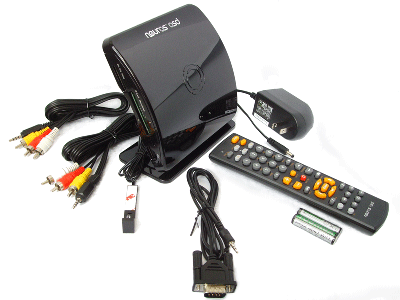
Neuros’ open set-top-box

The Neuros OSD is a versatile box that can act as a Digital Video Recorder capable of recording from virtually any source (cable or satellite TV, DVD, DVR/TiVoTM, VCR, game console, camcorder, etc), as well as stream and share video, music and photos between various devices including home entertainment centers, PCs and portables such as laptops, iPods, smartphones, and the PSP.

Continue reading »

YouTube represents 10% of North American Internet traffic

YouTube logoYouTube accounts for ten percent of all North American Internet traffic, according to a recent report (PDF) by Ellacoya Networks. Based on data of approximately one million broadband subscribers in North America, the study also revealed that — bucking a four year trend — HTTP traffic now surpasses that of p2p, largely due to the proliferation of video streaming sites such as YouTube. Remember that for years it has been p2p traffic that’s dominated broadband usage, as users download pirated music and movies over p2p file-sharing networks.

Continue reading »

BBC's Internet TV catch-up-service could face European Commision scrutiny

BBC logoThe Open Source Consortium (OSC) is threatening to lodge a complaint with the European Commision over the BBC’s soon-to-be launched iPlayer. The UK-only Internet TV catch-up service utilizes Microsoft’s DRM technology, and so won’t work on non-Windows operating systems such as Mac or Linux, which, the OSC says, will force viewers to buy or use a PC, giving Microsoft an unfair and uncompetitive advantage.


Although the decision on what operating systems to support is usually a commercial one, the BBC faces wider criticism because of its public service broadcaster status, and the fact that the corporation is funded by British tax payers.

Continue reading »

RealPlayer 11 Beta goes public

RealPlayer logoThe Beta version of Real’s latest media player, RealPlayer 11, is now available for download from the company’s website. We previously wrote an extensive review of the software, noting its flagship feature: the ability to download and save online video from virtually any website.

While it will be hard for RealPlayer to shake off its poor reputation, there’s much to like about version 11. The new interface and jukebox functionality has been appropriately borrowed from iTunes, and the ability to download and save videos from the web, not only works well, but should prove popular with users who want to build their own personal video collection.

In a later post, we followed up by asking whether Real’s new download feature might actually encourage online video producers to use more DRM.

Now you can try out the new version for yourself, available from Real’s site. (Note: this is a Beta version and users are already noting issues and complaining that it’s hard to find and re-install the previous version.)

Five resources to create a Wii media center

Nintendo Wii consoleIn a recent guest post, Tim Robertson looked at the Wii’s media handling capabilities and concluded that the Wii is no media center, lacking the ability to stream photos, videos or music over a home network. On the plus side, Nintendo’s latest console does have a fully-fledged web browser capable of accessing flash-based audio and video from sites like YouTube.

Finally biting the bullet, early last week I bought myself a Wii, and in between golf and tennis sessions I decided to try and push the limits of the console’s media-playback functionality. After a bit of research and with the help of a number of web sites optimized for the Wii and a few software downloads, I was able to fudge together a fairly capable Wii-based media center.

Here are five applications and websites needed to create your own Wii media center…

Continue reading »

Revision3 gets 8 million dollar cash injection

Revision3 logoVentureBeat is reporting that the San Francisco-based startup, Revision3, has raised a further $8million of funding, bringing their total investment to $9 million. Revision3 concentrates on producing niche online video content such as the geek news show, Diggnation, and the cooking series, ‘Ctrl-Alt-Chicken’. The company’s founders include Kevin Rose and Jay Adelson, the same team behind the hugely popular social news site, Digg.com.

What makes this news particularly significant is that it’s is a substantial investment in content rather than a distribution platform (as is the case with most other Internet startups such as Joost or Veoh for example).

A few more key take-aways from the VentureBeat article…

Continue reading »

Could RealPlayer 11 encourage more DRM?

RealPlayer logoThe most useful and controversial feature of the upcoming version of Real’s media player, RealPlayer 11 (see our review), is the ability to download almost any online video to a user’s hard drive. This includes content from YouTube and Google Video for example, as well as mainstream media Internet properties such as Comedy Central or ABC.com — regardless of whether those site’s terms and conditions rule out downloading and saving video. In fact, the only content that RealPlayer 11 won’t enable users to save a copy of are those videos that explicitly use Digital Rights Management (DRM) technology. Though, for now, in terms of free-to-watch online video, these are in the minority.

Continue reading »