Author Archive

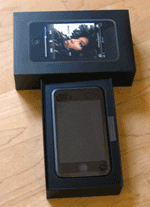
Why I bought an iPod Touch and not an iPhone

Disclaimer: I bought an iPod TouchWhen details of the iPhone’s UK launch were unveiled at a special press event in London last month, Apple CEO Steve Jobs and O2 UK boss Matthew Key both had to field a question about the recently announced iPod Touch. Since the Touch has many of the iPhone’s key features — multi-touch interface, widescreen display, mobile browser, WiFi support — and would go on sale in the UK before the iPhone, would it not eat into iPhone sales?

“You always know Apple will be on the front foot”, replied Key to the amusement of reporters, since O2 wouldn’t have been privy to Apple’s plans for an iPod Touch before they decided to go into partnership. The Touch and iPhone are “a different segment of the market”, argued Key, and both will sell well.

“One is a phone, one isn’t. One has email, one doesn’t”, explained Jobs. Then, exercising his famous Reality Distortion Field, he went on to claim that the iPod Touch would actually help drive iPhone sales, as people who experience the cut-down functionality of the Touch will realize that with the iPhone “they can have it all.”

After months of iPhone-envy from across the pond, and in light of the iPod Touch’s UK release, I made the decision that I didn’t want or rather need it all. At least not yet, anyway.

Continue reading »
SanDisk launches TV-friendly USB stick and video download service

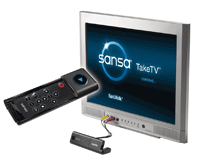
SanDisk launches TV-friendly USB stick and video download serviceSanDisk has become the latest company to tackle the PC-to-TV problem.


Taking a much simpler approach compared to the many media extenders on the market, the Sansa TakeTV player forgoes the need for a home network. Instead, content is physically shuttled from a PC to a TV via a dedicated USB stick and docking station. “No confusing WiFi set-ups, no waiting to burn DVDs”, boasts the Sansa online store.

The TakeTV device supports popular video formats DivX and xVid, and is available in two versions: a four-gigabyte model priced at $99 and an eight-gigabyte model for $149.

To support its TakeTV device, SanDisk has also rolled out a Beta version of a new video download service called Fanfare, which will offer paid-for, and eventually, ad-supported content from various partners. Of note, CBS and independent film-store Jaman are among the first to have signed on.

Continue reading »

Weekly wrapup, 15 – 19 October 2007

Here’s a summary of the week’s digital lifestyle action on last100. Note that you can subscribe to the weekly wrapups, either via the special weekly wrapup RSS feed or by email.

Enter your email address:

Top digital lifestyle news

Lots of mobile news this week, the biggest of which was probably Apple’s decision to finally open the iPhone to third-party developers. At the Symbian Show in London, Nokia also showed off the new version of the mobile OS S60, which offers an optional iPhone-like touch interface — watch the mobile Internet space heat up.

In Internet TV-related news, the BBC has partnered with Adobe to add an iPlayer streaming option with Mac and Linux support; and Sony — which just launched a cheaper PS3 — talked up its forthcoming online video network for the PS3 / PSP.

Additionally, speculation surrounding a Netflix set-top box has resurfaced.

Continue reading »

Netflix to steal Vudu's set-top magic?

Could Netflix be about to launch a set-top box?

Netflix to steal Vudu’s set-top magic?Dave Zatz over at Zatz Not Funny thinks so, after the movie rental company that’s best known for putting DVDs in the post, updated its trademark filling to explicitly reference a set-top box that can download and deliver video content from the Internet directly to a television.

Zatz notes that this isn’t first time that talk of a Netflix set-top box has surfaced, which begin last April with the recruitment of Anthony Wood to the newly created position of VP of Internet TV. According to the press release issued at the time, Wood would be “responsible for all aspects of product development related to the company’s strategic intent to deliver movies directly to subscribers’ televisions via the Internet.” Prior to joining Neflix, Wood was CEO of Roku, the company behind the SoundBridge line of audio streaming devices, and before that he was founder of ReplayTV — no less — credited with being the creator of the digital video recorder (DVR). In other words, Wood has some serious hardware pedigree.

Continue reading »

Apple cuts price of iTunes DRM-free tracks

Apple cuts price of iTunes DRM-free tracksWhen Apple launched iTunes Plus, the company’s DRM-free music download service, last April, I was critical of the price increase from 99c to $1.29 per track, compared to their copy-protected equivalents. CEO Steve Jobs attempted to justify the premium pricing, based on the fact that music on iTunes Plus was encoded at a higher bit-rate of 256kbps (up from 128kbps). Yet I still felt that Apple in conjunction with EMI, the only major label to sign on, were in effect penalizing those who wanted to purchase music DRM-free, with all of their fair use rights intact.

Continue reading »

iPhone-envy: Nokia unveils S60 touch interface

iPhone-envy: Nokia unviels S60 touch interfaceA recent report on U.S. sales of Apple’s iPhone claimed that the biggest losers have been Palm, T-Mobile and Motorola.

According to the NPD Group’s research, initial iPhone buyers were ten times more likely to have previously owned a Palm Treo, three times more likely to have owned a T-Mobile Sidekick, with many iPhone purchases also replacing a Motorola Q. In contrast, RIM’s Blackberry appears to have dodged Apple’s bullet, with the iPhone’s lack of corporate email support being cited as one possible reason.

Nokia also went largely unscathed, perhaps because the Scandinavian company doesn’t have the same presence in the U.S. as in other parts of the world.

However, not one to rest on its laurels, and with the iPhone set to launch in Europe next month, Nokia today unveiled the next version of the Symbian-based mobile operating system, S60, which will offer the option of an iPhone-like touch-screen user interface, and includes support for Flash video. S60 currently powers mobile devices from LG Electronics, Lenovo, Samsung, and Nokia themselves — including the company’s showcase N95.

Despite paying homage to the iPhone, the new enhanced S60 sports a few innovations of its own.

Continue reading »

BBC partners with Adobe to add iPlayer streaming option; Mac and Linux will be supported

BBC partners with Adobe to add iPlayer streaming option-- Mac and Linux to be supportedThe BBC’s iPlayer (see our earlier review) will roll out a streaming option later this year, in a move that will finally make the UK-only TV catchup service available to Mac and Linux users, in addition to those using a Windows-based PC.

Described as a “strategic partnership”, by Erik Huggers, BBC future media and technology group controller, the new version of iPlayer will use Flash video technology from Adobe, and is said to compliment the existing Windows-only download version of the service, which utilizes Microsoft’s Windows Media software.

Continue reading »

Weekly wrapup, 8 – 12 October 2007

Here’s a summary of the week’s digital lifestyle action on last100. Note that you can subscribe to the weekly wrapups, either via the special weekly wrapup RSS feed or by email.

Enter your email address:

Top digital lifestyle news

Lots of music industry news this week. The band Nine Inch Nails announced they were following Radiohead’s lead, by dumping their record label; and Madonna said she plans to do the same. On the digital front, online music service Rhapsody is now available on TiVo; and Universal is reportedly pushing ahead with Total Music, the latest assault on Apple’s iTunes.

Continue reading »

Music industry: five alternative business models

Music industry: five alternative business modelsThe record industry is in dire trouble and the major record companies know it. According to the IFPI’s most recent figures, “physical” music sales were down 11% to $17.5bn in 2006, and, blaming piracy — both CD copying and online file-sharing — the IFPI says that overall music sales have fallen for the seventh year running.

However, none of this was unpredicted, and in post-Napster 2003, Steve Jobs appeared to offer the recording industry a way into the future, through the iTunes Music Store. People didn’t want to steal music, argued Jobs, and if paid-for downloads could compete on price and convenience, then many of those illegal file traders would be converted back into paying customers. As a result, Jobs insisted on the unbundling of albums; instead all tracks would be offered for purchase individually, at the same price — 99c — whether they be a new release, top 40 hit, or an older and more obscure song. To which the majors reluctantly complied, and would later learn to regret.

Fast-forward again to 2007, and although paid-for downloads are on the increase, they aren’t rising nearly fast enough to make up for the loss in revenue from falling CD sales. By Jobs’ own admission, on average only three percent of music on an iPod originates from the iTunes Music Store. As if to rub salt in the wound, iPod sales accounted for nearly half of Apple’s total revenue for 2006.

Instead of recognizing that the record industry’s aging business model, even with the intervention of Jobs, is a broken one and in desperate need of a fix, the response has largely been litigation coupled with the introduction of technology, in the form of DRM, designed to enforce copy protection, which, ultimately, just inconveniences paying customers.

If the iTunes model isn’t the answer, and business can’t go on as usual, then what is? Here are five alternative models for selling music, many of which are actually being tested by artists, entrepreneurs, and even the major record labels themselves.

Continue reading »

Zattoo and LiveStation lookout – Joost to trial "live" television

Zattoo and LiveStation lookout - Joost to trial paidContent:UK reports that Joost is to add “live television” to its p2p-based Internet TV service. Content strategy and acquisition EVP, Yvette Alberdingkthijm, says that Joost will begin testing live transmissions in the first quarter of 2008, and that the company is currently “talking to everybody who has sports rights.” Alberdingkthijm acknowledges that securing sports rights can be extremely expensive but stressed that Joost is capable of doing live “really, really well.”

Were Joost to add a full lineup of “live” television channels, replicating the live streams found on traditional terrestrial, cable and satellite stations, then the service would compete even more directly with Zattoo and LiveStation, two Internet TV services which have, until now, distinguished themselves from other p2p-offerings by focusing on live rather than on-demand content.

In my early review of LiveStation, I concluded:

In the end, as ever, content will be king. And while we don’t yet know how many different Internet TV applications a user will welcome onto their desktop, it’s likely there’s room for at least one live and one on-demand offering.

If Joost does roll out live programing, it maybe that users only need one Internet TV application after all.