Here’s a summary of the last two weeks’ digital lifestyle action on last100. Note that you can subscribe to the weekly wrapups, either via the special weekly wrapup RSS feed or by email.
Download-to-own movie site Film Fresh (U.S.-only), in partnership with DivX, has secured content from Hollywood studios Lionsgate, Paramount Pictures, Sony and Warner Bros. The deal marks the first time that major studio content has been offered for sale in the DivX format in the U.S., according to Film Fresh.
Dave Zatz: I’m calling BS on their FCC responses. I pay $30/month for data access. And it seems to me that Apple and AT&T are collaboratively and selectively blocking apps that could compete with their own service offerings.
With Apple stuck between the FCC, Eurpean Union regulators and a hard place, I’m not that surprised to see the approval of music streaming service Spotify’s iPhone app. Apple today confirmed to paidContent that Spotify (currently Europe-only) has been given the green light and will be available in the App Store “very soon”.
While many had speculated that the app might be rejected by Cupertino on the grounds of ‘duplicating’ (read: competing with) the iPhone’s built in functionality — iTunes — I was confident that, especially in the current climate, Spotify would be approved.
I predict that Apple will in the end give Spotify the green light based on several factors. Avoiding monopoly accusations being one. Spotify’s pricing model being another (the iPhone app will only be available to premium subscribers so it’s far from a free-for-all). And then there’s Apple’s kludgy multitasking solution. The latter of which means that Spotify on iPhone will be unable to run in the background. Switch to a different app and the music stops.
One thing we don’t yet know, however, is if Apple has in anyway restricted any of the features of the Spotify iPhone app, in particular the ability to cache playlists for off-line playback. This feature alone means that Spotify competes more heavily with iTunes than other streaming music apps that already exist for the iPhone.
Overall though it looks like great news for Spotify and bodes well for the future of Rhapsody’s iPhone app, which is currently pending Apple’s approval.
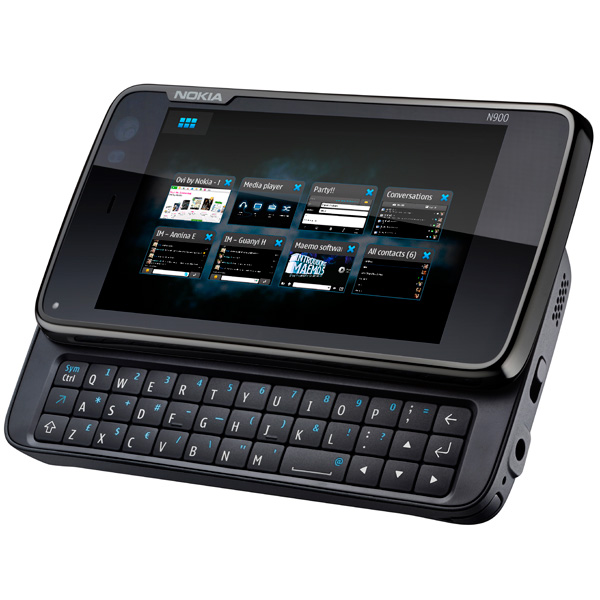
It had already been leaked to death, but frankly, if the walk-through video that’s been published today is anything to go by, I don’t think any of the previous pics or screen shots do this thing justice.

I’m referring to Nokia’s new Linux-based smartphone come Internet tablet, the N900, which the handset maker officially unveiled today. The device is powered by the company’s Maemo 5 OS, of which previous versions were used for its non-phone Mobile Internet Devices (MIDs), such as the N810 that I reviewed all the way back in February 2008.
And boy has Maemo come a long way. Best of all (shock, horror), it looks like Nokia can design User Interfaces after all.
I’ve written before about DivX being the video format of choice for ‘grey’ (read: pirated) content, but now it seems that the near ubiquitous standard is finally on the road to legitimacy with relation to content owners.
Download-to-own movie site Film Fresh (U.S.-only), in partnership with DivX, has secured content from Hollywood studios Lionsgate, Paramount Pictures, Sony and Warner Bros. The deal marks the first time that major studio content has been offered for sale in the DivX format in the U.S., according to Film Fresh.
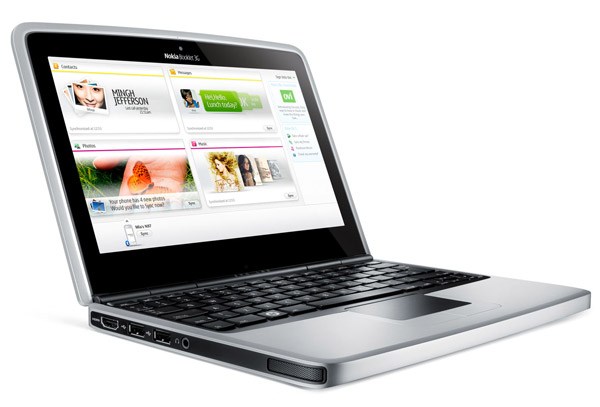
In a move that might leave many a tech analyst scratching their head, Nokia have announced their own Windows Netbook, albeit a high-end one.
Why the world’s largest mobile phone maker would enter the crowded and low margin market of Netbooks, when it should be focusing on how to restore its lead in the much higher margin ’smartphone’ category, is a very good question. The answer, however, is simple.
Carrier subsidy.
Here in the UK, we lead the way in the carrier-subsidy merry-go-round where Nokia does very well indeed out of the whole facade.
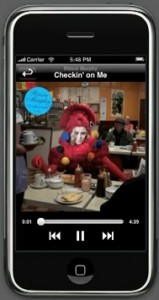
Adopting a similar PR strategy to Spotify, U.S.-only music subscription service Rhapsody ($14.99-a-month) has published details of its iPhone app, mid submission process to Apple’s App Store. While submitting an app alone far from guarantees that it will ever see the light of day through Cupertino’s official channel, by showing off the app now, including a video demo (below), it does ensure that any dirty linen on Apple’s part is aired in public. It also helps to build consumer demand from existing Rhapsody subscribers who also own an iPhone in preparation for a backlash should the app be rejected.
Here’s a summary of the last two weeks’ digital lifestyle action on last100. Note that you can subscribe to the weekly wrapups, either via the special weekly wrapup RSS feed or by email.
I personally wouldn’t go anywhere near this. The occasional ‘ilegal’ torrent at a time, such as a missed episode of Mad Men, may carry a little risk, but try justifying the complete Pirate Bay torrent index sitting on your hard drive — all 21 GB of it — and well I wish you good luck.
I was so underwhelmed with VidZone, the PlayStation 3’s on-demand music video service, that I couldn’t bring myself to review it. The UI is clunky and videos stream in a 4:3 aspect ratio, even for recent releases, so that they don’t fill up the whole screen on my High Def telly.
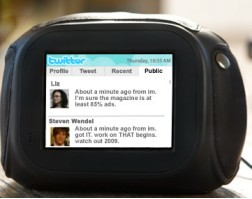
When Chumby, makers of the boutique gadget of the same name (a sort of cross between an alarm clock radio and digital picture frame, housed in a leather ‘bean bag-esque’ casing), announced that is was porting its widget-based platform to third-party hardware, the emphasis was on Internet-connected TVs, Blu-ray players and set-top boxes. Now it seems that the first ‘powered by Chumby’ device will be something much closer to the company’s own hardware: a digital picture frame, to be released in time for the holidays, reports Forbes.

This one feels a lot like a non-announcement, although technically it’s actually a pre-announcement.
Bricks ‘n’ mortar video rental chain Blockbuster is teaming up with Motorola in the U.S. to deliver its video-on-demand service to the handset maker’s future devices. Future being the operative word here as we don’t yet know when or on what phones, although it’s likely that the service will utilize Blockbuster’s recent partnership with Sonic Solutions, owners of the video download store CinemaNow, whose technology is already compatible with a range of mobile devices.
The fact that both Blockbuster and Motorola aren’t in the best of shape with regards to their respective markets won’t been lost on many, with Gizmodo’s Joanna Stern summing it up nicely: “I think it is romantic when two companies can hold each other in tough times.” Tough times indeed, although I’m skeptical that this partnership will do much for either companies’ bottom line.
While the U.S. version launched all the way back in July 08, it’s been a long wait for users across the pond. Along with announcing a new slimmer version of the PS3 and a bunch of other service enhancements, yesterday Sony revealed that the PlayStation video store will be opening its doors to parts of Europe from November this year.
Film companies Lionsgate, Paramount, MGM, Walt Disney, Fox, Universal and Warner Bros have been signed up by Sony, which will result in the delivery of “hundreds of movies straight to your PS3 and PSP,” Sony’s Andrew House has confirmed at the Gamescom Sony press conference in Cologne. These films will be purchasable using the usual wallet system, and the store will be rolled out in other territories throughout 2010.
While Sony will get there in the end — the company was already playing catchup in the games console delivered online video space even in the U.S. — the hold up is likely to be the usual issue of content licensing. Striking deals in one territory doesn’t guarantee speedy success in another.
In related news, Sony also announced that in the UK, the version of the BBC’s iPlayer TV catchup service for the PlayStation 3 will be promoted through the console’s ‘What’s new’ section being introduced as part of a new firmware update.
I’m finding it increasingly hard to comment on the Palm Pre and supporting WebOS, since I’ve yet to get my hands on the company’s ‘second coming‘ smartphone. The device is due to launch here in the UK exclusively on carrier 02 (strangely sharing the limelight with Apple’s iPhone) sometime in Q4.
Nonetheless, news comes today that Palm is to begin accepting applications from developers who want to charge for their Palm Pre WebOS apps, with the pending launch of the company’s Palm App Catalog e-commerce beta program in mid-September. Attracting developers to Palm’s new platform will be key to the Pre’s success and future handsets released by the company running on its shiny new WebOS.
On that note, on par with Apple and Google (Android), developers who charge for their apps will get the better part of a 70/30 split with Palm. More information about the developer program can be found here.