Posts Tagged ‘Kindle’

Why Sony is embracing the ‘open’ ePub eBook standard (Hint: Amazon)

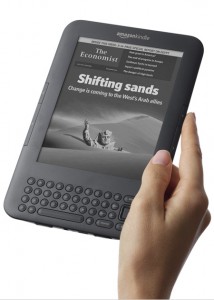
I’ve argued before that with regards to eBooks and the Kindle, Amazon doesn’t view itself as a hardware company. Unlike the iTunes ecosystem designed to shift more iPods and iPhones, for Amazon it’s actually about selling digital content — the eBooks themselves — as demonstrated by the release of the iPhone ‘Kindle’ eBook reader and the company’s work-around to keep Apple away from any iPhone-generated eBook revenue.
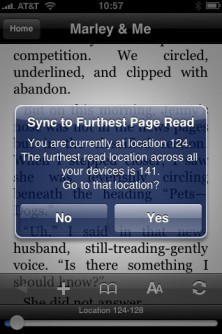
The Kindle hardware exists to kick start and accelerate the uptake of eBooks, and as well as creating Kindle reader software for other mobile platforms, similar to what the company has already done on the iPhone, I wouldn’t be surprised to see Amazon one day license its Kindle platform to competing hardware eBook readers. As I said, it’s clearly about shifting content, and to achieve this, owning the eBook ’standard’ and therefore default store.

Continue reading »

Amazon to Apple: keep your hands off our iPhone Kindle eBook revenue

iPhone Kindle app

iPhone Kindle app

At first glance it seems innocuous enough: Amazon has launched a version of its Kindle eBook store optimized for the iPhone’s web browser to make it easier for users of Apple’s device to purchase new eBooks for the iPhone’s Kindle application. “The most common feedback we heard from customers was that they wanted a better experience for purchasing new Kindle books from their iPhones”, says Ian Freed, vice president of Amazon Kindle operations.

In the updated iPhone Kindle app, a “Get Books” button opens the phone’s Safari web browser and takes users straight to the new iPhone-friendly site. Any new purchases made then show up in and are downloadable from the iPhone Kindle app itself.

See also: What Kindle on iPhone says about Amazon’s eBook strategy

The result of which is that Amazon has made it relatively simple for users to purchase Kindle content in a way that replicates the iPhone’s upcoming ‘in-app purchases’ feature, all without giving Apple its 30% cut or, presumably, breaking any terms of service.

Google helps add 500,000 public domain eBooks to Sony Reader store

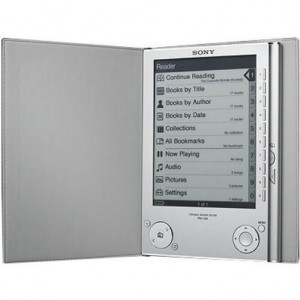
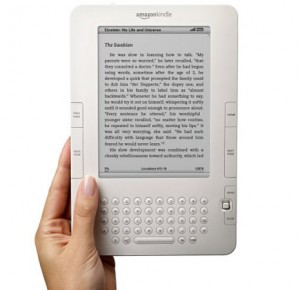
Not sure if this is such a big deal but owners of Sony’s Reader – which includes my dad – can now access over half a million public domain books via the company’s eBook store, courtesy of a new partnership with Google Book Search.
Titles include an “extensive list of traditional favorites”, according to the joint press release, such as “The Awakening,” “A Connecticut Yankee in King Arthur’s Court,” and “Black Beauty”, along with Jane Austin’s “Sense and Sensibility” and “Emma.”

Continue reading »

Usability guru: Amazon’s Kindle is great for reading novels, poor for everything else

Usability guru Jackob Nielson has given Amazon’s Kindle eBook reader the once over. His conclusion: perhaps unsurprisingly, the device is great for linear reading – think books, and in particular novels – but falls down badly when consuming non-linear content, such as electronic versions of magazines or newspapers.
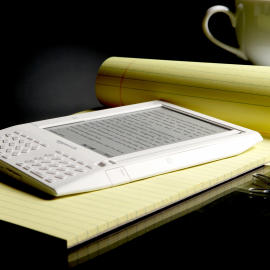
Additionally, Nielson says that although he has previously questioned the viability of eBook reading devices in general, the Kindle’s e-ink screen technology and his own reading speed using Amazon’s device (less than 0.5% difference compared to the exact same paperback) has changed his mind.

On the Kindle’s linear reading strengths, Nielson gives praise to the device’s dedicated page turn controls:

… turning the page is extremely easy and convenient. This one command has two buttons (on either side of the device). Paging backwards is a less common action, but it’s also nicely supported with a separate, smaller button.

The device thus offers good support for the task of linear reading — appropriately so, as Kindle’s design is centered on this one use case. While reading, your only interaction is to repeatedly press the next-page button.

However, “anything else is awkward”, writes Nielson.

Continue reading »

What Kindle on iPhone says about Amazon’s eBook strategy

The news today that Amazon has released a Kindle client for Apple’s iPhone and iPod touch says a lot about the company’s eBook strategy. Amazon’s Kindle device has often been described as wanting to become the iPod of books, but unlike Apple it’s clear that the e-tailer sees itself in the business of selling content and not just to drive sales of hardware.

In terms of music and video sales, Apple’s iTunes Store exists purely to add value to and increase uptake of the company’s iPod and AppleTV devices, with the major record labels and Hollywood studios receiving the majority of revenue from any content sold. Until fairly recently, content from iTunes could only play back on Apple’s hardware – for movies and TV shows this is still the case – helping to lock customers into the iTunes/iPod ecosystem. In contrast, eBooks bought from the Kindle store are now able to be read on at least one non-Kindle device, Apple’s iPhone, with more to come. This suggests to me that Amazon is taking a large enough cut from each eBook sold to justify potentially diluting sales of the Kindle device itself.

Continue reading »

Kindle 2.0 is looking more like Kindle 1.5

Peter Burrows of BusinessWeek today wrote an even-handed post about the coming of Kindle 2.0, the much anticipated update to Amazon’s much ballyhooed eBook reader. And while he feels the Kindle revolution is “awfully evolutionary,” he also questions just how evolutionary it really is.

Burrows says he can confirm that McAdams Wright Ragen analyst Tim Bueneman [via Seattle Post-Intelligencer] has been saying recently: Amazon will unveil a larger-screen Kindle aimed at college students in the coming months. Burrows also says there will be an upgrade to the Kindle base model, which will be thinner, with a better screen, more stylish, and will include fixes to some of the user interface quirks from Kindle 1.0.

Burrows quotes a source who has seen Kindle 2.0 as saying it is a big leap from its predecessor as the iPod mini was from the first iPod. “They’ve jumped from Generation One to Generation Four or Five,” the source said. “It just looks better, and feels better.”

Wow. Kindle 2.0 must be one heck of a device.

But I, like Burrows, wonder.

Continue reading »

Despite projections, eBook readers are not going to be next iPod without changes

As a voracious reader I am happy to see the success of the Kindle, Amazon’s electronic book reader. But no matter how many devices Amazon or others sell, the whole eBook reader thing is fundamentally flawed.

Let’s be honest. Electronic reading devices mostly suck. The platforms or ecosystems eBook readers are built on — from content purchase and management to DRM — are awful.

So when I read that Mark Mahaney of CitiGroup says that Amazon is expected to sell about 380,000 Kindles in 2008, I applaud. I desperately want eBooks and eBook readers to be as successful as the iPod — and that’s millions of units sold, not just a few hundred thousand.

But eBook readers will never be as successful as the iPod. Not the way that the publishing industry works today. Not the way eBooks are designed and manufactured.

Continue reading »