Archive for the ‘Audio’ Category

"MusicPal", Freecom's new portable Internet radio

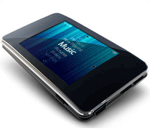
“MusicPal”, Freecom’s new portable Internet radioMusicPal” is a new WiFi-enabled Internet radio from Freecom. Designed to be an updated version of the kind of portable radio you might have in your kitchen or by your bedside, the device can access over 5,000 Internet radio stations, stream music from your PC or Mac, as well as operate as an alarm clock. But, perhaps most interestingly, news headlines and whether reports (pulled in via RSS) can be displayed on the device’s LCD screen.

Continue reading »

Zune users to be paid for sharing songs?

Zune users to be paid for sharing songs?A recent patent application by Microsoft describes a mechanism whereby Zune users are paid for sharing songs. Currently the company’s digital audio player has the capability to wirelessly swap music with other Zune owners, with the restriction that any shared song can only be played a maximum of three times. After which you’re given the option to buy the track from Microsoft’s Zune Marketplace. In a move designed to encourage sharing — and in turn, sell more music — Microsoft proposes paying users a percentage of revenue from sales generated through tracks they’ve shared.

Continue reading »

Use iTunes to stream music over the Internet

Simplify Media Back before digital, I carried stacks of cassette tapes or CDs, even a boom box once, so I could listen to music when I traveled. Now that the digital age is here, the cassettes and CDs have been replaced by mp3s and an iPod (or two). Something, however, is still missing.

I couldn’t carry my entire record collection with me then, and I have more than 80 gigs of music now, so no matter what I’d leave music home. Inevitably I’d want to listen to a Miles Davis disk from the ’70s and not one from the ’50s that I brought with me.

If you use iTunes to manage your digital music, it’s now possible to have your entire collection — every scrap of music in your Library — available to you or your designated friends using a simple application known as Simplify Media.

Continue reading »

iriver dances to the tune of Rhapsody

iriver dances to the tune of RhapsodyRealNetworks and iriver have announced the launch of the clix Rhapsody, a version of iriver’s portable media player which is optimized to integrate with Real’s subscription-based digital music service. The new features focus on music discovery, such as automatic updates that deliver personalized play-lists each time a user connects to the service, as well as the ability to rate songs, albums and artists directly on the device. The partnership follows a similar arrangement between Real and SanDisk for the later’s Sansa Rhapsody player.

It’s interesting to see a number of hardware manufacturers align themselves so closely with Real, in an attempt to create devices which work seamlessly with the Rhapsody service. The upside is, in theory at least, that — like with iPod/iTunes — the user experience should be greater as both companies can control all of the pieces and fully integrate the hardware and software. This is also the reasoning behind Microsoft’s abandonment of its ‘PlayForSure’ partners when the company launched its Zune platform. The downside is a lack of choice for consumers, where each device is tied to a single paid-for music service. However, the success of Apple’s iPod strategy would suggest that users will take ease-of-use and simplicity over choice, anytime, and that’s assuming that most people get their music from paid-for digital music services in the first place. Which, of course, we know they don’t.

(CrunchGear and Gizmodo both have a review of the clix Rhapsody)

Why Apple doesn't need Universal Music

iTunes logoThe New York Times is reporting that Vivendi-owned Universal Music Group has decided against renewing its licensing deal with Apple’s iTunes. Instead, Universal will license its music to Apple “at will”, meaning that the company can remove its songs from the iTunes store at short notice, which it hopes will put the company in a stronger position when negotiating pricing and other terms in the future.

The reason for the stand off is fairly well documented. Universal, along with the other majors, is frustrated at Apple’s insistence on fixed pricing and its refusal to allow other download services and music player manufacturers to utilize the company’s copy-protection technology, FairPlay. The latter means that music bought from iTunes only works on the iPod, and no other service can sell DRM’ed downloads that will work with Apple’s music player. As a result, says Universal, Apple has become too powerful a player in the music industry.

Will such strong-arm tactics help Universal? I’m not convinced Apple needs Universal as much as Universal needs Apple.

Continue reading »

Neuros' open set-top-box

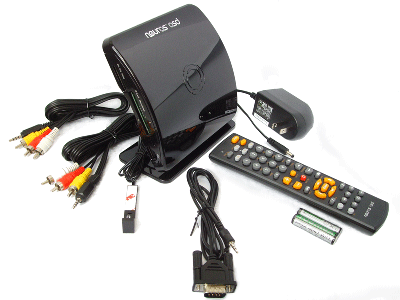
Neuros’ open set-top-boxMedia streaming boxes such as the AppleTV, XBox 360, PS3, and products from Netgear, do a varying job of bridging the gap between the PC and television, as well as in some cases, delivering Internet content directly into the living room. But all are closed systems. The result of which is that users are left trying to hack these devices against the wishes of manufacturers (see our post ‘When will Steve Jobs open up the AppleTV?‘) or have to make-do with whatever official features are implemented. Bucking this trend, Neuros is taking a wholly different approach, and has open-sourced the firmware for it’s Neuros OSD media-center, meaning that anybody is free to write add-ons that extend the device’s functionality.
Neuros’ open set-top-box

The Neuros OSD is a versatile box that can act as a Digital Video Recorder capable of recording from virtually any source (cable or satellite TV, DVD, DVR/TiVoTM, VCR, game console, camcorder, etc), as well as stream and share video, music and photos between various devices including home entertainment centers, PCs and portables such as laptops, iPods, smartphones, and the PSP.

Continue reading »

YouTube represents 10% of North American Internet traffic

YouTube logoYouTube accounts for ten percent of all North American Internet traffic, according to a recent report (PDF) by Ellacoya Networks. Based on data of approximately one million broadband subscribers in North America, the study also revealed that — bucking a four year trend — HTTP traffic now surpasses that of p2p, largely due to the proliferation of video streaming sites such as YouTube. Remember that for years it has been p2p traffic that’s dominated broadband usage, as users download pirated music and movies over p2p file-sharing networks.

Continue reading »

RealPlayer 11 Beta goes public

RealPlayer logoThe Beta version of Real’s latest media player, RealPlayer 11, is now available for download from the company’s website. We previously wrote an extensive review of the software, noting its flagship feature: the ability to download and save online video from virtually any website.

While it will be hard for RealPlayer to shake off its poor reputation, there’s much to like about version 11. The new interface and jukebox functionality has been appropriately borrowed from iTunes, and the ability to download and save videos from the web, not only works well, but should prove popular with users who want to build their own personal video collection.

In a later post, we followed up by asking whether Real’s new download feature might actually encourage online video producers to use more DRM.

Now you can try out the new version for yourself, available from Real’s site. (Note: this is a Beta version and users are already noting issues and complaining that it’s hard to find and re-install the previous version.)

National Day of Silence for Internet radio

Save Net RadioIf you try to “tune in” to many Internet radio stations and online music services today, and hear nothing, here’s why: protesting against an impending royalty rate increase that, if implemented, would lead to many services having to shut down, webcasters across the US are holding a national Day of Silence.
Organised by the Save Net Radio Coalition, thousands of US-based webcasters have turned off the music and gone silent in a unified effort to draw attention to the 300% royalty hike.

Continue reading »

Five resources to create a Wii media center

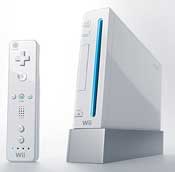
Nintendo Wii consoleIn a recent guest post, Tim Robertson looked at the Wii’s media handling capabilities and concluded that the Wii is no media center, lacking the ability to stream photos, videos or music over a home network. On the plus side, Nintendo’s latest console does have a fully-fledged web browser capable of accessing flash-based audio and video from sites like YouTube.

Finally biting the bullet, early last week I bought myself a Wii, and in between golf and tennis sessions I decided to try and push the limits of the console’s media-playback functionality. After a bit of research and with the help of a number of web sites optimized for the Wii and a few software downloads, I was able to fudge together a fairly capable Wii-based media center.

Here are five applications and websites needed to create your own Wii media center…

Continue reading »