Archive for the ‘Audio’ Category

How Spotify can beat Microsoft [music streaming]

Spotify, which has become the talk of the town here in London, could launch in the US as early as September, reports the Observer newspaper. The music streaming service, which offers both ad-supported and subscription versions, is seen as not only a real iTunes contender but also compelling enough and the right side of “free” to wean users off of illegal file sharing networks.

I’m a big fan myself and am particularly excited about the up and coming Android, Symbian and iPhone mobile versions of the service.

See also: Music streaming service Spotify demos Android app, off-line syncing included!

Along with the incumbent iTunes — who offer a different model: ala carte downloads — Spotify will face much competition in the ad-supported and subscription streaming space. US-strongholds include services such as Pandora, iMeem, MySpace and Last.fm (ad-supported), along with Napster and Rhapsody (subscription).

One other competitor whom Spotify may or may not have had in mind when deciding to compete in the US is Microsoft (the underwhelming Zune aside). The Redmond giant is reportedly launching a similar service to European-based Spotify later this month.

Continue reading »

The Pirate Bay sold, plans to go legit. Users urged to become capitalists.

When the Pirate Bay four were convicted of “assisting in making copyright content available” and sentenced to a one year prison term and a fine of $3.6 million, the site’s co-founder Peter Sunde played down the verdict, claiming that it was business as usual. The argument being that the site itself was never on trial, only the four individuals named in the law suit.

Today, however, we learn that, moving forward, it’s far from business as usual as The Pirate Bay has been acquired by Global Gaming Factory X (GGF), a publicly listed company in Sweden, for the grand sum of $7.8 million. Profit made from the sale will be used to fund a new political organization set up “to help with projects about freedom of speech, freedom of information and the openness of the nets”, according to a blog post published on The Pirate Bay.

Continue reading »

Pirate Bay offering file sharers their own encrypted private network

Forget the UK government’s Digital Britain report (out today), which will propose a solution to the “file sharing problem”, or Virgin Media and UMG’s carrot-and-stick solution. Notorious BitTorrent tracker Pirate Bay thinks it has the answer: a new service that will offer file swappers their own encrypted virtual private network that will keep any “ilegal” activities away from the prying eyes of the content industry and their trigger happy legal teams.

Dubbed IPREDator after Sweden’s copyright law IPRED (Intellectual Property Rights Enforcement Directive), the VPN service is currently in limited beta with 3,000 testers and another 180,000 on the waiting list. The service costs 5 euros per-month.

(via The Register)

UK ISP Virgin Media and UMG announce “carrot and stick” music plans

I have a love-hate relationship with my Internet Service Provider (ISP) Virgin Media. I love the fact that they give me a fast and reliable fiber optic broadband connection (no copper running into this house), although I’m less keen on their peak time throttling policy. On the other hand, I hate their cozy relationship with the major records labels over the issue of illegal file sharing, whereby they appear to be more than willing to entertain the idea of disconnecting customers at the labels’ request if it’s claimed they are persistent offenders.

This week, Virgin talked up the latest phase of that cozy relationship, announcing a new unlimited music plan backed by Universal Music Group, and a firm commitment to “educate” file sharers through a temporary suspension of service.

Continue reading »

Music streaming service Spotify demos Android app, off-line syncing included!

Spotify on the Google phone

Spotify on the Google phone

Music streaming service Spotify already offers a very compelling desktop experience. The Mac and Windows client features the familiar iTunes-esque User Interface, a fast growing music catalogue and the ad-supported free-ness that is so popular with users who otherwise might source their music from P2P filesharing networks. That’s all well and good but ad revenue alone is unlikely to generate enough revenue for Spotify to stay in business. Instead, the company is hoping that over time enough users will opt for the monthly paid-for subscription version and it’s here that mobile could be key.

Continue reading »

Microsoft takes on iPod touch with Zune HD

zunehd

New Zune HD

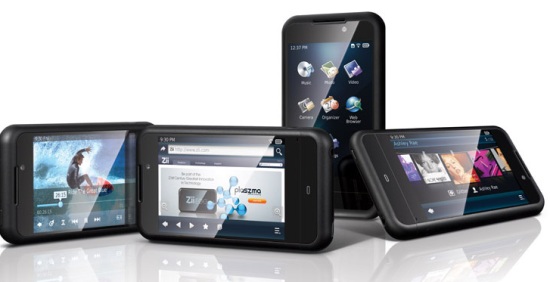
Microsoft today announced its latest Zune portable media player designed to go head to head with Apple’s iPod touch. Dubbed the Zune HD, the device features a 3.3″ 16:9 widescreen capacitive OLED with multitouch, WiFi, and a built-in web browser, along with existing Zune media playback features. Talking of which, the “HD” moniker refers to both HD Radio (offering higher quality audio and additional track and station data), along with support for 720p HD video playback. Interestingly, the device itself only offers a screen resolution of 480 x 272, meaning that High Def videos played back on the device are downscaled, which shouldn’t matter all that much on such a small screen. To view content in its full HD glory, the Zune HD features a HDMI-compatible docking station for plugging into a high definition television.

Of course to really take on the iPod touch, not only will the Zune HD’s web browsing experience need to up its game compared to existing Windows Mobile devices, but it would need to foster its own third-party software eco-system. Something that Microsoft hasn’t yet announced and it’s unclear if the company plans to do so, although I’m not ruling it out. Remember Apple doesn’t call the iPod touch a media player, instead referring to the device as the “first mainstream Wi-Fi mobile platform, running all kinds of mobile applications.”

(via Gizmodo)

Sony considering PSP game rental and music download services

pspIt’s looks like Sony may finally be getting serious about its download service for the PlayStation Portable (PSP), with the company considering a subscription-based game rental offering and a la carte music downloads akin to the iTunes Store.

Continue reading »

Napster tries again, unlimited streaming and five downloads for $5 per-month

Napster tries again

Napster tries again

Now under the stewardship of Best Buy, Napster is taking yet-another-stab at offering a compelling music service since its glorious P2P days of yesteryear. This time round the company is touting the combination of unlimited streaming of its 7 million strong music library in combination with 5 DRM-free downloads per month, all for a monthly subscription of just five dollars. “Music fans now have the best of both worlds”, boasts the press release.

Continue reading »

Archos’ Android powered MID set to debut on June 11th?

Archos press invite

Archos press invite

Although it hasn’t been confirmed as such, Archos is hinting that it will unveil its first Android powered Mobile Internet Device (MID) at press event to be held in Paris on June the 11th. The company isn’t actually using the MID moniker and instead refers to said device as an Internet Media Tablet, emphasizing its support for a range of audio and video codecs, including High Definition video playback, along with the ability to surf the web and access other Internet-based content.

Perhaps unsurprisingly, the use of Android brings telephony support to the table and, presumably, third-party applications downloadable from the Android Market app store.

Other than that, the device is said to sport a 5 inch touch screen, use TI’s OMAP 3 processor (the chip used to power Palm’s soon-to-be-released Pre smartphone), 3.5G connectivity, support for Adobe Flash, and provide up to 7 hours of video playback.

See also: Android’s biggest Netbook challenge (Hint: Windows)

Despite my skepticism of Android’s commercial potential running on a traditional Netbook, I think touch screen-based MIDs are a much more natural fit as they share a lot more heritage with smartphones (Android’s primary target). Additionally, one of my criticisms of existing MIDs, such as Nokia’s N810, is their lack of cellular connectivity – instead relying solely on WiFi – something that Archos’ upcoming Android device will address.

(via Engadget)

Hands-on: LG Arena KM900 touch screen phone

lg-arena-browser

LG Arena KM900 web browser

I’ve had just over a week to test out LG’s latest flagship phone – the LG Arena KM900 – a device that I first set eyes on at last month’s The Gadget Show Live. The touch screen phone has a lot going for it, but like many post-iPhone offerings, doesn’t quite live up to the promise based on technical specs alone and at times has the potential to frustrate. 

Continue reading »

Nokia admits mistakes over UK launch of “Comes With Music”

Nokia Comes With Music

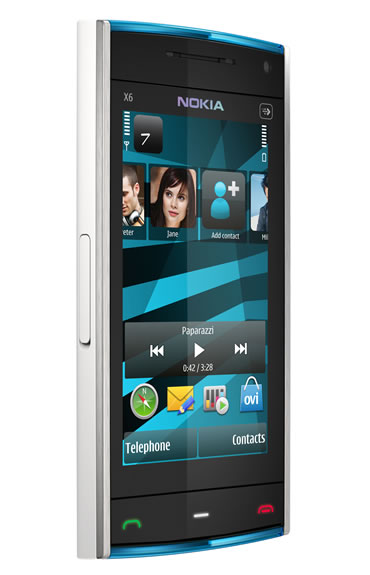
Nokia and I are in agreement over at least one thing: the company made mistakes when launching its all-you-can-eat music subscription offering “Comes With Music” in the UK. The service whereby you purchase a qualifying Nokia handset and then get access to the entire library of the Nokia Music Store for 12 – 18 months and get to keep any downloaded tracks once the subscription ends, was launched in the UK on two aging phones and with the backing of only one carrier and one retail chain.

Continue reading »

Why has Nokia’s ‘Comes With Music’ been a flop in the UK?

Nokia's Comes With Music at Carphone Warehouse, UK

Nokia’s all-you-can-eat music offering “Comes With Music” (CWM) hasn’t exactly caught on in the UK, according to Music Ally, with the service attracting just over 23,000 active users. “Given the high-profile marketing campaign around its launch with retailer Carphone Warehouse, that’s a sluggish start”, notes the site. So why has CWM been a flop here in the UK?

First a quick recap of what CWM offers: those who purchase a supported Nokia handset get 12 months “unlimited access to the entire Nokia Music Store catalog with the ability to keep all downloaded tracks even after the year is over.” Tracks can be downloaded “over the air” or sideloaded via a PC (Windows only), and are ‘policed’ using Windows Digital Rights Management (DRM). To continue downloading tracks on an “unlimited” basis once the 12 months are up, users need to purchase a new CWM handset.

While the thinking behind CWM has some merit – offer a paid-for music service in a way that “feels like free” and compensates labels and artists accordingly – Nokia’s execution has been poor, at least in the UK (sales elsewhere are reportedly much better), although much of the blame, as always, must rest with the record labels themselves.

Continue reading »