Author Archive

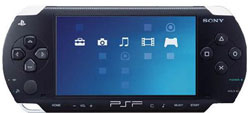
BT and Sony to bring VoIP to PSP

Sony PSPBT and Sony have inked a four year deal that will see the two companies bring voice calls, video conferencing, and IM functionality to PlayStationPortable (PSP) users across Europe. The partnership intends to integrate the PSP with BT’s existing broadband video and voice ‘softphone’ products, and in the following months, additional features will be launched to enable calls and messages to PCs, fixed lines and mobiles. The service will initially roll-out in the UK, with other parts of European to follow.

In a joint press release, Steve Andrews, BT chief, Mobility and Convergence, is quoted as saying:

“The PSP is an excellent device for both gaming and communications, because of its high quality screen and audio capabilities. With over 8 million PSPs shipped across Europe, we are very excited by the opportunity to give customers a whole new communications experience, connecting and seeing friends across the world through BT’s technology”.

It’s certainly true that Sony’s hand held game console has a very nice screen and good audio, but I can see a couple of issues holding it back from being a really useful communications device. Instant Messaging will be a pain, as there is no touch screen or physical keyboard. Additionally, the machine will have to connect over WiFi, and in the UK at least, we are far from free or low cost ubiquitous WiFi access, and I don’t think the PSP’s younger users are going to have the spending power to hang out at Starbucks all day long — making it OK for use around the home, but not really viable as a mobile communications device.

Update: The BBC has more details, including a video demonstrating the snap-on video camera for video calls. Also of note, the new PSP functionality will only work on home or BT wireless hotspots because it utilises BT’s 21 Century Network (21CN), which is specifically designed for Internet Protocol (IP) technology such as VoIP.
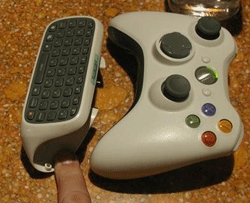
ChatPad: XBox 360's soon-to-be released thumboard

Xbox 360 ChatPadThe recent dashboard update to the XBox 360 delivered Windows Live Messenger functionality to Microsoft’s next-generation console, which the company claimed, makes Xbox Live “the largest social network on television.” However, right now Xbox users are limited to inputing text using a virtual on-screen keyboard or can choose to plug in a USB one — which is hardly ideal. To solve this problem, Microsoft will soon be releasing a new input device called the ChatPad, which adds a snap-on QWERTY thumb-board to the traditional XBox controller.
Charles Husemann, over at GamingNexus, got his hands on a prototype of the device, and was impressed:

It’s a pretty tight fit so you don’t have to worry about accidentally knocking it off during gameplay. The unit isn’t really that heavy and doesn’t really impact the weight or balance of the Xbox 360 controller. I think this is something that a lot of people will snap on and leave on.

Using the buttons will take a little getting used to but like any small QWERTY keyboard once you get used to it you’ll be ripping off long diatribes in no time.

Husemann also reveals that the ChatPad has a backlight, which automatically turns on and off as you start and stop typing, rather like a mobile phone. Microsoft claims that this means the backlighting won’t impact too much on battery life.

Husemann concludes:

[the ChatPad] feels great, and I think a lot of people are going to snap this sucker up (especially now that Live is hooked into Live Messenger). Pricing and availability haven’t been announced yet but I think this is going to be another great Xbox accessory that a lot of people are going to want to pick up.

From what I know of the product, I think Husemann is spot on.

What’s also clear is that Windows Live Messenger integration, along with the XBox’s media extender (and forthcoming IPTV) functionality, further positions the game console as Microsoft’s trojan horse, designed to deliver Internet services into the living room.

Pandora on your mobile and in your living room

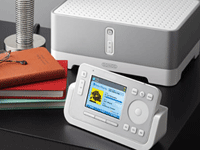
Pandora anywherePandora has launched its new ‘anywhere’ platform, which will see the music discovery service being available to devices beyond the PC — both mobile and around the home. If you’re not familiar with the service, Pandora is based on the Music Genome Project where a group of experts have analyzed the component parts or ‘genes’ of the musical works of over 10,000 artists. The result of which is that you can tell Pandora to create a radio station based on songs that have similar ‘genes’ to a chosen artist or track. However, until now, aside from a partnership with Slim Devices (makers of the excellent Squeezebox), Pandora was only available through a flash-compatible web browser.

Continue reading »

When will Steve Jobs open up the AppleTV?

AppleTVJust weeks before Apple launched it’s AppleTV (then known as the iTV), I wrote a post for ZDNet titled: Could YouTube be the killer-app for Apple’s iTV?. My proposition was that if Apple were to open up its set-top-box it wouldn’t be long before the device became capable of much more than streaming content from a Mac or PC.

Continue reading »

CBS buys video blog Wallstrip

Wallstrip video showThe video blog, Wallstrip, which describes itself as “stock culture meets pop culture”, has been acquired by CBS. The price is unknown, but CBS has denied it’s 5 million dollars as was first reported by the gossip blog, Jossip. At the time is was suggested that the main attraction for CBS was securing the services of the shows dynamic host, Lindsay Campbell, who was to become the new face for the studios online video initiatives.

That’s not the case says NewTeeVee. The deal is just as much about the talent behind the camera:

Wallstrip creator Howard Lindzon said CBS bought the show in part because of its “web 2.0” attitude towards widely syndicating and distributing its video… “Quincy wants to be everywhere,” he said, meaning Quincy Smith, CBS’ dealmaker and the initiator of the Wallstrip purchase. The team will be part of CBSNews.com, helping out with its video projects.

In other words, the deal should be viewed as an acquisition of a production company, rather than a single show. CBS clearly hopes to leverage what the Wallstrip team have learnt from their online video experiments, as well as harness the team’s ability to put out very cost effective content, with a distribution model that embraces the distributed nature of the net.

On a personal note, I count myself as a fan of the show. I’m not really all that interested in the stock market, but Wallstrip does a good job of explaining the cultural phenomena behind market success stories (and in an entertaining way), such as how Apple positions itself as a lifestyle company, and why people go crazy over Nike.

Congrats Wallstrip!

(If you’re new to the show, check out the announcement episode.)

The Pirate Bay to launch YouTube competitor?

The Piratebay logoThe Pirate Bay, best known for illegal music, video, and software downloads via BiTtorrent, is set to launch its own video streaming site.

A cryptic message posted on the Bay’s official blog states:

…it’s in the works being done right now and as usual we put a bit of Pirate Bay mentality behind every project we do.

Torrent Freak interprets this as meaning that the site will be similar to YouTube but without compliance with the Digital Millennium Copyright Act.

…it’s exactly that “Pirate Bay mentality” that, in our opinion, is going to make this site a winner. Think YouTube without Google constantly pulling down copyrighted videos.

It’s hard to imagine how a lawless ‘YouTube’ could survive in a world where IP laws are increasingly harmonized across borders, and countries have an incentive to comply with the World Trade Organization. But then again, The Pirate Bay has a pretty good track record of evading US lawyers.

Google Reader comes to the Wii

Google Reader LabsA version of Google’s web-based RSS reader, designed specifically for use on Nintendo’s Wii, has been released into the wild. The work of a few Wii-owning Google engineers, Google Reader for Wii takes full advantage of the Wii Remote, and the interface is scaled for comfortable viewing on a television.

Writing on the official Google Reader blog, Google engineer, Mihai Parparita, says:

Earlier this year, I acquired a Nintendo Wii. As I was recovering from Wii elbow, I began to explore the capabilities of the Opera-based Internet Channel. It occurred that Reader may be a lot of fun on the Wii, especially with many photo and video feeds.

Some weekend hacking confirmed my suspicions, and the rest of the team also seemed to think it’d be a neat side project.

To access Google Reader on your Wii, point your browser at reader.google.com. Alternatively, if you’re currently Wii-less you can visit www.google.com/reader/wii or check out this video.

Joost 'opens' to the public — full review

JoostJoost, the much hyped online TV service from the founders of Skype, has begun opening its doors to the public. Though you can’t sign up through the company’s website, current Beta testers now have an unlimited number of invites to send to friends, so that it shouldn’t take long before anybody who wants to try out the service, can.
What is Joost?

Claiming to combine the best of TV with the best of the net, Joost is an on-demand video service that utilizes P2P technology to deliver a TV-like experience on a PC. In this respect, think of it as cable television without the need for a set-top-box. Additional functionality is provided through a number of built-in applications (called ‘widgets’) which include a channel-based chat room, an IM client (currently GTalk and Jabber only), and an RSS-based news ticker.

Continue reading »

Poll: Can Skype replace your landline?

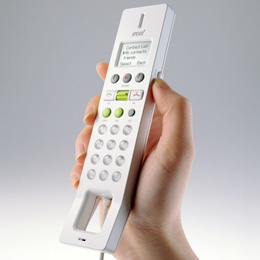
IPEVO skype handsetSkype has been my Instant Messenger of choice for quite some time, and ever since purchasing a proper Skype handset (see picture) I’ve used it more and more for voice calls. In my experience it leaves iChat’s audio quality in the dust. Where Skype has really impressed me is in its ability to patch in regular land line and mobile phone calls whilst holding a conference. For me it’s become a critical business tool — although I do still maintain a traditional landline.

Others I know have been brave enough to dump their landline completely, opting to use a SkypeIn number instead — only to regret the decision. Having to ask a client to call you back in the hope that you’ll get a better peer-to-peer connection is, to say the least, a little embarrassing.

What’s your experience with Skype? Take our poll, and let us know more in the comments.

[poll=2]

Amazon to challenge iTunes

Amazon has revealed plans to launch its own DRM-free music download store, in what many will see as a direct challenge to Apple’s iTunes. By selling tracks in the mp3 format — without copyright protection — music from Amazon will be compatible with almost any digital music device including cell-phones, streaming media boxes, and mp3 players such as Apple’s very own iPod.

Amazon’s catalogue will initially comprise of music from the third largest record company, EMI, and thousands of smaller labels. Along with Apple, who also recently starting selling DRM-free music, Amazon’s clout should help pile on more pressure for the other major record labels to follow suit and embrace the mp3 format.

As the Financial Times points out:

The web-based retailer’s decision to enter the digital music market comes at a time when the record companies are desperate for a rival to iTunes. In spite of challenges from Microsoft, Yahoo and others, the Apple service still commands roughly 80 per cent of the online music market, which has allowed it to dictate terms to the music companies on pricing and other issues.

Amazon has said that the service will debut later this year, but hasn’t revealed details on pricing, except to say it will be “competitive”.