
Author Archive

Would you bet your HD movie collection on a startup staying in business?

Set-top box movie service Vudu claimed a first today, offering download to-own movies in HD, albeit with a very limited catalog and high prices.

Previously, the company (like its competitors, which include Apple and Microsoft) offered HD content for rental only, but now customers can choose to pay between $13.99 and $23.99 to actually own the movies they download, which can be either stored on their Vudu hard drives or on the company’s own servers through its Vudu Vault ‘backup’ service. The only studios to be on board so far, however, are independents FirstLook, Kino and Magnolia Pictures, who together will begin by offering just 50 titles (compared to the 1,400 HD movies that Vudu makes available for rental), including “War, Inc.”, “Transsiberian” and “Man on Wire”. Moving forward, each participating studio has agreed to license new releases for sale in HD through Vudu on the same day and date as their DVD release.

See also: Vudu’s latest price cut is a start, here’s what else they need to do

Limited content aside, Vudu’s pricing remains too high, a problem not specific to the service but one that the company has failed to address nonetheless. As Streaming Media’s Dan Rayburn writes, it’s probably not Vudu’s fault, as the pricing will have been dictated by the studios themselves. Either way, as far as consumers are concerned, downloads of any sort – even in HD – shouldn’t cost the same or more than the DVD equivalent. And the issue is further compounded when you factor in that Vudu’s use of a proprietary video format (however high quality) and its copy-protection scheme means that content can’t be moved to other devices and is completely reliant on the company staying in business, which in the nascent market of video downloads is far from guaranteed.

Chumby bets on Internet-connected TVs

Hoping to move beyond being a geek’s favorite boutique gadget to something more mainstream, Chumby is partnering with chip maker Broadcom to make it easy for consumer electronics companies to embed its widget platform into Internet-connected TVs, Blue-ray players and set-top boxes.

Chumby’s content, which is currently available on the company’s own Internet-connected device – a cross between an alarm clock radio and digital picture frame – consists of “over 1,000 widgets in 30 different categories” such as news, entertainment, music, and sports. Content partners include CBS, MTV Networks, The New York Times, Pandora, The Weather Channel Interactive, and AOL’s SHOUTcast and Scripps Networks. Chumby can also access “thousands of Internet radio stations and podcasts”, along with a user’s own content and that shared by friends within their Chumby social network.

See also: Chumby gets $12.5M… here’s why it’s taking off

Of course, Chumby’s platform isn’t the only TV widget offering, with Yahoo’s Widget Channel making a big splash at this year’s Consumer Electronics Show (CES). Internet-connected TVs and accompanying widgets were also the talk of CES in 2008 – back then Sharp, Samsung, Panasonic and Google made related announcements, although not much seems to have materialized since then, suggesting that the market for Internet widgets on the telly is far from proven. In that sense, Chumby isn’t too late to the game.

Video demo of Chumby’s widget platform running on a TV after the jump…

Continue reading »

Why you may never see Spotify on iPhone

The video demo of the upcoming version of Spotify for iPhone (and iPod touch) that was yanked from YouTube has reappeared via Tech Digest. The mobile version of the streaming music service looks as polished as Mike Butcher over at TechCrunch UK first reported, although now that I’ve had a few hours to ponder its existence, I can see a number of reasons why Apple may never allow Spotfy into the iPhone App Store. Spotify isn’t the only music streaming app for iPhone (and therefore iTunes competitor) but it differs in two crucial ways:

  • Unlike Last.fm or Pandora, specific tracks and whole albums can be streamed on-demand, as apposed to having to be content with the choices or recommendations of the app itself – with no limits aside from the size of Spotify’s music catalog.
  • According to reports, Spotify on iPhone is able to cache tracks referenced in the playlists it creates so that the service can still be used outside wireless coverage. This solves one of the major drawbacks of streaming-only offerings and makes Spotify a much more direct iTunes competitor. Interestingly, Slacker offers similar functionality in its Blackberry mobile app but stripped off-line plackback from the company’s iPhone version.

Concept: iPhone app management in iTunes done right

I have a fascination with all things usability, and when it comes to the art of user experience, Apple is second to none. But that’s not to say that they always get things right or that ideas from Cupertino can’t be improved upon. They can – just ask Palm with its Pre smartphone and webOS.
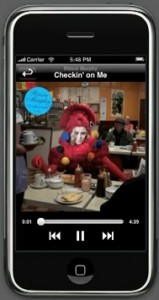
More proof comes via a concept video published on YouTube, demonstrating a much better way to manage iPhone apps via Apple’s desktop iTunes software. As Gizmodo explains:

The concept is simple, and wouldn’t require a change of habit by iPhone/iPod touch users: in iTunes, users see a representation of their various home screen(s), with which they can remove, move or sort apps. Sorting options are an obvious addition—sorting by most-used is what most people do manually (and imperfectly) anyway, so having a one-click option for that would be an immediate improvement. If custom sorting is your game, this will make the previously cumbersome process almost instant.

The result is simply brilliant and if the comments left on YouTube are anything to go by, Apple should hire this guy and get to work immediately putting his ideas into the next version of iTunes. As per usual, video demo after the jump…

Continue reading »

Spotify for iPhone in existence, S60 version on its way too

I recently hailed Spotify as my streaming music service of choice but bemoaned the lack of a mobile version. That’s set to change, reports my friend Mike Butcher over at TechCrunch UK, with a working version for Apple’s iPhone and iPod touch already in existence – though not yet publicly available through the App Store – along with a Symbian S60 version in development.

See also: Spotify, a very compelling music streaming service

Interestingly, Butcher says that it’s rumored that the iPhone client will only be available to users who use the paid-for version of the service, which is certainly one way for Spotify to sell more subscriptions. Right now the audio ads that persist on the free version of Spotify aren’t intrusive enough to make me want to switch to the paid version, but adding more value through a mobile client could make the difference. Especially if playlists can be ‘cached’, as Butcher suggests, so that you’ll still be able to use Spotify on the go even when you’re without a wireless connection. This will also help to save on battery life too, which can an issue with any mobile streaming service, not just Spotify.

After viewing a video demo of Spotify running on the iPhone (which has since been yanked from YouTube), Butcher says that, with the addition of a mobile client, the service “could even give the iTunes store a run for it’s money”, since it gives instant access to millions of tracks. “Assuming Apple lets it into the App Store of course”.

Official video ad of Spotify after the jump…

Continue reading »

Weekly wrapup: Mobile World Congress

Here’s a summary of the last week’s digital lifestyle action on last100. Note that you can subscribe to the weekly wrapups, either via the special weekly wrapup RSS feed or by email.

Enter your email address:

Note: Blogging was a little light last week on last100. Apologies, normal coverage should resume this week!

Mobile World Congress

This week was a big one in mobile, with plenty of news coming from the Mobile World Congress in Barcelona…
MWC: Five handsets that caught my eye

This week’s Mobile World Congress (MWC) in Barcelona has seen a flurry of handset announcements boasting, amongst other features, more megapixels, support for HD video, OLED screens and touchscreen UIs. Here are five handsets that caught my eye.

Continue reading »

Zatz Not Funny: iPhone apps of the week, placeshifting cable TV, Hulu drops the hammer, mobile broadband choices

A periodic roundup of relevant news from our friends at Zatz Not Funny

The free media-centric iPhone apps of the week

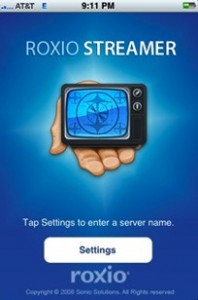
Dave Zatz: Roxio Streamer is a brand new app that hooks into their OS X Toast 10 software ($80) to transcode and stream transferred TiVo video, EyeTV recordings, and a variety of other media from Mac to iPhone or iPod Touch over WiFi.
Cable’s new approach to Placeshifting

Mari Silbey: Although we’ve seen some minor attempts by cable operators to let subscribers place-shift their TV programs – witness Comcast’s Any Room initiative – for the most part cable TV customers are stuck watching their shows in one place. Today several news outlets are reporting that the big cable companies have a plan in the works to change that.

Hulu drops the hammer

Dave Zatz: I sort of figured this day would come… Based on my perception of the licensing/royalty complexities and content providers fear that a current web video catalog piped to the television competes with live broadcasts. Hulu has shown their true colors – spawned of big media and beholden to big media.

Choosing a broadband card (Verizon or Sprint)

Dave Zatz: In choosing a broadband card and service, most modern 3G hardware should be fine. Assuming you can get a good deal (which you usually can), the key factors in making a decision are access, coverage, and contract terms.

Video: 26 minutes of Palm Pre goodness

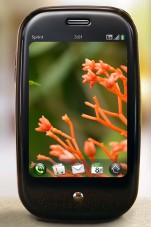
It’s a quiet day today on the news front after the flurry of announcements that came out of Mobile World Congress (MWC). And although I already highlighted five new handsets that caught my eye, none captured my imagination quite as much as the Palm Pre and accompanying webOS that was unveiled last month.

Sadly, we didn’t learn much new about the Pre at MWC, such as an exact release date (either in the States or here in the UK), but the good folks over at precommunity.com did capture an extended demo – all 26 minutes – of Palm’s comeback device. Once again it looks like bloggers and the wider press could look but not touch, nonetheless things are a lot less rushed this time and even in the space of a month the Pre’s software appears much more complete, making the wait that bit harder. Full video after the jump…

Continue reading »

Hulu blocks Boxee, could Firefox, IE and Safari be next?


quick intro to boxee from boxee on Vimeo.

The news that Hulu has asked Boxee to remove access to its content is ridiculous on many levels.

Not least is the fact that, in relation to Hulu, technically speaking Boxee is just a web browser that happens to be optimized for a ‘ten foot’ or TV-like viewing experience rather than for when you’re sat directly in front of the PC. And crucially, since Boxee has yet to license its software to set-top box makers or build a box of its own, the only way to get Boxee content onto a TV is via a PC (aside from running Boxee on a hacked AppleTV). Once the PC is using the TV as its monitor, any content can be displayed on the television, including using a standard web browser such as Firefox, IE or Safari to access Hulu or any online video site. All Boxee has done is design a better browsing experience for when you’re sat further away. In other words, Boxee alone doesn’t enable Hulu to be viewed on the TV, it just makes it more convenient.

Continue reading »

MWC: Five handsets that caught my eye

This week’s Mobile World Congress (MWC) in Barcelona has seen a flurry of handset announcements boasting, amongst other features, more megapixels, support for HD video, OLED screens and touchscreen UIs. Here’s five handsets that caught my eye.

Samsung Omnia HD

Not content with competing on megapixels alone, the Omnia HD, as the name suggests, is the first smartphone to both record and playback High Definition video. And that’s proper High Def (720p) unlike the slightly misleadingly named Touch HD from HTC. However, there’s much, much more to like about the Omnia HD, not least its 3.7″ AM OLED touch screen, which if the screen on Nokia’s N85 is anything to go by (I have one on loan right now), will be absolutely stunning. The device also has full DLNA certification, meaning that it’s possible to share media shot or stored on the handset with other UPnP AV devices, such as a PlayStation 3 connected to a High Definition TV.

OS-wise, the Omnia HD uses the latest Symbian OS and the touch-friendly version of S60, although Samsung have customized the home screen quite a bit, including various widgets as first seen on the Tocco.

Continue reading »