
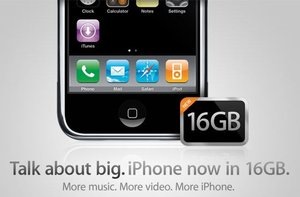
 Despite being on the market less than six months, Apple’s iPhone has moved into the No. 2 spot among smart phones in the U.S., surpassing Windows Mobile handsets from Microsoft.
In an analysis from Canalys researchers, it is estimated that the iPhone had 28 percent of the U.S. smart phone market during the fourth quarter. Research In Motion, makers of the Blackberry line of phones, still has the largest share at 41 percent.
Nokia, the world’s No. 1 cell phone manufacturer, sold 52.9 percent of the smart phones worldwide, dominating everywhere but the U.S. market. Worldwide, RIM is second with 11.4 percent (up 121 percent over the same quarter in 2006), and Apple is third despite the phone’s limited availability with 6.5 percent, surpassing troubled Motorola.
Continue reading »
 If Verizon Wireless is truly the winner of the FCC’s 700 MHz spectrum auction, as many
  No matter how much we talk about Apple’s elegant iPhone or Google’s mobile initiatives, Nokia just plods along undaunted, doing its own thing. With the introduction today of
 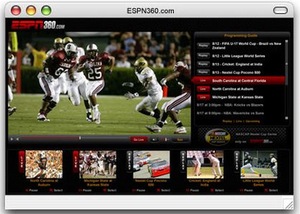 ESPN will offer some live broadband programming to anybody on college campuses or at military bases here in the U.S. Web users in the .edu and .mil domains will be able to access the content at ESPN360 without charge.
 Maybe it’s not as easy as Google thought to enter the mobile world.
 The big game is this weekend in the States. New England vs. New York. But there’s another game being played at the same time that, to some, is more interesting than football.
 For those of you playing along at home, the Federal Communication Commission’s 700 MHz spectrum bidding reached an
  Looks like the rumors and back-room talk about Motorola are true: The company is looking to spin off (or “strategically realign”) its Mobile Devices business, or sell it outright.
 It’s only a pair of rumors. One old. One new.
 Bummer, dude.