Here’s a summary of the week’s digital lifestyle action on last100. Note that you can subscribe to the weekly wrapups, either via the special weekly wrapup RSS feed or by email.
Following the news last week that Canadian broadcaster CBC would be releasing a TV show through BitTorrent as a free and legal (DRM-free) download, we published the inside story courtesy of last100’s Guinevere Orvis. In a post titled ‘Inside story: the making of a legal TV torrent‘, Guinevere, who worked on the CBS project, wrote: “Why in the year 2008, seven years after BitTorrent’s birth and a lifetime in Internet years is this a groundbreaking thing? Let’s break down what it takes to get a legal torrent going and maybe we’ll get some answers.”
In our recent Year in review (2007) for digital music, we predicted that the idea of a music flat-rate or so-called music “tax” would be one model that will be pushed hard by the major record labels in 2008. Universal Music Group, publicly at least, has been most committed to the idea. First, by touting its own Total Music plan, and then through announcing a partnership with Nokia as part of the handset maker’s “Comes With Music” offering. Now it seems that Warner Music has been handed the flat-rate baton.
In our recent Year in review (2007) for digital music, we predicted that the idea of a music flat-rate or so-called music “tax” would be one model that will be pushed hard by the major record labels in 2008. The idea:
Charge the customers of ISPs, cellphone carriers or even device manufacturers a flat-rate fee as part of their data service plan or purchase, in exchange for the right to access and possibly share music from the major record labels’ catalogs. That way, downloading is decriminalized and the recording industry is guaranteed revenue.
Of all the four major labels – Universal Music, Sony BMG, Warner, and EMI – Universal, publicly at least, has been most committed to the idea. First, by touting its own Total Music plan, and then through announcing a partnership with Nokia as part of the handset maker’s “Comes With Music” offering.
Now it seems that Warner Music has been handed the flat-rate baton.
I asked the question in September, and I’ll ask it again: Do we really need live TV on our cell phones? AT&T, the largest U.S. carrier, says we do.
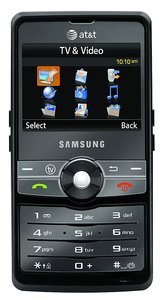
AT&T said Thursday it will offer live mobile TV service from MediaFLO in May through two handsets — the LG Vu and the Samsung Access. Subscribers willing to pony up the extra bucks (prices won’t be announced until later) will receive eight channels of live TV plus two exclusive channels in select markets.
AT&T offers everything from music to Web surfing is looking to live mobile TV as a way to earn additional revenue, something all the carriers desire as cell phone call prices continue to fall. Rival Verizon, the No. 2 U.S. carrier, already offers broadcast mobile TV through V-Cast.
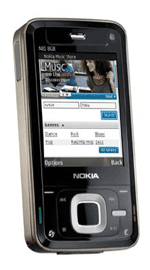
Having already secured Universal Music’s support, Nokia is hopeful that the three remaining major labels – Sony BMG, EMI and Warner, along with around ten independents – will also sign on in time for the launch of its all-you-can-eat music download service.

Announced last December at the annual Nokia World conference, “Comes With Music” will enable customers to buy a Nokia device with a year of unlimited access to “millions of tracks”, and – rather surprisingly – get to keep any downloaded tracks once the twelve month subscription period ends. The only way to then continue accessing the service, however, is to purchase a new “Comes With Music” device (see our follow-up report).
March 26th, 2008 | Posted in Comms, Mobile | Comments Off
I’m still shaking my head over this one. Motorola, one of the stalwarts of the mobile communications industry, will split into two publicly traded companies in 2009, one for its profitable infrastructure equipment, the other for its not-so-profitable mobile handsets.

Back in 2005, Motorola introduced the Razr as an exclusive fashion phone costing $600 with a service plan, $800 without — and people complained that Apple’s iPhone was too expensive at its introduction. Like the iPhone, the Razr was the must-have geek toy of its time.
In 2006, however, Motorola allowed the Razr to enter the mass market as a mid-price (then super-cheap) phone, which lessened its must-have coolness and social impact. It seemed every snot-nosed kid at the mall had a Razr stuffed in a back pocket.
Disclaimer: The views expressed here are my own and not those of CBC/Radio-Canada.
Last week, CBC released an official DRM-free BitTorrent of a prime time show– a first for a major north American broadcaster (see last100 coverage). Since then we’ve been getting hundreds of emails of support and one clear resounding message: give us more. This begs the question, why aren’t broadcasters doing more? Why in the year 2008, seven years after BitTorrent’s birth and a lifetime in Internet years is this a groundbreaking thing? Let’s break down what it takes to get a legal torrent going and maybe we’ll get some answers.
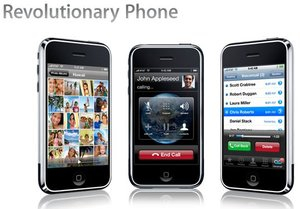
A 3G version of Apple’s iPhone could be on its way – literally – if one analyst’s sources are to be believed.
According to “sources in Asia”, Gartner’s Ken Dulaney says that Apple has placed a 10 million unit order for a 3G version of the iPhone — the handset’s first major hardware update since its launch last June. During a telephone briefing with iPod Observer, Dulaney also speculated that the updated iPhone would utilize OLED technology for the device’s display which should help improve battery life.

The lack of ‘3G’ – a mobile data technology that enables much faster Internet access on cell phones compared with the currently supported EDGE (2.5G) – is seen as a major shortfall of the iPhone, and is in part being blamed for poor sales in Europe. Hence Apple’s imminent move to a 3G iPhone, says Dulaney.
This is getting a bit embarrassing. Every few days a record label stands up and announces a new digital download scheme that will revolutionize the recording industry and save the environment.
OK, maybe not save the environment. We have Al Gore for that. But definitely the record industry. Somebody needs to save the recording industry, and it can’t always be Steve Jobs, so today it’s a dude named Rolf Schmidt-Holtz.
Schmidt-Holtz is the CEO of Sony BMG, the world’s second-largest record label behind Universal Music Group and ahead of Warner and EMI. Schmidt-Holtz told a German newspaper, Frankfurter Allgemeine Zeitung, that Sony BMG is working on a subscription service that would allow customers unlimited access to the label’s entire library for a monthly fee, roughly US$9-$12.
Best of all — besides saving baby seals — the Sony BMG plan will work on all digital music players, including the ubiquitous iPod. And maybe, just maybe, if everybody behaves and stops pirating music, customers “could keep some songs indefinitely — that they would own them even after the subscription expired,” Herr Schmidt-Holtz is quoted as saying.
There used to be a time when you could only download legal digital music from the iTunes Store and a handful of little-known indie sites. Now there seems to be legal downloading on every street corner, with the record labels cutting deals with everybody except iTunes.
The latest deal to gain legitimate steam is one between MySpace and two of the top four record labels, Sony BMG and Warner. According to a report today in the News Corp.-owned New York Post — coincidentally the owner of MySpace — the social networking site is close to signing deals with Sony and Warner as it puts together MySpace Music. The venture may be announced as early as this week, the Post notes.
“Everybody’s operating with a sense of urgency to try to close it out,” an “industry insider” told the Post.
The new MySpace Music is expected to be a mix of pay-per-download and ad-supported streaming audio and video. As the Post notes, no money is expected to change hands as the labels are “trading content rights in exchange for minority equity stakes in MySpace Music and the chance to participate in the advertising revenues that News Corp. hopes to generate from the service.”
Every episode of “The Daily Show with Jon Stewart” available online is bad enough, but now we can watch 12 years worth of “South Park.” Man, I will never get anything done ever again.
(Try concentrating while playing the recent “South Park” episode “Britney’s New Look.” Impossible.)
Announced at the end of November, “South Park” episodes have finally come to the Web, legal, of high quality, and nicely organized, with minimal commercial interruption. Viacom/MTV, owner of “South Park” home Comedy Central, and SouthParkStudios are giving us every episode for free at southparkstudios.com.
At the site you can stream full episodes, organized by season, and all sorts of clips (controversial goes without saying). There’s also “South Park” news, games, crap (downloads, mobile, and the store), and a fans section. Unfortunately, you cannot embed full episodes, but you can embed the 3,000 available clips.
SouthParkStudios is a joint venture between “South Park” creators Matt Stone and Trey Parker and Comedy Central, with the parties splitting ad revenue 50/50. In addition to housing “South Park” content, the studios will also serve as a home for other animated projects from Stone and Parker. The arrangement also allows MTV Networks to expand its online video reach.
Here’s a summary of the week’s digital lifestyle action on last100. Note that you can subscribe to the weekly wrapups, either via the special weekly wrapup RSS feed or by email.
Top digital lifestyle news
The big Internet TV news this past week is that Joost is reportedly switching strategy and will be bringing its service to the Web browser. Last100 editor Steve O’Hear wrote that the move “would signal an admission that Joost’s strategy to build its service around the kind of ‘lean back’ experience that it hoped to deliver via a full screen desktop application has largely failed.” Also Steve points out that the Internet TV landscape has changed dramatically — there are now a plethora of companies serving a similar mission to Joost, including big hitter Hulu, the NBC/Fox joint venture.
On the mobile front, the U.S. Federal Communications Commission announced that the big winners in the 700 MHz wireless spectrum auction were, indeed, Verizon and AT&T, the two biggest players in the industry. Dan Langendorf says that now the wait it over, it’s time for the U.S. mobile industry to innovate.
Following comments from Adobe, we also looked at the implications of Flash on iPhone (or the lack of). In a post titled ‘Who needs Flash on iPhone more? Adobe or Apple?‘, last100 editor Steve O’Hear asked: Is Adobe committing itself to building the missing version of Flash that Jobs demands? Or does Adobe really believe it can go-it-alone? “Without Apple providing the hooks to enable Adobe to tap into the iPhone’s Safari web browser,” Steve contended, “it’s hard to see how a Flash plug-in could be implemented. Instead, Adobe might be able to create a work around: some kind of stand-alone Flash Player that opens full screen to play certain content.”
March 21st, 2008 | Posted in Net TV | Comments Off
Gizmodo featured a product today that I must say is interesting: The Myka is a device that makes it easy to download torrents and play them on your living room TV.
It’s no muss, no fuss BitTorrenting, perfect for people who don’t want to mess with downloading torrents and watching them on a computer, or preparing them for play through some bridge device to a television.
The Myka, which sort of looks like a beefed up Mac Mini, connects to the Internet via LAN or WiFi, has HDMI, Composite, S-Video and SPDIF connections, and a choice of 80, 160, or 500 gigabytes of storage. You can even add a USB expansion hard drive to a port that actually works, unlike what’s found on the AppleTV. It runs a Linux OS and is pre-installed with BitTorrent software.
Prices range from $299 to about $460.
For those of you who want to download and watch legal torrents, like CBC’s program “Canada’s Next Great Prime Minister“, or other fare (wink wink), The Myka might be a product worth exploring.