
Here’s a summary of the week’s digital lifestyle action on last100. Note that you can subscribe to the weekly wrapups, either via the special weekly wrapup RSS feed or by email.
Top digital lifestyle news
Lots of mobile news this week, the biggest of which was probably Apple’s decision to finally open the iPhone to third-party developers. At the Symbian Show in London, Nokia also showed off the new version of the mobile OS S60, which offers an optional iPhone-like touch interface — watch the mobile Internet space heat up.
In Internet TV-related news, the BBC has partnered with Adobe to add an iPlayer streaming option with Mac and Linux support; and Sony — which just launched a cheaper PS3 — talked up its forthcoming online video network for the PS3 / PSP.
Additionally, speculation surrounding a Netflix set-top box has resurfaced. Continue reading »
 There’s one thing to this whole video identification business I don’t understand. If it’s so important that we stop people from uploading copyrighted content to video sharing sites like YouTube and Veoh, then why haven’t the best brains in multiple industries figured out a solution?
 Slowly but surely, methodically, Sony is lining up its Playstation 3 as an affordable gaming console and establishing it as the center of a home entertainment network.
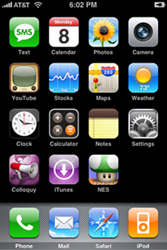 I had to rub my eyes when I saw this: Apple is opening up the iPhone to third party developers.
 When Apple launched iTunes Plus, the company’s DRM-free music download service, last April, I was critical of the price increase from 99c to $1.29 per track, compared to their copy-protected equivalents. CEO Steve Jobs attempted to justify the premium pricing, based on the fact that music on iTunes Plus was encoded at a higher bit-rate of 256kbps (up from 128kbps). Yet I still felt that Apple in conjunction with EMI, the only major label to sign on, were in effect penalizing those who wanted to purchase music DRM-free, with all of their fair use rights intact.
  Napster, Napster, Napster. First you set the music world on fire (along with the legal system). Now you’re sort of an also-ran.
 A recent report on U.S. sales of Apple’s iPhone claimed that the biggest losers have been Palm, T-Mobile and Motorola.
 Today’s announcement that YouTube’s video identification technology is now in beta was mostly met with jeers, not cheers.
 The BBC’s