
 The Nokia Music Store that we wrote about in late August, has finally opened its doors.
A quick recap: designed to run on the company’s flagship multimedia handsets, the N81 and N95, as well as a Windows PC, the service offers individual songs costing €1 and albums at around €10, from a catalog featuring “millions of tracks” from major artists and independents. Music can be bought “over-the-air”, as well as being able to be purchased and “side-loaded” via a PC, with synchronization offered both ways.
A subscription-based service is also available through a PC, though, curiously, isn’t supported on a cell phone.
Here’s what we wrote when Nokia first announced it music store:
Like with Apple’s iTunes/iPod ecosystem, Nokia is now in a position to control the whole user experience, by designing both the software and hardware required to use its music download service, and this is obviously one motivation behind the company’s attempt to bypass the networks. However, a second, and perhaps, bigger reason behind…. [the] launch is that profits from hardware sales are falling, requiring the company to reinvent itself as one that provides a broad range of mobile services — and in doing so, will inevitably have to wrestle some power away from the carriers.
James Burland over at Nokia Creative has produced a video review of the Nokia Music Store running on an N95. Check out the video after the jump….
Continue reading »

 When details of the iPhone’s UK launch were unveiled at a special press event in London last month, Apple CEO Steve Jobs and O2 UK boss Matthew Key both had to field a question about the recently announced iPod Touch. Since the Touch has many of the iPhone’s key features — multi-touch interface, widescreen display, mobile browser, WiFi support — and would go on sale in the UK before the iPhone, would it not eat into iPhone sales?
 AT&T and Napster are banking on the spontaneous behavior of kids when it comes to
 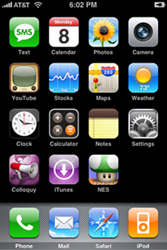 I had to rub my eyes when I saw this: Apple is opening up the iPhone to third party developers.
 A recent report on U.S. sales of Apple’s iPhone claimed that the biggest losers have been Palm, T-Mobile and Motorola.
 The unveiling of Microsoft’s