
Archive for the ‘Mobile’ Category

Google Latitude shows what's wrong with Nokia's social location (SoLo) strategy

If the next frontier is mobile, a key battle ground is going to be location-based services. And, drilling down further, location-based social networking, such as the ability to share your current location with friends. Yesterday, Google went head-to-head with Nokia and a plethora of startups with such an application. Called Latitude, the Google Map-powered software enables users to keep track of where their friends are and what they’re up to. Sort of like Twitter, IM and GPS rolled into one.

If that sounds a lot like Nokia’s Friend View and, more broadly, the handset maker’s social location strategy (SoLo), that’s because it is. But there’s one significant difference: despite investing heavily in its own mobile operating system, Google Latitude has launched simultaneously on multiple mobile platforms: Blackberry, S60, Windows Mobile, and Google’s own Android. iPhone support should also arrive soon, says the company. In comparison, like other Nokia web services, Friend View is only available on S60 and targeted solely at Nokia’s own cell phones.

Continue reading »
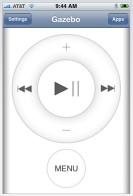
Turn your iPhone into an Apple Remote

Another remote control application has hit the the iPhone’s App store. This time, “Rowmote” emulates Apple’s own remote control, the Apple Remote, which used to ship for ‘free’ with the company’s consumer Macs but now has to be purchased separately at an additional cost of $19.
Rowmote (iTunes link) is compatible with the iPhone and iPod touch and works over WiFi to control any of Apple’s own apps that are currently supported by the Apple Remote: Front Row, Quicktime, DVD Player, iTunes and Keynote, although it also requires a small piece of software to be installed on the Mac itself. Aside from emulating the Apple Remote’s functionality, right down to the look and feel, Rowmote also features an application switcher of sorts, enabling users to bring to focus any of the supported apps, a feature that maybe worth paying the 99 cents download fee for alone.

See also: iPhone remote control app for VLC Media Player

However, for those simply wanting a remote control for iTunes (or the AppleTV), Apple’s own ‘Remote’ app — a free download from the App Store — is a much better solution as it includes the ability to visually browse your iTunes library on the iPhone or iPod touch itself.

Looking forward, the app’s developer, Evan Schoenberg, says that the next version of Rowmote will add support for media center software, Boxee, along with Microsoft’s Powerpoint presentation software.

(via Gizmodo)

Should Nokia release a Netbook?

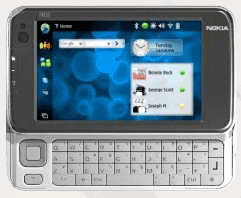
If 2008 was the year of the Netbook, is it too late for Nokia to jump on the bandwagon? Mikey Bee of NokNok.tv doesn’t thing so, noting that while the company talked up its recently announced N97 smartphone for its Netbook-like qualities (despite featuring a comparatively small 3.5 inch screen), it also fazed out the WiMAX version of its rather long in the tooth N810 Internet Tablet, perhaps paving the way for a new Nokia device designed primarily for surfing the web.
See also: Hands-on: Nokia’s N810 Internet Tablet

How might a Nokia ‘Netbook’ shape up? Were the company to release such a device, I’d expect it to follow many of the design lines of its existing Internet Tablet range, powered by the Linux-based Maemo OS but featuring a larger screen (topping out at 7 inches). Rather than a slide out keyboard, I think a more traditional clam shell design should be incorporated, a major part of the appeal of existing Netbooks (as apposed to less popular tablet PCs or UMPCs). Software-wise, the device would tie into all of the company’s web services, including Share on Ovi, along with support for third-party social networking sites, such as Facebook and Twitter, which could easily be added through widgets on the home screen, just like the existing N810 User Interface and that used on the upcoming N97.

Continue reading »

If buggy smartphones are the "new reality", here's some free advice for handset makers

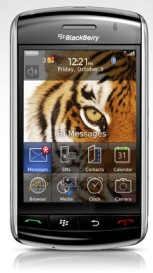
It’s an honest yet unwelcome admission: rushing devices to market with buggy and unfinished software is the “new reality” in the smartphone space, RIM’s co-Chief Executive Jim Balsillie tells the Wall Street Journal. When the company released its iPhone competitor, the Blackberry Storm, it met its Black Friday deadline by “the skin of their teeth”, only for the device to be widely slammed by critics for its many software glitches, most of which, RIM claims, have now been addressed by a firmware update.
RIM’s story isn’t an isolated one. The majority of smartphones that I’ve tested over the last year, admittedly some were “pre-production” models, had issues with the software on which they run on. The problem should be addressed in a forthcoming software update, I’m almost always told, and more often than not it is.

Eventually.

And there lies the biggest problem.

While “release early and release often” might be the new smartphone reality, timing is everything. Here’s some free advice for smartphone makers…

Continue reading »

What if Apple sued Palm, would Microsoft come to the rescue?

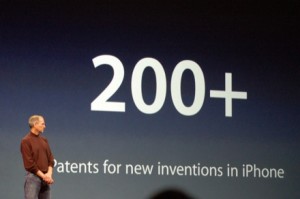
When the iPhone first launched at Macworld in 2007, I distinctly remember Apple CEO Steve Jobs boasting that the company had over 200 patents on this thing. At the time, that boast stuck out like a sore thumb as I couldn’t recall Apple making such a fuss over patents before.

Attempting to ‘protect’ one’s intellectual property through patent applications is something that large tech companies do every day. But the fact that Jobs felt the need to highlight this in relation to the iPhone told its own story: Apple was onto something big and it fully expected others to copy many of the iPhone’s ‘innovations’, such as the device’s multi-touch User Interface and related gestures to manipulate content.

Two years on and although we’ve seen many so-called iPhone “killers” from the likes of Google, Nokia, Samsung, HTC and RIM, none of them have dared to go as far as implementing a multi-touch UI.

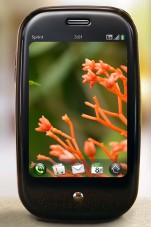
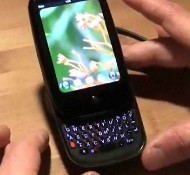
Until just over a week ago, that is, when Palm unveiled its new Pre smartphone and accompanying webOS, which includes a capacative multi-touch display and relies heavily on gestures for navigation. None of which has gone unnoticed by Apple.

Continue reading »

Will audio ads on Pandora help it swim back across the pond?

It won’t be popular, yet Pandora’s decision to introduce audio ads is almost certainly necessary to keep the service running and, therefore, something I welcome. Especially if it helps bring the service back to the UK.

Rolled out with little fanfare, besides an acknowledgment on the company’s Twitter feed, the music streaming service has started serving audio ads, reports TechCrunch. While they do interrupt the music, the ads are “fairly sparse”, says Jason Kincaid. And I’ll have to take his word for it.

Continue reading »

Mike Arrington's CrunchPad web tablet reaches prototype but should it go into production?

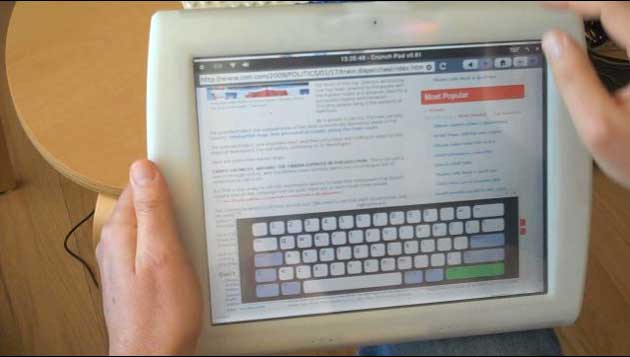
Six months on from TechCrunch editor Mike Arrington’s stated mission to create a “dead simple and dirt cheap touch screen web tablet to surf the web” and the first fully working prototype has been unveiled.

The device, which is now being called the ‘CrunchPad’, sports a 12 inch resistive 4:3 touchscreen, Via processor and 4GB of storage, virtual on-screen keyboard and is powered by a version of Linux and a custom WebKit browser. It’s primary use is for surfing the web, perhaps while watching TV “so you can look up stuff on Wikipedia or IMDB as you channel surf”, writes Arrington. Or as another means to consume online video (“on Hulu or Joost or wherever”) and other content, as well as check email or access other web services such as Google Docs.

See also: How do you use your Netbook?

In other words, just like existing Netbooks, the CrunchPad is designed for the Cloud, in which our data and applications increasingly reside on remote servers, accessible through a standard web browser.

Continue reading »

Who has the most to fear from Palm's "New-ness"?

Pandora CTO Tom Conrad put it best: “I can’t think of much that’s harder in the world than building a modern, mobile operating system and integrating it with a fantastic piece of hardware”, he tells Palm Info Center.

We see companies take a swing and miss at this time after time – I really think Palm has hit a home run on this one.”

And Conrad should know.

Not only has his company ported its music streaming and discovery service to over 40 different handsets, “everything from J2ME and Windows Mobile to the iPhone”, but Pandora was also chosen by Palm to get an early hands-on peak at the webOS and Pre and begin bringing their app over to the company’s new platform.

At the same time, Conrad rightfully reminds us that Palm is still very much the underdog. Of course, underdogs should rarely be underestimated.

On that note, who should have the most to fear from Palm’s “New-ness”?

Continue reading »

Why you may never see Firefox, Opera or Chrome on the iPhone

A report on Macrumors (my favourite Apple rumor site) observes that the company appears to have relaxed its iPhone App Store policy in relation to third-party web browsers. It was thought that, until now, competitors to Apple’s own Mobile Safari weren’t being approved on the basis that they “duplicate functionality” or compete with Apple’s own offering. That may no longer be the case.
“Over the past 24 hours, Apple has begun to approve 3rd party web browsing applications for the iPhone. A number of new web browsing apps have suddenly appeared with original submission dates ranging as far back as October”, writes Macrumors.

A partial list of these new applications include:

Edge Browser (Free) – No loss of screen real estate to the address or navigation bars.
Incognito ($1.99) – Now you can browse without leaving a history of any kind.
WebMate:Tabbed Browser ($0.99) – Web Mate simplifies browsing by queuing up all the links you click on, then allowing you to view them one by one when you’re ready.
Shaking Web ($1.99) – adds a sophisticated algorithm to compensate for small hand shaking to allow for easier reading.

This has led to many speculating that heavyweight competitors, such as Firefox, Opera or Google’s Chrome, could be next to land on the iPhone.

Not so fast.

Continue reading »

Video: Palm Pre and webOS in action

I didn’t get around to posting yesterday because, in all honesty, I spent most of the day scouring YouTube and various blogs for video coverage of the Consumer Electronics Show. In particular, I was keen to take in as many hands-on demos of the new Palm Pre and the accompanying webOS.

See also: Have we just witnessed the second coming of Palm?

After many hours of viewing, I’m glad to report that my initial enthusiasm for Palm’s new offering hasn’t waned. In fact, despite my natural cynicism towards the company’s bizarre decision not to allow bloggers at CES to actually hold the device — they could still touch it — I’m even more convinced that Palm has taken the mobile experience up a level, building nicely on top of what Apple and the iPhone delivers in terms of user experience and the mobile web. If I had to sum up the difference between Palm’s and Apple’s approach, the iPhone often feels like it wants me to do things Apple’s way — no multitasking, iTunes, MobileMe etc. — while the Pre and webOS appears to fit around the way I already manage my digital life. That’s my key takeway from the various demos and early coverage but of course, until I actually get my hands on the device, I’m reserving my final judgment.

Check out IntoMobile’s “hands-on” video after the jump (note: it’s a little grumpy and rushed on Palm’s part)… and you can also watch the complete Palm press event here.

Continue reading »