Archive for the ‘Comms’ Category

Analyst estimates more than 1 million iPhones are "unlocked"; here's what it means

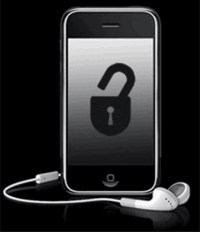
iphone unlockBernstein Research analyst Tony Sacconaghi estimates that more than a quarter of the iPhones sold in the U.S. have been “unlocked” to work on network providers other than officially sanctioned AT&T.

That’s about 27 percent of the iPhones sold in 2007.

It works out to about 1.45 million handsets.

What do these numbers mean?

Even if they are estimated, these numbers mean that an amazing number of people have taken the time, effort, and trouble to unlock the phones, no matter the complexity or risk. Some of these people are techies and hackers who are comfortable messing around with the innards of electronic equipment.

But to hit these numbers, it means that a whole lotta average folks are unlocking their iPhones or — more likely — paying a cottage industry to do it for them.

Continue reading »

FCC's 700 Mhz spectrum auction begins today; why it matters and gives us hope

fcc wireless logoGranted, the start of today’s FCC 700 MHz spectrum auction is no spectator sport. No network coverage. No $3 million ads. No pre-game shows.

And yet the auction isn’t without intrigue for you and me, although it’s more along the lines of Tammany Hall or a Dick Cheney cabinet meeting. Oh, to be a fly on the wall at AT&T, Verizon, Google, and the Federal Communications Commission, the chief players in the spectrum hunt.

For the most part, nobody yet cares about the 700 MHz spectrum (FCC table) except for teleco geeks, the tech press and bloggers, and the players themselves. It’s too early for any of this to matter at a practical, day-to-day level. But do not underestimate its importance to our lives in the long run, at least here in the U.S.

Continue reading »

Apple: iPod Touch first mainstream Wi-Fi mobile platform

The iPod Touch is Apple’s next generation iPod, right? Wrong.

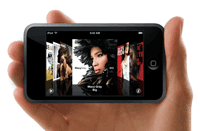
Apple: iPod Touch first mainstream WiFi mobile platformDuring the company’s Q1 earnings conference call, Apple executives finally let the cat out of the bag and admitted publicly what they’ve known and I believed all along: the iPod Touch is potentially the “first mainstream Wi-Fi mobile platform, running all kinds of mobile applications”, not just music, video and casual web browsing.

Two words stick out: platform and mainstream.

Continue reading »

Jobsnote highlights: Macbook Air, iTunes movie rentals, Apple TV redux

Probably the most anticipated announcement that Apple CEO Steve Jobs made at the annual Macworld expo this morning was that of the MacBook Air: a 13.3″, LED backlit notebook computer that pushes the concept of “thin” to its boundaries. But the one that Jobs spent the most time on, and seemed the most excited about, was the announcement of the iTunes Movie Rentals store in conjunction with the revamp of his maybe-no-longer-a-hobby-project Apple TV.

iTunes movie rentals and Apple TV 2

We all knew iTunes Movie Rentals were coming, all that was left for Jobs to announce were the details.

Movie rentals on iTunes

The iTunes Movie Rental store launches today in the US (later this year for the rest of the world), with rentals costing $3.99 for new releases, and $2.99 for library titles. Renters have 30 days to begin watching a movie, and then 24 hours to finish watching it once they do. Every major studio is on board, and Apple’s rental store launches with over 100 titles (1000 promised by the end of February), with new releases appearing 30 days following DVD release (which perhaps indicates some hesitation on the part of studios to embrace a new format — no surprise there).

At first glance, Netflix would appear to have a leg up on Apple. Unlimited streaming for a little as $8.99 per month is probably a better deal for most consumers than $4 per movie strapped to a 24 hour viewing window. But where Apple’s system shines is in its convergence with other devices. Whereas Netflix can only stream to Windows PCs, Apple can stream or download rented movies to both the Mac and PC, as well as to any current generation iPod, the iPhone, and the Apple TV.

Continue reading »

Skype coming to Sony's PSP?

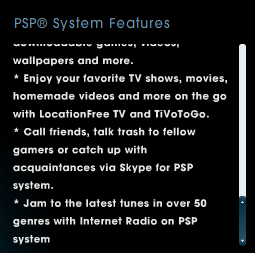
Skype coming to Sony’s PSP?With this year’s Consumer Electronics Show (CES) and Macworld just around the corner, let the rumor mongering and product “leaks” begin. Today’s news (Engadget) is that users of Sony’s PlayStation Portable will soon be able to make Internet-based telephone calls and send messages over Skype’s network. Interestingly, the source of the “leak” is Sony’s own official CES preview page.

This isn’t the first time Sony has sought to add VoIP functionality to the PSP. Last May, Sony Europe announced that they had teamed up with British Telecom to bring voice calls, video conferencing and IM functionality to users across Europe. However, Skype has a huge installed user base, much larger than BT’s own ‘softphone’ products, and presumably will be offered to users in the U.S. and other parts of the world, not just Europe.

Video: 3's Skype cell phone

Video: 3's Skype cell phoneCellulare Magazine have published a hands-on video of the new Skype cell phone offered by 3 Mobile (see yesterday’s coverage).

A few observations:

  • The handset itself won’t win any prizes on the style-front. It’s a bog standard candy-bar design, with a slightly cheap looking trim. This isn’t a phone for the tech-savvy early adopter crowd to rival the iPhone, but is squarely aimed at younger, more general, price conscious consumers.
  • Despite offering first-of-its-kind native Skype functionality, the phone doesn’t feature WiFi. Duh!
  • Sending Skype-to-Skype IMs maybe free, but there is, sadly, no QWERTY keyboard.
  • Presence — the ability to see who is “online” and ready to receive a call — is a great feature on a cell phone.

Watch the video for yourself, after the jump…

Continue reading »

iPhone-envy: Nokia unveils S60 touch interface

iPhone-envy: Nokia unviels S60 touch interfaceA recent report on U.S. sales of Apple’s iPhone claimed that the biggest losers have been Palm, T-Mobile and Motorola.

According to the NPD Group’s research, initial iPhone buyers were ten times more likely to have previously owned a Palm Treo, three times more likely to have owned a T-Mobile Sidekick, with many iPhone purchases also replacing a Motorola Q. In contrast, RIM’s Blackberry appears to have dodged Apple’s bullet, with the iPhone’s lack of corporate email support being cited as one possible reason.

Nokia also went largely unscathed, perhaps because the Scandinavian company doesn’t have the same presence in the U.S. as in other parts of the world.

However, not one to rest on its laurels, and with the iPhone set to launch in Europe next month, Nokia today unveiled the next version of the Symbian-based mobile operating system, S60, which will offer the option of an iPhone-like touch-screen user interface, and includes support for Flash video. S60 currently powers mobile devices from LG Electronics, Lenovo, Samsung, and Nokia themselves — including the company’s showcase N95.

Despite paying homage to the iPhone, the new enhanced S60 sports a few innovations of its own.

Continue reading »

The Google phone may not be a phone, but an operating system

08google190.jpgWhat if the Google phone isn’t a phone at all?

What if Google just made a mobile operating system that allowed the search giant to bring its online advertising to the cellphone, that extended the use of its mobile applications like Search and Google Maps, and that delivered Google desktop applications and services to any handset?

The New York Times today published a story that said Google hopes to “persuade wireless carriers and mobile phone makers to offer phones based on its software.” At the core will be a Google mobile operating system that is expected to be based on open-source Linux software. It is unlikely that Google will manufacture the phone itself, according to analysts interviewed by The Times.

In other words, Google may not be preparing a physical phone to rival Apple’s iPhone or the other smartphones on the market. Rather, Google apparently is developing an alternative mobile OS to Microsoft’s Windows Mobile, which is built into phones from many manufacturers, and the Symbian operating system, used primarily by Nokia and Sony Ericsson.

Can a Google Mobile OS compete with Windows Mobile and the Symbian OS?

Continue reading »

Ad-funded mobile network goes live in the UK

Ad-funded mobile network goes live in the UKWould you welcome spam onto your mobile phone in return for free text messages and voice minutes? Blyk, a new mobile network for 16 to 24 year olds which launched in the UK today, believes that the answer is yes.
The idea behind the virtual network operator (infrastructure is provided by France Telecom’s Orange) is to match brands to users, through targeted advertising in the form of multimedia messages (MMS). Up to six messages will be sent per-day, with users rewarded with 43 minutes of voice calls and 217 text messages per-month, after which they can pay to “top up” their SIM card for more minutes and texts. Stay within the “free” limits, and thanks to advertising, you’ll never have to pay a mobile phone bill again.

Continue reading »

Poll: should Apple join the wireless auction?

Apple and at&tWhile many expect Google to throw its hat in the ring, and enter a bid in the upcoming U.S. wireless spectrum auction, Apple’s name hasn’t really been mentioned — until now that is. Yesterday, Business Week reported that CEO Steve Jobs and Co. have studied the implications of joining the auction, which will be held Jan. 16, given that the chance to wrestle power away from incumbent telco’s — such as AT&T and Verizon — is too tempting to dismiss outright. Many feel that Apple’s iPhone will be deemed a success in spite of its partnering carriers, not because of them.

Continue reading »