Archive for the ‘Audio’ Category

Rhapsody launches DRM-free MP3 music store

Another day, another DRM-free music store

Rhapsody launches DRM-free MP3 music storeRhapsody, the joint venture by Real Networks and Viacom’s MTV Networks, is the latest digital music service to launch a DRM-free music download store. Although the company isn’t ditching Digital Rights Management software altogether – its music subscription service still relies heavily on copy-protection technology – the new Rhapsody MP3 Store is selling DRM-free MP3s priced at .99c per track or $9.99 for the complete album, which is pretty much inline with the rest of the industry.

Rhapsody MP3 Store will face stiff competition from a host of similar services, not least Apple’s iTunes and Amazon’s own MP3 store. Along with other DRM-free competitors to iTunes, the store’s website is extremely keen to highlight that tracks are compatible with Apple’s iPod music players. “Fill your iPod or any other music player with the tunes you want”, reads the site’s About page.

Rhapsody Vice President Neil Smith told Reuters: “We’re no longer competing with the iPod, we’re embracing it.”

Rhapsody also does a good job of explaining the broader benefits of a DRM-free service.

Continue reading »
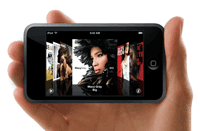
Coming soon: iTunes remote control app for iPhone and iPod touch

Coming soon: iTunes remote control app for iPhone and iPod touchThis one is obvious but cool nonetheless.

With the launch of the App Store next month, Apple will release free software that lets you control iTunes on your Mac (or PC, we presume) via an iPhone or iPod touch. MacRumors notes the discovery in a pre-release version of iTunes 7.7 seeded to developers last night. “In the Read Me of the iTunes installer is a hint at a previously unannounced iPhone/iPod Touch application”:

… the new Remote application for iPhone or iPod touch to control iTunes playback from anywhere in your home — a free download from the App Store.

Continue reading »

MSN Music DRM servers get three year stay of execution

MSN Music DRM servers get three year stay of executionIn a classic DRM U-turn, customers of Microsoft’s now-defunct MSN Music store are being given at least three more years in which they can be sure that the music they’ve purchased will continue to play, even after an operating system re-install or upgrade, and when transfered to a compatible device. That’s because the company, having weathered a storm of negative PR and complaints from customers, has relented on its decision to shut down the service’s verification servers used to implement that store’s copy-protection technology.
Continue reading »

Last.fm now streaming on Squeezebox

We’re big fans of Logitech’s line of Squeezebox streaming audio devices, and today the company announced that it had partnered with Last.fm to add the social music service to its existing bevy of online streaming options.

Owners of the Logitech Squeezebox Duet (see our coverage), Squeezebox Classic or the high-end Transporter network music systems who are based in the U.S., UK or Germany will be able to access Last.fm’s music catalog through their home stereo systems. Users will be able to listen to Last.fm Internet radio stations based on artist or genre, as well as stream personalized stations created based on their listening habits — thanks to Last.fm’s “scrobbling capability” which debuted on Squeezebox earlier this year.

Continue reading »

In the news: SpiralFrog, We7, The Filter, helping us discover new artists and content

spiral frogIt seems like a millennia ago when music fans huddled around the radio to listen to Casey Kasem’s “American Top 40” or the television on Saturday mornings to see what new artists appeared on “Soul Train.”
Now, all you have to do is fire up the Internet and head over to any one of a million or two music sites like iTunes and last.fm to find new artists and “Top 40” lists that mix the familiar with the obscure.

Three such sites — SpiralFrog, We7, and The Filter — are in the news this week and each, in its own way, is working hard to introduce you to new music and entertainment content.

SpiralFrog, the free, ad-supported music download service, today announced a digital distribution agreement with EMI Music.

EMI’s catalog of digital music and videos will be available to consumers for legal downloading from SpiralFrog in North America. EMI artists are certainly recognizable — from The Beach Boys and Miles Davis to Norah Jones and Coldplay — but while your listening to old favorites it’s impossible not to stumble on indie artists and breakout bands while using the site.

Continue reading »

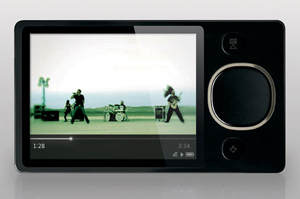
How to save the Zune

This is a guest post by Michael Pinto who is the Creative Director of Very Memorable, Inc. a design firm that specializes in the youth market and interactive media.

With the iPhone taking away the mind space of the iPod, the Zune already seems to be in an orphan category with consumers. A sign of this is the recent high profile blowout when GameStop announced that they planned to stop selling the Zune. However, to me the surprise was that GameStop had been selling the Zune in the first place. I’ve been to several locations over the last year or so and I’ve never spotted one in a store. Perhaps the reason for this is that I was hunting to buy yet another Nintendo DS Lite and not looking for an MP3 player as a stocking stuffer.

In fact the only time that I’ve seen a Zune in the wild was while I was running through Kmart. Now think about that for a second: The biggest market for this device would be those hungry for music — tweens, teens and young adults. This market is very style conscience to say the least, and the one place they might encounter this device is in-between the linens and pantry items. Also the few times that I’ve seen representatives of the youth market at Kmart they were hunting for dorm room necessities rather than objects of entertainment.

Continue reading »

DLNA certified: how your computer, cellphone, games console, media streamer and other devices can play nicely together

Imagine a world where your computer, cellphone, games console, storage devices, media streamers and other hardware all play nicely together, so that, for example, music, photos and video can reach the television or Hi-Fi no matter where in the home it originates.


That world is one which the Digital Living Network Alliance (DLNA), an industry consortium backed by big name consumer electronics, computer and mobile device manufacturers such as HP, Microsoft, Nokia and Samsung, is aiming to create through support for the UPnP (Universal Plug ‘n’ Play) AV standard. For end consumers this means that any ‘DLNA certified’ device should, in theory, be able to share or access media on the same home network — a message that DLNA members have largely failed to communicate, which is especially sad considering that many people already own a number of compliant devices (see our recent guide to streaming media from a Mac to PlayStation 3).

In this post we’ll explore the UPnP AV standard a little further, and pick out a few of our favorite supporting devices.

Continue reading »

Could we be edging closer to a Europe-wide 'iPod tax'?

Could we be edging closer to a Europe-wide 'iPod tax'?Consumer electronics companies including Apple, Nokia and Sony, maybe softening their stance against a Europe-wide copyright levy on “the sale of products that can be used to copy music, books, films and other protected content”, reports the Financial Times.

Currently 22 out of 27 European countries already enforce the so-called ‘iPod tax’, at greatly varying levels, on products ranging from digital music players, printers, mobile phones and even blank CDs. Notably, the UK doesn’t currently enforce any kind of copyright levy. The charges are designed to compensate for the losses copyright owners may face from “private copying” of works.

Continue reading »

Forrester sees picture frames, clock radios, remote controls, and house calls in Apple's future

forresterThis is why the analysts make the big bucks. Predictions. Forecasts. Gazing into crystal balls to come up with . . .

  • Digital picture frames.
  • A clock radio.
  • A remote control.
  • A media server that’s not called a “server.”
  • House calls.

This is Apple’s future, according to Forrester analysts J.P. Gownder and James McQuivey [via Wall Street Journal].

Gownder and McQuivey predict that Apple, who brought us the OS X operating system, elegant computer products, the iPod line of digital music players, the iTunes store, and the iPhone in the past eight years, next will come up with products and services that will connect computers to content throughout the digital home by 2013 [Wired].

Forrester thinks that, judging by Apple’s performance under CEO guru Steve Jobs, the company is set for radical change over the next five years.

But a wall-mountable digital picture frame — even if it looked like a MacBook Air display? A clock radio that pipes music across a home network? An “AppleSound” universal remote control with a touch-sensitive screen? A media storage something-or-other that’s not a “server” because the word “server” scares the average person? And house-call technical assistance from mobile “Genius Bar” workers?

This is a joke, right?

Continue reading »

Napster: DRM is dead, long live DRM

As promised in January, Napster has relaunched its U.S.-only music download store, sans DRM.

As of today, all of Napsters’s 6 million tracks, comprising music from all four majors, are available to purchase as MP3s, playable on almost any digital music player including iPods. The company claims that it is now “the world’s largest and most comprehensive MP3 store”, beating both Apple’s iTunes Store and Amazon MP3 in terms of the number of songs on sale without copy-protection. For the most part, pricing for downloads will remain at 99 cents for single MP3 tracks and $9.95 for albums, according to the press release.

However, in many respects Napster wants to have its cake and eat it.

Continue reading »