Archive for the ‘Audio’ Category

iSlsk brings filesharing to the iPhone and iPod touch

iSlsk brings filesharing to the iPhone and iPod touchSoulseek, which was creted by former Napster programmer Nir Arbel and visibly resembles early versions of Napster, is not one of the most popular filesharing apps. It doesn’t have the mainstream appeal of Kazaa or Limewire, nor does it garner the press attention of BitTorrent. And that’s all probably fine with its users, who tend to gravitate toward more independent musical fare. But Soulseek has done something the others haven’t — made the jump to the iPhone.

Developer Errrick created iSlsk, a new filesharing client for jailbroken iPhones that works with the Soulseek network, by basing it on open source versions of the client for the Mac. “I saw all the capabilities this little gadget had and then thought ‘why didn’t someone already do something like this?'” he told TorrentFreak.

Continue reading »

How-to: Stream media from a Mac to PlayStation 3

How-to: Stream media from a Mac to PlayStation 3Apple and Sony are fierce competitors, but that hasn’t stopped the PlayStation 3 playing nicely with Mac OSX computers. Thanks to some great third-party software, and Sony’s decision to add support for the UPnP AV standard, the PS3 has, in some ways, become a better solution than Apple’s own offering to the problem of streaming content – audio, video and photos – from a Mac to the TV. Here’s our quick guide to creating a Mac-supported PS3 media center.

Step One: Turning the Mac into a PS3-friendly media server

Assuming that your Mac is already on the same local network as your PlayStation 3, the first thing you’ll need to do is install a UPnP AV-compliant media server. In fact, this will need to be done for all of the Macs that you want to share media from.

Continue reading »

Five companies that sold customers down the DRM-filled river

Five companies that sold customers down the DRM-filled riverThe news last week that Microsoft plans to turn off its verification servers for its now-defunct MSN Music store, is a stark reminder of the potential pitfalls customers face whenever they purchase content crippled by Digital Rights Management (DRM) software. Any digital store that sells or loans you content in a copy-protected format makes you a hostage to that store or format’s commercial success. The Microsoft example, however, is just one of many. Here are five cases where companies have sold their customers down the DRM-filled river.

Continue reading »

Sony BMG joins Nokia's all-you-can-eat music service

Two down, two to go

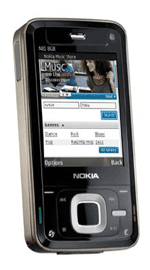
Sony BMG signs on to Nokia's all-you-can-eat music serviceSony BMG today became the second major label to sign up to Nokia’s ‘Comes With Music’ service, whereby customers who buy a supported handset will get a year of unlimited access to “millions of tracks”. When Nokia first unveiled its all-you-can-eat music offering last December, Universal Music was the sole partner, a natural fit considering that the label has been busy touting its own flat-rate plan known as Total Music. However, the two remaining majors, EMI and Times Warner, have yet to commit to Nokia’s scheme.

The way ‘Comes With Music’ will work is as follows: Consumers who buy a supported Nokia device will have a year of access to Universal Music and Sony BMG’s music catalog, whereby they’ll be able to download tracks to both their mobile handset and Windows PC through the Nokia Music Store. After the year is up, they get to keep any downloaded tracks. To continue accessing new music, however, users are given “a number of attractive options” — aside from purchasing a new ‘Comes With Music’ device and starting another 12 month cycle, they can purchase tracks (download to-own) from the Nokia Music Store, or move on to a Nokia “unlimited access” subscription plan a la Rhapsody.

Continue reading »

We7 signs new indies, Sony BMG streaming by end of month

We7 signs news indies, Sony BMG streaming by end of monthWe7, the UK-based free, advertising-supported online music service backed by Peter Gabriel, has announced new licensing deals with three leading independent labels and distributors: IRIS, InGrooves and BFM Digital. The move adds a further 200,000 tracks to We7’s catalog (now totaling 750,000+), which offers free ad-supported downloads from other independent labels including Sanctuary Records, V2 and Nettwerk.

In early March, the company also unveiled its first major label partner, Sony BMG, who by the end of this month will begin offering free streaming of its music catalog to We7 users in the UK. Sony BMG’s roster includes international artists Bruce Springsteen, Westlife and Foo Fighters, along with British talent such as Mark Ronson, Kasabian and Leona Lewis. In additional to ad-supported streaming, users will be given the option to purchase and download tracks outright, either through We7 or on iTunes.

The partnership with IRIS gives We7 access to music from independent labels such as Scion, Chemikal Underground, Subliminal and Big Dada, while the deal with InGrooves secures tracks from ESL Music, VP Records, Chocolate Industries and A2M Distribution, and BFM Digital distributes labels such as Cristal Records, Disk Eyes and Ana Records.

Disclaimer: We7 is currently a last100 sponsor.

Also see: Q&A: We7 CEO Steve Purdham and Is free legal music service Qtrax too good to be true?

Catching up on iTunes news: NBC wants back on iTunes, but with conditions

Catching up on iTunes with NBC Universal, Fox and Paramount, Amazon MP3, and Starbucks.

NBC wants back on iTunes, but with conditions

George Kliavkoff, NBC Universal’s chief digital officer, indicated indirectly and directly at the Ad: Tech conference that NBC would like to be back on iTunes, which the network dumped in late 2007 over a nasty public spat about pricing.

kliavkoffIndirectly, Kliavkoff said during an on-stage interview at the conference, “If you look at studies about MP3 players, especially leading MP3 players and what portion of that content is pirated, and think about how that content gets onto that device, it has to go through a gate-keeping piece of software, which would be a convenient place to put some anti-piracy measures.”

Directly, Kliavkoff said, “We’d love to be on iTunes”, but only if Apple institutes more anti-piracy measures. “It has a great customer experience,” he said. “We’ve love to figure out a way to distribute our content on iTunes.”

The timing is interesting. iTunes is now the largest music retailer, and while the video side of the store (TV shows and movies) has not reached the same level, it still benefits from the overall iTunes brand and music traffic. Since NBC bolted, no other major network or studio has followed, leaving NBC standing alone.

Think NBC regrets its decision?

If it does, NBC doesn’t appear to be budging. In addition to the extra anti-piracy protection, the network would also like to see flexible pricing on iTunes, which doesn’t seem to be likely anytime soon.

(via News.com and NewTeeVee)

Photo credit of Kliavkoff: News.com at Ad:Tech

Continue reading »

Where do you get your recommendations on the Web? From a service like The Filter? Or from friends?

It’s hard to fault Peter Gabriel’s logic: We are overwhelmed by the amount of information and choice we have on the Web. But is his solution — a recommendation engine called The Filter — really the answer?

Of course Gabriel, the genius behind the British rock band Genesis and the solo artist who gave us such tunes as “Solsbury Hill,” “Exposure,” and “Games Without Frontiers,” thinks so as he and England’s Eden Ventures have invested $8 million in The Filter. They believe people are overwhelmed by the Web and can’t find good content because it’s buried out of sight.

“When you drown people in an ocean of information, you’ve got to give them navigation tools,” Gabriel told News.com. “I know that there is better stuff out there than what I generally am exposed to . . . So if I have a sort of intelligent ally working with me 24 hours a day, I think I have a much better chance of getting stuff that will entertain, excite, and inspire me.”

The Filter, originally launched as a music recommendation service about a year ago in Europe, re-launched today in private beta as a more complete solution. It will be available to the public sometime in May.

But there’s something about The Filter that bugs me. What separates The Filter from any of the other algorithm-based recommendation engines out there, whether a human is a part of the process or not — Amazon, iTunes, lastFM, Netflix, Imeem, Digg, Pandora, and many more?

Continue reading »

What is music 2.0?

Music futurist Gerd Leonhard has just released an informative video explaining what music 2.0 is and how the music industry should change to adapt to ‘web 2.0’ principles. Some of the themes are that control doesn’t work (e.g. DRM and trying to control networking) and that music is meant to be shared. Even iTunes comes into some criticism – iTunes works great, says Leonhard, but it “is a locked community”. Ultimately, Leonhard says that “open is king” and that “we have to give up on the idea of control and move to an open ecosystem in music.”

Video embedded after the jump…

Continue reading »

Free ad-supported music leads to more sales

So says Last.fm

Since CBS-owned Last.fm re-launched its free ad-supported music service in January, with licenses from all four of the major labels, overall CD and download sales through the site’s partnership with Amazon.com have experienced a 119% increase. The upturn in sales can be accredited to an increase in new visitors as well as existing users who, according to Last.fm, have purchased 66% more music than they did prior to the free-on-demand offering. Last.fm also has affiliate deals with iTunes and 7Digital.

Continue reading »

Wal-Mart ditches DRM at a cost

Wal-Mart ditches DRM at a costWhen Wal-Mart first starting selling DRM-free music through its online store, we had one major complaint. Alongside those iPod-friendly MP3s from EMI and Universal Music, sat copy-protected tracks from the two remaining major labels that were only compatible with PCs running Windows and supported PlayForSure devices. A sure way to confuse customers and create a very poor shopping experience, we concluded.

Along with a redesign of the Wal-Mart online music store, the “world’s largest retailer” has finally ditched DRM completely but at a cost. Rather than successfully negotiating licensing deals with the DRM-free holdouts – Sony BMG and Warner Music – Wal-Mart has sacrificed music from those two labels completely (tracks from Sony BMG’s Neil Diamond seem to be the exception, reports Wired).

Continue reading »