Archive for the ‘Mobile’ Category

The roundup of roundups: Everything you want to know about the Google phone (with links!)

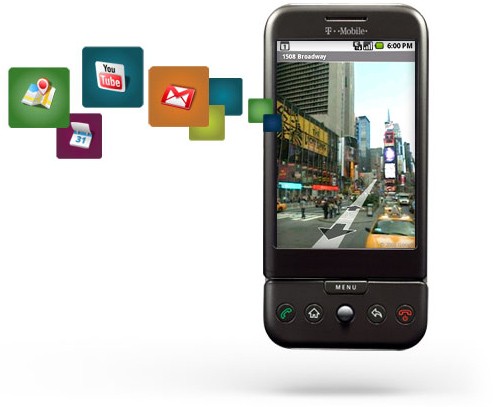
In case you haven’t heard, T-Mobile announced the world’s first — and for the time being, only — cell phone powered by Google’s open-source, mobile operating system today amid much pomp and circumstance.

Cue the band.

You can spend hours thumbing through your bookmarks or RSS feeds looking for and reading about the new T-Mobile/Google phone, dubbed the G1. Most everybody is writing about the same thing — the specs, the looks, the apps, the Android operating system.

But there are a few posts out there looking at the G1 from various other perspectives — advertising, search, what’s missing, and so on. To save you a few minutes, we’ve combed through the basics, looked under the hood just a bit, hit on the basic apps, and compiled other posts of interest for your reading pleasure.

So off we go.

Continue reading »

Time for the big reveal: T-Mobile to introduce first Google Android phone

In the language of reality TV, it’s time for the big reveal. Ladies and gentlemen — drum roll please — T-Mobile presents the first cell phone powered by Google’s much-ballyhooed mobile operating system, Android.

Formal introductions will be made at 10 a.m. EST in New York. But, unlike the super-secret debut of Apple’s iPhone in June 2007, lots is known about the so-called Google phone even before its reveal.

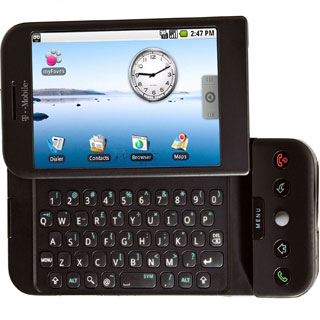
It will be known as the G1, but popular culture is sure to call it the first Google phone, gPhone, or Gphone. So, without further delay, here’s the Gphone brought to you by the carrier T-Mobile and hardware manufacturer HTC.

G1 Specs

No surprise here: The G1 will sell for $199 (the same as the iPhone) with a low-cost data plan (which remains to be detailed).

According to TmoNews, the phone is 4.6 x 2.16 x 0.63 inches, weighs 5.6 ounces, an features a 480 x 320 HVGA display. Of course it uses the 3G network, has built-in GPS, has a 3.1-megapixel camera, has 8 GB of memory, has five hours of talktime and 130  hours of standby (we’ll see about that).

Continue reading »

The Google phone is on its way: a checklist for success

The long-awaited Google phone will be announced next Tuesday, so says the Wall Street Journal, Reuters, and the rest of the Web. The phone, which features the first release of the Android operating system, will be available near the end of October.

Coincidentally, Google today showed off a fairly polished version of Android and its HTC-manufactured hardware at Google’s Developer Day conference in London. Check out the YouTube demo video for details.

The upcoming news conference and the nearing release date got me thinking about what I’d like to see in the first Google phone. What I want isn’t a wish list, per se, but more of a checklist.

Here goes.

Continue reading »

Review: Nokia E71 (my favorite smartphone yet?)

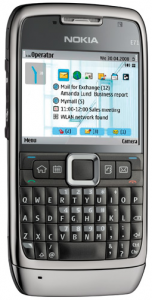
I’m a great believer that when it comes to choice of smartphone, one size doesn’t fit all. As much as we like the iPhone here at last100, for example, particularly for its industry leading mobile web browser and fast growing library of third-party applications, for my personal needs it doesn’t quite fit the bill. Enter Nokia’s new QWERTY smartphone, the business-oriented E71, which along with addressing most of its predecessors’ shortcomings (the E61/E61i) is a device that comes incredibly close to meeting all of my own particular requirements. Which, of course, isn’t to say that it will meet yours, although it may well do.

Claiming to be the world’s slimmest cell phone with a QWERTY keyboard, the E71 is highly pocketable, especially compared to Nokia’s earlier attempts. It also looks the business in other ways, using a stylish blend of stainless steel and ‘grey’ high density plastic, resulting in a very solid feeling build.

Spec-wise, the version of the E71 for review was the UK version, a Quad-band GSM /3G phone with HSDPA, EDGE, GPRS and WiFi data support.

Continue reading »

Apple's line of iPods still rock, but not like they used to

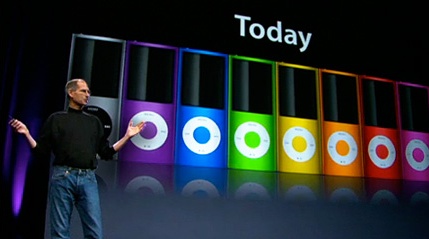
Apple’s “Let’s Rock” event today was like going to see The Rolling Stones or The Who in concert. Mick and Pete can still rock, but not like they used to.

Apple’s line of iPod products still rock, but not like they used to. Apple unveiled an updated second generation iPod Touch, yet another iPod Nano form factor in snazzy colors, a 120 GB iPod Classic, and new headphones. That was it for hardware.

On the software-and-service side, iTunes 8 was introduced. The iPod Touch and the iPhone are getting a 2.1 software update, due Friday. The iTunes Store will be selling high-definition TV shows for $2.99 a pop. And estranged NBC Universal is putting its shows back on iTunes after a hiatus of nearly a year.

As Philip Elmer-DeWitt noticed for Fortune, “Apple fails to wow Wall Street” and saw its shares fall more than 7.5 points, or 4.7 percent, during the event. The stock closed at 151.68, down nearly four percent for the day.

Frederic Lardinois of ReadWriteWeb simply said “Let’s Rock” was “a bit of a lackluster event.”

Agreed. Apple’s announcements today were incremental and more maturation of a product line and ecosystem than game-changing, earth-shattering, stand-in-line-for, can’t-live-without, and must-have gadgets since, well, the first iPod or iPhone.

Here’s a roundup of “Let’s Rock.”

Continue reading »

BBC iPlayer shows a little too much love to Nokia's N96?

Erik Huggers is the BBC’s Director of Future Media and Technology. Although a more apt title for himself, along with predecessor, Ashley Highfield, would be Director of Future License Fee Justification. That’s because the BBC, which is funded by British tax payers, is doing more than most broadcasters to stay relevant as we move towards a future where viewers want to watch ‘television’ on their own terms: from anywhere, on-demand and on the device of their choice.

Enter the BBC’s catch-up service, iPlayer, which streams the public broadcaster’s content to Windows PCs and Macs, Nintendo’s Wii, Apple’s iPhone and iPod touch, along with Virgin Media’s cable TV service. A download version is also available for Windows-only.

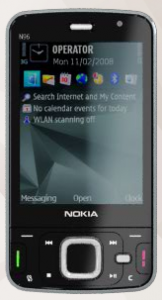
And just today, the BBC and Nokia announced that a streaming and download version of iPlayer will soon be available for the mobile phone maker’s yet-to-be-released N96 handset.

Continue reading »

Why Chrome is a win-win for Google

For those that have been off-line for the last few days and without access to a television or other forms of old media, Google has announced and released the first version of its own web browser called Chrome (see ReadWriteWeb’s extensive coverage).
But do users and developers alike really need another browser? Google says that Chrome recognizes and builds on the best innovations of its competitors, but more importantly has built a web browser from the ground up to cope with the shift towards cloud computing in which the web has “evolved from mainly simple text pages to rich, interactive applications.”

“What we really needed was not just a browser, but also a modern platform for web pages and applications, and that’s what we set out to build”, says Google.

A few examples of how Google has put this into practice with Chrome include a faster JavaScript engine called V8, and “multi-threading” so that if a web app running in one tab crashes it won’t impact on the performance of other open pages/apps.

It’s highly debatable, of course, whether Google can be any more successful than others who have tried to grab market share from Microsoft who bundle its own Internet Explorer with the various flavors of its Windows operating system.

It could be argued, however, that whatever Chrome’s eventual market share, it serves as a win-win for Google. Here’s why:

Continue reading »

Nokia's all-you-can-eat music service to land in UK first

No carrier support

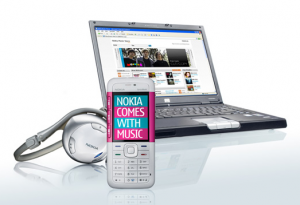
Nokia’s all-you-can-eat music subscription service, will launch first in the UK next month, but the real news is the lack of carrier support. Instead, Comes With Music will be offered on a pre-pay handset only, the slightly dated Nokia 5310 XpressMusic, sold exclusively through Carphone Warehouse, the same retail chain who in conjunction with 02 have partnered with Apple to sell the iPhone.


Described by Nokia as “a revolutionary way for people to discover and enjoy music”. Comes With Music gives those who purchase a supported handset “unlimited access to the entire Nokia Music Store catalog with the ability to keep all downloaded tracks even after the year is over.” It’s seen as a direct attempt by the world’s number one handset maker to take on Apple’s iPhone/iTunes music service – ironic considering that both offerings will now compete for shelf space at the Carphone Warehouse during the busy Christmas period.

As we’ve noted before, Nokia’s aggressive moves into the ‘services’ space was bound to hit a nerve with carriers who offer their own competing products. According to The Guardian newspaper (via mocoNews), Nokia has touted Comes With Music to all five UK networks, none of whom have found it attractive enough to bite. So far at least.

The major labels on the other hand seem more than willing to play ball. To date, Universal Music, Sony BMG and Warner Music have already signed on, and Nokia is hopeful that EMI will also soon join.

Why didn't we think of this? Microsoft planning mob app store of its own

The news today that Microsoft is preparing to launch a mobile app store of its own to support the upcoming release of Windows Mobile 7, seems like a no-brainer in light of Apple’s successful offering for the iPhone. So much so that it begs the question: why didn’t they think of it before?

It’s not just a Microsoft issue. Nokia, Sony Ericsson, and Palm, for example, also largely leave it to others such as Handango to offer a marketplace for third-party applications.

However, I’d suggest that those aforementioned companies aren’t entirely to blame for not offering their own centralized app store for their respective platforms. Apple has a distinct advantage, at least for now: a single device/platform, as well as success in wresting an unprecedented amount of control from its carrier partners.

Continue reading »

Android Developer Challenge winners appear polished, ready for sale

It looks like Google may have made the right move with the Android Developer Challenge after all.

The winners of the first developer challenge, announced this evening, appear polished, well thought out, and ready for the first Android-powered phones to hit the streets in the not-too-distant future.

The Android Developer Challenge provides yet another contrast to Apple and its iPhone. Apple announced a software developers kit (SDK) for the iPhone this spring and a few months later the first iPhone/iPod touch applications went on sale at the App Store July 11.

While many of the iPhone applications performed flawlessly, many felt rushed and suffered from buggy behavior. Subsequent releases worked out the kinks.

Google certainly has had its share of problems with the Android SDK and cranky developers, but these Android apps seem tight, well developed, and ready for sale. Of course, final judgment cannot be levied until we actually have working Android phones in our hands and these applications running.

Of the 50 applicants that emerged from Round 1 of the ADC, 10 were awarded $275,000 each for their efforts, with another 10 receiving $100,000 each. A complete listing of winners and entrants is here.

The $275,000 winners include:

Continue reading »