Posts Tagged ‘Nokia’

Hands-on with the Nokia E55 (or how I learned to live with half a QWERTY)

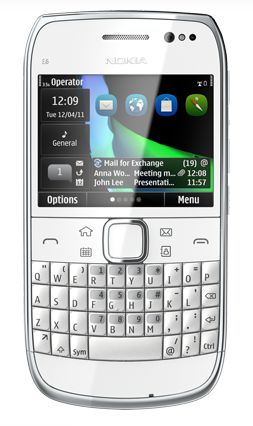
e55_newI’m generally a fan of Nokia’s business focused Eseries smartphones, while for day-to-day use I require a device with a QWERTY keyboard (preferably a portrait one). Combine the two and the Nokia E71, released around 18 months ago here in the UK, is as close as I’ve got yet to the “perfect” smartphone — I even named it in my top ten Digital Lifestyle products of 08 — although, obviously, it’s far from perfect. Perfection is, of course, a moving target in the world of smartphones.

The subsequently released Nokia E75, which features both a traditional numeric keyboard and a generously large landscape slide-out QWERTY, came in at a close second and even offers a few of improvements over the E71, such as a faster processor, updated software, better camera and a 3.5mm headphone jack.

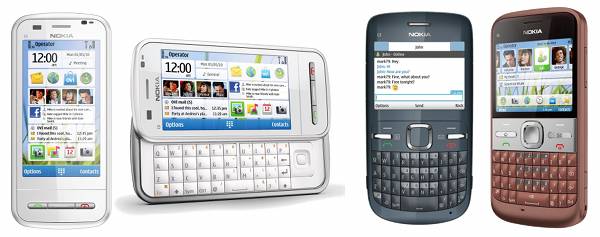
I was therefore keen to try out Nokia’s attempt at a third QWERTY touting form factor, with the announcement of the E55. As you can see from the photo above, the device adopts the traditional candy bar shape by featuring something the handset maker is calling a “compact QWERTY”. Essentially housing two QWERTY letters per key (can I say half a QWERTY?) and utilizing predictive text to bridge the gap. But, in everyday use, how does the E55’s keyboard perform?

Continue reading »

Nokia’s all-you-can eat music service now “comes with” its own flagship touch screen phone – Nokia X6

Nokia_X6_white_blue_homescreenAlthough I’d put poor marketing, carrier resistance, and possibly DRM, ahead of the lack of a flagship device to explain why Comes With Music, Nokia’s all-you-can-eat music service, hasn’t been the hit the handset maker had hoped for, the company’s newly announced X6 music phone is encouraging.

The device, unveiled at Nokia World today, is to be a Comes With Music exclusive offering, and sports a 3.2-inch touch screen display (16:9 ratio at 360 x 640 pixels), 32 GB of built-in storage, a 5 megapixel camera with Carl Zeiss optics and dual LED flash, A-GPS and WiFi, amongst its impressive stats. And in a first for Nokia, that touch screen is capacitive (not resistive), meaning that its should be a lot more responsive to the touch of a finger. Regular readers will know I’m not a fan of old skool stylus optimized resistive screens.

A quick recap of how Comes With Music works: you purchase a qualifying Nokia handset and then get access to the entire library of the Nokia Music Store for 12 – 18 months and get to keep any downloaded tracks once the subscription ends. For that privilege, the Nokia X6 has an estimated retail price of EUR 450, although the handset maker is stressing that ‘in many, many markets’, thanks to carrier subsidy, the device should be closer to “free”.

Nokia dumps location-based service Friend View, falls in love with Facebook

During the opening keynote at Nokia World, which kicked off today, CEO Olli-Pekka Kallasvuo was at pains to point out that the handset maker didn’t view Internet “services” as an interesting side business but that it was still the future of the company.

And along with music, messaging and turn-by-turn navigation, location-aware social networking, which the company calls SoLo, and other types of location-based services are key to this future. After all, Nokia has invested heavily in GPS-related technologies and applications, the boldest example being the $8.1 billion purchase of Navteq in late 2007.

What was and still is unclear is how much of Nokia’s SoLo strategy involves building out its own social networking offerings or partnering with and supporting established social networks. With today’s announcement of a tie up with Facebook and with it the death of the company’s own ‘Friend View’, with regards to the simplest of ‘SoLo’ applications — share my current location with friends — the handset maker has seen sense and decided to do the latter.

Continue reading »

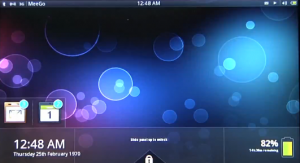
Nokia can do UI design after all, Linux-based N900 unveiled

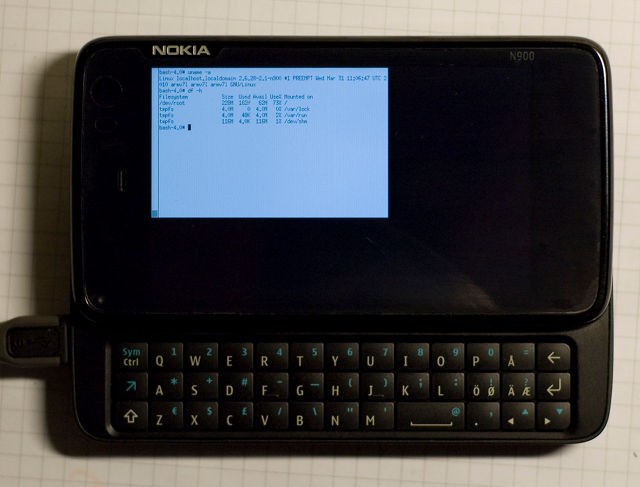
Nokia-N900-8It had already been leaked to death, but frankly, if the walk-through video that’s been published today is anything to go by, I don’t think any of the previous pics or screen shots do this thing justice.

I’m referring to Nokia’s new Linux-based smartphone come Internet tablet, the N900, which the handset maker officially unveiled today. The device is powered by the company’s Maemo 5 OS, of which previous versions were used for its non-phone Mobile Internet Devices (MIDs), such as the N810 that I reviewed all the way back in February 2008.

And boy has Maemo come a long way. Best of all (shock, horror), it looks like Nokia can design User Interfaces after all.

Continue reading »

Why is Nokia entering the crowded Netbook market? Answer: the mobile carrier subsidy merry-go-round

nokia-booklet-3gIn a move that might leave many a tech analyst scratching their head, Nokia have announced their own Windows Netbook, albeit a high-end one.

Why the world’s largest mobile phone maker would enter the crowded and low margin market of Netbooks, when it should be focusing on how to restore its lead in the much higher margin ’smartphone’ category, is a very good question. The answer, however, is simple.

Carrier subsidy.

Here in the UK, we lead the way in the carrier-subsidy merry-go-round where Nokia does very well indeed out of the whole facade.

Continue reading »

Can I survive on half a QWERTY? Nokia E55 in the house

Nokia E55Regular readers of this blog – and anybody who’ll listen – will know that I’m a big fan of physical QWERTY keyboards on mobile phones. I’m much less fond of virtual ones, such as that found on the iPhone or my Android-powered HTC Magic.

My current day-to-day phone is a Nokia E71, which I’ve found to have the best QWERTY to-date, but my love affair with mobile QWERTYs started way back when I bought my first Palm Treo (see my GDGT profile, if you’re interested in my gadget history).

I was therefore intrigued when Nokia announced the E55 with a keyboard that the company describes as a compact-QWERTY. Similar to BackBerry’s sure-type layout, each key houses two letters. The option of predictive text helps to smooth over this obvious compromise but then on the other hand you get the advantage of a candy bar form factor, and in the E55’s case, a very slender one too.

Over the next few weeks I intend to put the Nokia E55 through its paces and see how well I do on half a QWERTY. Watch this space.

Symbian Foundation crowdsourcing UI design

uibrainstormThe Symbian Foundation, Nokia’s ambitious open source project designed to give longevity to the Symbian OS, has launched a new blog inviting the ‘community’ to submit their own User Interface mockups.

UI of course is an area where Symbian is perceived to be lagging behind competitors, such as Apple’s iPhone, Android, and the Palm Pre’s Web OS. It’s also something so fundamental to the user experience that it seems odd, even in a small way, to farm this out to the community.

My fear is that, like many an open source project, you could end up with ‘design by committee’.

Continue reading »

Palm Pre to launch on O2 in the UK, just don’t mention the competition

It’s now official: The Palm Pre will launch exclusively on Telefonica-owned O2 here in the UK.

When?

“In time for the holidays”, say Palm and O2, with no word yet on pricing. My guess is that we’re talking early October, enough time to ramp up for Christmas spending.

Either way, it’s a pretty long time to wait, especially since O2 will have been busy pimping its other flagship exclusive. Apple’s newly launched iPhone 3GS.

And then there’s the rest of the competition.

Continue reading »

How I plan to use my HTC Magic Android phone

Vodafone HTC Magic running on zero SIM on three

Vodafone HTC Magic running on a SIM Zero contract on 3

As my obsession with mobile continues – the new frontier – I’ve made the decision to take out a second mobile phone contract. But with a twist. I don’t plan to make (or receive) a single call on handset number two. Instead, it will be used for data only (Web browsing, third-party Internet-connected apps and email).

Continue reading »

Nokia testing “long form” video service

We’ve known for a long time that Nokia wants to be seen as much as a services company as a handset maker, so it shouldn’t be all that surprising to learn that the company is exploring different ways to deliver online video to mobile phones.

According to a report in New Media Age, Nokia is particularly interested in “kick-starting” the consumption of long-form content on mobiles by utilizing a podcast style delivery method whereby users subscribe to various video feeds, presumably enabling content to be downloaded to the device “over-the-air” rather than being “side-loaded”.

While the service is said to be in trial mode only with about 600 users, 100 of which are Nokia employees, content partners already reportedly include BBC Worldwide, ITV, Sky and Paramount.

Intel and Nokia announce “long-term relationship” to develop Intel-based mobile devices

This one feels like a bit of a re-announcement but over time could well amount to more. Chip maker Intel and handset maker Nokia held a joint press call today to tell the world about a new “long term relationship” to share R&D and key technologies to develop a new mobile platform or range of devices that “go beyond today’s smartphones, notebooks and netbooks”.

Oh and said devices will be powered by future Intel processors, of course.

Which, as The Register points out, sounds a lot like the Mobile Internet Devices (MIDs) Intel has been to touting for years, and very similar to Nokia’s own – albeit non-Intel based – N810 Internet tablet (see my review).

Continue reading »

Flash 10 coming to smartphones this October? Apple and RIM still missing in action

Flash Player 10 on smartphonesIt seems that Adobe is well on track to deliver a version of Flash 10 for smartphones, with the first beta release due this October. Adobe President and CEO Shantanu Naraye said as much during the company’s latest earnings call, as well as revealing that “multiple partners have already received early versions of this release…”.

Naraye then goes on to name names, citing Android, Nokia’s Symbian, Windows Mobile and Palm’s WebOS as among the first smartphones to “support web browsing with the newsest Flash player.”

Continue reading »