
 When it comes to companies, there aren’t many bigger than Microsoft; they have over 75,000 employees in over 100 countries and more than $50 billion in annual revenue. While Microsoft’s product focus is definitely software, they do compete in a number of other markets such as gaming consoles, consumer hardware like mice and keyboards, and media and content such as MSNBC. Less visible is the product experimentation that goes on at Microsoft. You’re more likely to hear about Google employees tinkering with ideas and side projects (thanks to the company’s “twenty percent” time) but the fact is, Microsoft employees are a creative bunch.
You’ve likely heard all about the successful experiments. Not just the “big bets” as Gates likes to call them, or the interesting things that happen at Microsoft Research, but projects that almost never made it to market, like J. Allard’s Xbox. But what about the flops? As our exploration of Microsoft’s Internet TV initiatives proved, the company is certainly not afraid to experiment, taking the good with the bad. And Microsoft has had its fair share of bad. Let’s look now at some of the company’s more interesting “digital lifestyle” flops.
Smart Personal Objects Technology (SPOT)
 Sold under the brand MSN Direct, SPOT is Microsoft’s attempt to create more intelligent everyday devices, like a watch that can show the current weather in addition to the time. The technology behind the devices is called Microsoft DirectBand, a wide-area wireless network that “utilizes unused FM radio spectrum” to communicate with the devices. The service is supported in over 100 cities in the United States and Canada, and a number of electronics manufacturers have created and sold compatible devices.
Why it’s a flop
Though technically still on the market, the SPOT initiative was launched way back in 2002, and has changed very little in the five years since. In addition to watches there are now coffee makers and GPS units that support MSN Direct, but that’s about it. How many people do you know that own a SPOT device? I don’t know any. The one thing keeping SPOT even marginally interesting is the .NET Micro Framework that Microsoft released earlier this year, and chances are developers will find far more innovative ways to use the technology than Microsoft has.
It’s also worth noting that SPOT’s goal of making small bits of information available to users wherever they are has already been achieved to a large extent by services like Twitter. With SMS support and a number of weather, news, and financial bots available, why fork over the money for a SPOT device?
Microsoft Automotive
 Microsoft’s attempts to create software and other technology solutions for automobiles are almost legendary – who hasn’t heard a joke about a car running Microsoft software crashing and needing a complicated reboot? Like SPOT however, Microsoft is still plugging away at the idea, with three products currently available: Windows Automotive, Microsoft Auto, and Windows Mobile for Automotive. The success of these products is up for debate – the news page is quite sparse, but the Windows Automotive page proudly mentions Ford Sync, a vehicle set to launch this fall.
Why it’s a flop
I still do not drive a Microsoft-powered vehicle, and I’m guessing you don’t either. Chances are — that won’t be changing anytime soon. Almost ten years of making announcements, and yet ending up with very little in the way of tangible products, make Microsoft’s auto projects a disappointing flop.
Microsoft Networking Hardware
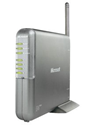 Microsoft has been quite successful in the peripherals market, with mice, keyboards, and webcams all selling relatively well. Their foray into networking hardware back in 2002 was a major failure, however. Called wireless base stations, the MN-500 and MN-700 were billed as easy-to-use broadband routers. The devices included a built-in firewall, support for NAT, WEP security, and software that would automatically detect Internet settings. Microsoft also produced a variety of wireless networking adapters.
Why it flopped
There is a lot of competition in the market for networking gear, and it seems Microsoft just wasn’t committed enough to stick it out. Faced with poor sales, Microsoft discontinued their networking equipment after only a couple years. But they didn’t stop there – all associated web pages at microsoft.com are gone too. Only the support information remains. It’s almost as if Microsoft wanted to forget all about their routers. Fortunately, the Internet doesn’t forget.
ActiMates
 Strangely enough, Microsoft has dabbled in the toy industry. In the fall of 1997 the company announced ActiMates Interactive Barney, an “innovative early-learning system” for young children. The idea behind the toys was actually really cool – the plush Barney toy would “come to life” when a special broadcast of the popular children’s show came on TV. Microsoft eventually released seven different characters, including Barney, Arthur, and the four Teletubbies.
Why it flopped
Price was probably the main factor which led to the demise of the ActiMates toys. With a starting price of $99, they were not cheap. Combined with a certain “creepiness” factor, it’s not hard to see why the toys failed to catch on.
The Digital Home
 You could argue that Microsoft has the entertainment aspect of “the digital home” covered quite well with their current product offerings. TV, movies, music, and photos are easily stored and transmitted digitally, and products like the Xbox 360 make it easy to work with all kinds of media. Yet Microsoft has for years been promising much more than just entertainment.
One need look no further than the annual Bill Gates keynote at CES. Sometimes he has used the event to launch new products, but more often the keynote is all about looking into the future. Kitchen countertops that assist with recipes, bedroom mirrors that double as television screens, digital picture frames, biometric door locks, and intelligent rooms that recognize individuals as they enter to adjust preferred lighting and temperature settings. Truly awesome ideas that could have a big impact.
Why it flopped
Too bad the ideas have never been implemented. The “Microsoft Home” prototype does actually exist at the company’s Redmond campus, but the technology included within isn’t yet commercially available. The company talks about the advanced house almost every single year, yet it never seems to move any closer to commercialization. It’s sad, but Microsoft’s idea of the digital home is nothing more than “vaporware”.
What will they come up with next?
Microsoft is larger and more successful than ever, so don’t be surprised if their product experimentation becomes even more varied in the future. There will most certainly be more flops, but they’ll hit a few out of the park too. And don’t forget about their announced products that have yet to launch – Microsoft Surface, Windows Home Server, and Windows Live Folders, to name just a few. Will they be major successes, or big disappointments? Time will tell!

Good summary article, I enjoyed reading it very much. However, I have to disagree with your terming of Microsoft Home as Vaporware. By my definition (am I wrong) vaporware is a product which does not exist. According to this, the items do exist they just haven’t been commercialized…But I hope, and expect, them to be within the next ten years.
Windows Automotive is actually a big part of modern Fords, and has been in a number of luxury cars in the EU for years. I think every Ford from 2009 and forward has full Windows Automotive support.
Good point, but if you look at the vast amount of products/services Microsoft launches every year some of them are always gonna end up in these categories.
I suppose you’re right David, the home does exist. I think vaporware is still a relevant term though – there’s been far more hype and announcements than actual results.
Granted they have some real duds of products, but every company has at least a handful of products or services that either never lived up to their supposed promise or consumers just weren’t interested in. There are some clever ideas coming out of Microsoft and some are bound to be highly successful while others completely crash and burn, but at least they are persistent in trying something new.
Good point, but if you look at the vast amount of products/services Microsoft launches every year some of them are always gonna end up in these categories.
No perfect things always.
Windows Automotive? The new Fiat 500 will have it, I think. I thought about buying the car, but after I heard of the Windows integration I changed my mind. Never. Any. Microsoft. Ever.
Ok, besides Windows & Office (XP, Moblie, etc,.) what has been successful, as is profitable?
1) Get underwear
2) ??!??
3) Profit
Microsoft is like a blind man shooting in the dark. Other than profits from their Windows monopoly, they are failing on all fronts. Why does anyone believe their promises anymore?
Microsoft did a bang up job on these too…
Microsoft on your telly: a history of the company’s Internet TV strategy
Microsoft Home won’t be viable until Surface is available to the consumer. Then it’ll be a presentable option to the new home builder.
MS home does exist in Bill Gates’ house.
The next flop will be Microsoft Surface.
You forgot Microsoft Phone, and Microsoft UltimateTV! UltimateTV got a lot of commercial time on prime time networks, competing with TiVo in its early days. And then they pulled the plug…
“The next flop will be Microsoft Surface.” @ Ledd
You’re right… flopping right along…
Microsoft Meeting: Will Another Demo End Up On YouTube?
July, 26, 2007
http://www.cnbc.com/id/19980908
‘You’d think after a year, and so many YouTube views, that any new product demo this time around would be bullet-proof, particularly one involving Bill Gates himself. But this morning we got a kind of digital deja vu dispatch from senior executive at an investment firm who says this year’s tech demo was equally disastrous. Says our source who was on hand for this: “Gates’ first demo on that ‘table’ Surface display (the one Microsoft made a big deal about) didn’t work.” (Remember this product, unveiled earlier this year? The coffee-table sized computer that, um, acts as a coffee table?) “Supposed to be a ‘touch screen’ control but Gates touched it and tried to move things on the screen; nothing moved, it was frozen.” Gates’ quote, according to our tipster: “It’s a lot more fun when they work.” He added: “Gates looked kinda embarrassed, but he’s still talking and things going fine now.”
“He later got it fixed,” our tipster writes, “but it took two tech guys 7 to 8 minutes to fix it.”
It gets worse. The same analyst says the crowd can’t connect into Microsoft’s own network to view slides on their laptops during the executive presentations: “IT guys running around like crazy here trying to get things fixed…”’
I’m sorry, I guess it’s a Vista flop… they can’t even get their core business right…
Windows Vista unreadiness revealed
July, 26, 2007
http://www.theregister.co.uk/2007/07/26/windows_vista_drivers/
‘Turner joined other senior executives at Microsoft’s annual financial analyst summit to paint a future of Windows running on multiple devices and even inside table tops, with the recently unveiled surface computing – which runs on Windows Vista…
Getting a first-hand taste of what’s coming down the road from Microsoft, chairman Bill Gates was forced to ad lib during his conference demo, as the surface computing setup failed to work on the first attempt. “It’s turned on… maybe we’ll come back to that. It’s more exciting when it does something – which right now it’s not,” Gates said to a ripple of analyst laugher.’
the FIA has announced that all the Forumula One Cars electronic control units starting next year will be Microsoft products. Does anyone know if this is in any way related to the Windows Automotive stuff?
also.. I cant believe you didnt mention Bob… the most horrible “lifestyle” UI ever.
@carldec: No, I don’t think it is directly related to Windows Automotive. It’s actually not just Microsoft, but a joint venture between McLaren (who have been supplying ECUs for years) and Microsoft. I think Microsoft’s role is more to ensure the devices work well with backend infrastructure for analysis.
See: http://www.microsoft.com/presspass/press/2006/dec06/12-11FIAPR.mspx
I didn’t mention Bob for precisely that reason – everyone mentions Bob! And the article was focused more on hardware and systems than software.
The technologies aren’t duds, but Microsoft’s association with them is the kiss of death to be sure.
Microsoft’s latest flop will be the computerized table. The interface seems cool at first, but like most Microsoft products, its a solution in search of a problem.
There is absolutely new about Microsoft Surface! Its already been done by several other companies. The only thing Microsoft did was to run these old technologies on Vista. Surface doesn’t even have a touch screen, it uses cameras, how 90’s. Nowhere near the iPhone.
Great article! Windows Home Server and Microsoft Surface look they are incredible products, but will Microsoft stick it out or ditch these like they did all of the products on your list…
Anda kemungkinan telah mendengar semua tentang percobaan yang berhasil. Bukan hanya “taruhan besar” seperti yang Gates suka menyebutnya, atau hal-hal menarik yang terjadi di Microsoft Research, tetapi proyek yang hampir tidak pernah berhasil dipasarkan, seperti slot deposit pulsa.
hello!,I really like your writing so a lot! share we keep up a correspondence more about your post on AOL?
I require an expert on this house to unravel my problem.
Maybe that is you! Having a look ahead to see you.