
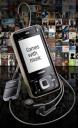
 Ars Technica has dug up a few of the missing details on Nokia’s new “Comes With Music” offering, whereby customers who purchase a qualifying Nokia phone (due to go on sale in the second half of 2008) will have twelve month’s unlimited access to Universal’s entire music catalog.
According to Ars:
- While customers will be able to keep any downloaded tracks even after the “free” subscription period ends, the service employs Windows DRM, meaning that music can only be played on a PC or, presumably, a compatible Nokia device. If you own an iPod or Zune, you’re out of luck.
- Tracks can only be transfered to one PC and one registered Nokia device at a time.
- Music can be burned to CD but only after paying an additional upgrade fee per-track.
- As we suspected, Universal’s participation in Nokia’s “Comes With Music” offering is part of the label’s Total Music plan, whereby the cost of a music subscription is absorbed into the price of a supported device.
- One the twelve-month period ends, the only way to continue subscribing is to purchase a new “Comes With Music” Nokia device.
Ars Technica makes a big song and dance out of the fact that Nokia’s “Comes With Music” service will employ Windows DRM. But frankly, what did they expect? Despite a very welcome industry move away from DRM for download-to-own (DTO) music sales, there is no way on earth Universal (or any other major label) would offer unlimited DTO access to its entire catalog, in one go, and without any technological restrictions on how those tracks might be shared.
And for Nokia, the idea of going DRM-free also makes little sense. If users can transfer their “Comes With Music” collection to an iPod (or other competing device), then there seems little incentive to purchase a new Nokia phone as a way of renewing their subscription.
In fact, trying to work through the conflict of interests between the major labels, device manufacturers, ISPs/carriers, and, of course, consumers, that are inherent in Universal’s Total Music model, and I’m becoming increasingly convinced that the idea is doomed from the start.
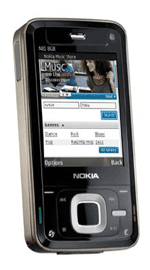 “The single biggest issue that’s facing the music industry is there are huge waves of devices being sold and shipped to consumers on a daily basis. Very few of these devices are then subsequently used to subscribe [to] legitimate downloads,” says Universal Music executive Rob Wells.
 Deutsche Grammophon has opened a wonderful online music store for classical music enthusiasts, the



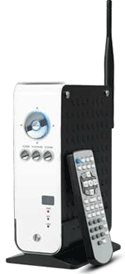 Pitched by the company as an AppleTV alternative,
  Microsoft’s Xbox Live has come a long way since it launched in November of 2002. Xbox Live started out as a multiplayer gaming network, but today the 8 million users with Live accounts do much more than just play games. Users can download movies and television shows, chat with friends, and more. Even Microsoft now describes the service as a “comprehensive unified online entertainment network”. Marketing-speak at its finest, but it’s true – Xbox Live is a key component of Microsoft’s connected entertainment vision. In this post we look at the state of Xbox Live today, and explore some of the ways Microsoft will likely enhance it in the future.
  Now this would be one heck of an early present: The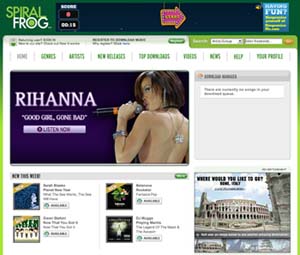
 Two significant bits of music news this week: The Beatles are expected to release their catalog into the digital realm sometime in 2008, and U2 has given fans an unprecedented sneak preview of the unreleased song “Wave of Sorrow” through the Facebook app iLike.