Archive for the ‘Mobile’ Category

Bill Gates at CES: No web fridges, but you can watch TV on your Xbox 360

One of the highlights of CES (Consumer Electronics Show) each year is Bill Gates’ keynote speech, available here as a webcast. This year there were a slew of products and partnerships announced. It was less futuristic vision and more beta products and what’s coming in 2008. In other words, it was much less about Internet-connected fridges, and more about what you can do now on your Xbox 360.

By now everybody is familiar with Microsoft’s strengths: Windows, devices, ‘rich’ user interfaces, partnerships with big media and electronics companies. Over the past few years we’ve seen Microsoft morph into a ‘Services’ company too, where services are delivered over the Internet. Although the branding as Windows Live has been clumsy and confusing, Microsoft has still been able to slot its Services vision into the Windows and devices foundation. Hence Gates’ talk of “Services-connected devices running on the Web” and the “huge amounts of storage” that Microsoft is able to provide.

Continue reading »
Motorola to introduce the DH01! (It's a mobile TV device)

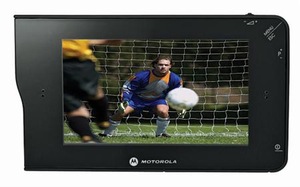
motorola tv deviceI agree with Henry Blodget over at Silicon Alley Insider. Motorola is launching a portable TV with a really, really bad name: Motorola TV DVBH compatible DH01 device.”

Now that will capture the imagination of consumers, conveying to them what a fun, on-the-go, game-changing device the DVBH is. Or is that the DH01? And this from the same company that brought us the fashion-forward, interestingly-named RAZR and MOTOKRZR cell phones.

Of course, that was years ago and Motorola has since dropped the cell phone ball, sinking to the No. 3 worldwide handset manufacturer. To expand its reach in portable consumer electronics, Motorola is introducing a mobile device for playing live television, which will also play on-demand video clips and programs saved on digital video recorders. (via Reuters.)

Continue reading »

Skype coming to Sony's PSP?

Skype coming to Sony’s PSP?With this year’s Consumer Electronics Show (CES) and Macworld just around the corner, let the rumor mongering and product “leaks” begin. Today’s news (Engadget) is that users of Sony’s PlayStation Portable will soon be able to make Internet-based telephone calls and send messages over Skype’s network. Interestingly, the source of the “leak” is Sony’s own official CES preview page.
This isn’t the first time Sony has sought to add VoIP functionality to the PSP. Last May, Sony Europe announced that they had teamed up with British Telecom to bring voice calls, video conferencing and IM functionality to users across Europe. However, Skype has a huge installed user base, much larger than BT’s own ‘softphone’ products, and presumably will be offered to users in the U.S. and other parts of the world, not just Europe.

Mobile: the Year of Wireless hasn't arrived — yet

apple google year end smNeither 2007 nor 2008 are the Years of Wireless. They’re the transition years.
The significant events that shaped the U.S. wireless industry in 2007 will carry over to 2008 and most likely 2009 before the industry receives a long-time-in-coming, much-needed makeover that — hopefully — will benefit all the players: the carriers, the infrastructure providers, the handset manufacturers, the developers and, best of all, you, the consumer.

Looking  back at last100’s coverage of the U.S. wireless industry, three significant themes emerged that, taken singularly, could have qualified 2007 as the Year of Wireless: Life Remotes (the introduction of the iPhone), Disruption (Google’s game-changing involvement in an industry outside its own), and Mobile Lifestyle (mobile apps).

Yet each of these are far from complete, or even fully developed, so to say 2007 is the Year of Wireless is premature. We examine some of the events of 2007 and look forward into what promises to be an active, topsy-turvy 2008.

Continue reading »

Hey handset guys! Look around: Consumers want smartphones

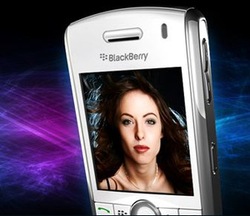
blackberry pearlI’ve noticed this for a while, written about it, talked about it, and yet many handset manufacturers seem to be ignoring the obvious: Consumers want “smart”phones.
Case in point: Yesterday I spent time at a satellite R&D office of one of the largest handset manufactures in the world. A few of us were getting on an elevator as our escort talked about one of the company’s Windows Mobile smartphones.

“It’s for the business user,” he said.

“Maybe,” I answered, “but haven’t you noticed the number of average people out there carrying (RIM) BlackBerries, (Samsung) Blackjacks, and (Motorola) Q’s? These aren’t business people. They’re soccer moms and young adults.

“They’re not using smartphones to get their email from a corporate Exchange server. They’re not conducting traditional business. They’re conducting life’s business.”

In one ear, out the other.

And yet the latest numbers from Research in Motion, the ones behind the BlackBerry, bear me out and substantiate the trend.

Continue reading »

Despite recent interest, eBook readers have a long way to go

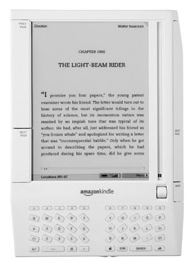
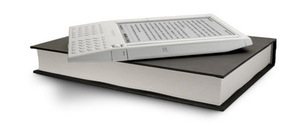
kindle and book smWith the introduction of the Amazon Kindle, alternative ways to read books is back in the public eye. Problem is, where are they going? And will they ever be accepted after years of promise?

As Amazon CEO Jeff Bezos said in a lengthy Newsweek cover story when the Kindle electronic book reader was released, “Books are the last bastion of analog.”

Indeed. Most people, particularly authors, publishers, and book lovers, passionately believe that the book is perfect and will never be improved, even in an era of digital upheaval.

Books do not have storage memory, displays, or power sources. They’re bound paper with words and images, sturdy, reliable, always-on, with a fabulous user interface. They feel great in our hands, smell good, and when we’re done reading we shelve them like trophies.

kindleAnd yet it’s inevitable that the book will ultimately succumb to digital technology, which has already consumed music, film, video, photography, and communications and is turning those industries inside-out and changing society.
There’s no reason not to believe that digital technology will do the same to books. Unfortunately, alternative book reading remains an unfulfilled promise, hampered by poorly designed hardware, cumbersome user interfaces, scant content, competing formats, digital rights management (DRM), and a misplaced business model.

For now, consumers have no compelling reason to stop reading printed books. In this post, we examine the state of alternative book reading, what choices people have, what works, what doesn’t, and what resources are available.

Continue reading »

Verizon to broadcast 24 college bowl games on V Cast

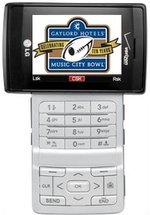
verizon vcastJust in case you are a graduate of, say, Southern Missouri, Boise State, or South Florida, and can’t make it to your beloved team’s bowl game, don’t despair. Verizon Wireless has you covered.

If you subscribe to Verizon Wireless.

And if you have a V Cast enabled phone.

If you do, and you’re out Christmas shopping and not in front of the big-screen TV with chips and beer, then you can watch your team on a really tiny screen. But, hey, something is better than nothing when it comes to bowl season, right?

ESPN Mobile TV, CBS Mobile TV, and Fox Mobile will be bringing complete NCAA bowl games to Verizon Wireless V CAST TV this month — but only 24 of the “lesser” bowls, not the biggies like the Capitol One Bowl (Michigan vs. Florida), the Rose Bowl (USC vs. Illinois), and the BCS Championship game on Jan.7 between Ohio State and LSU.

Continue reading »

Life is good for Apple's iPhone

timeEverything is progressing just fine for Apple’s iPhone, as it was named Time Magazine’s Gadget of the Year and two reports state it’s on schedule for an expected update in 2008 with the possibility of overtaking the venerable iPod in sales by 2009.

Time, however, underestimates the impact of the iPhone. It says, “The iPhone changed the way we think about how mobile media devices should look, feel, and perform.”

No argument there.

But as we’ve said all along, the significance of the iPhone is greater than the device itself. It, along with Google’s mobile effort and Nokia’s activities, will change the face of the U.S. mobile-phone industry as early as 2008. No other device on Time’s list — from the Nikon Coolpix to the Belkin N1Vision Wi-Fi Router — even comes close to having that kind of impact.

Continue reading »

Where to watch NFL, MLB, NBA, NHL online

composite logos smallThe Internet is not just a place to get the latest scores and follow your favorite team in the standings. The Web has evolved so well that it has displaced traditional media as the first-stop source for all your major-sports needs.

Except for local coverage, there’s no need to watch TV sportscasts anymore. Pardon the sports pun, but the Internet has all the bases covered — from providing the usual scores, standings, and statistics to rich, always-available highlights, interviews, streaming games, downloadable games, podcasts, extensive season and historical archives, and a host of mobile solutions from wallpapers and ringtones to live GameCasts with Audio. Best of all, there are no timetables.

The Big 4 professional sports leagues in the U.S. — the NFL, MLB, NBA, and NHL — have leveraged existing footage (usually developed through their “official” networks) to create their own unique content. The leagues flood their Web sites with an overwhelming array of branded digital content so fans can stream games, download ones they missed, and watch clips packaged in so many ways the head spins.

We at last100, being the sports fans we are, decided to take a look at the Big 4 — plus the top “amateur” league in the U.S., the NCAA — to see where their Internet and new media strategies have evolved. Without a doubt, the major sports leagues are using the Internet so thoroughly to feed information-hungry fans that, except for the beat guys covering the local teams for television, radio, and newspapers, there’s little reason to watch nightly sportscasts or read the morning sports section.

Continue reading »

Why is AT&T behind Google and Verizon in the open-network game?

Why is AT&T behind Google and Verizon in the open-network game?AT&T, the No. 1 U.S. wireless carrier, is dropping the open network ball here and is looking pretty goofy in the process.

USA Today ran an ebullient story on AT&T flinging its cellphone network wide open as if it was big, big news. “Starting immediately, AT&T customers can ditch their AT&T phones and use any wireless phone, device and software application from any maker,” USA Today wrote.

AT&T CEO Ralph de la Vega piles on, “You can use any handset on our network you want. We don’t prohibit it, or even police it.”

But as we know, AT&T operates a GSM network. Anybody with an AT&T SIM card (subscriber identity module) can use any unlocked GSM-enabled phone on its network. The phone can use any operating system — Windows Mobile, Symbian, Linux.

Go into any AT&T retail store and sales people will tell you — unofficially until now — that wireless customers had the option of using devices and applications other than those offered by AT&T. As USA Today notes, AT&T sales people will let consumers “know all their options” before making the final purchase.

Continue reading »