Archive for the ‘Mobile’ Category

Warner Music jumps on-board Nokia’s all-you-can-eat music plan

Three down, one to go
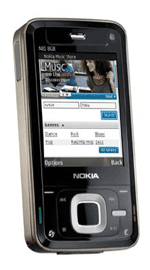
Warner Music jumps on-board Nokia’s all-you-can-eat music planNokia continues to cozy up to the music industry, announcing today that Warner Music has signed onto ‘Comes With Music’, the company’s all-you-can-eat music subscription plan. The major recording label becomes the third of the Big Four to have agreed a partnership with Nokia, following earlier deals with Universal Music and Sony BMG. The remaining major holdout is EMI.

Announced last December at the annual Nokia World conference, “Comes With Music” will enable customers to buy a Nokia device with a year of unlimited access to “millions of tracks”, and – rather surprisingly – get to keep any downloaded tracks once the twelve month subscription period ends. The only way to then continue accessing the service, however, is to purchase a new “Comes With Music” device (see our follow-up report).

Continue reading »
Coming soon: iTunes remote control app for iPhone and iPod touch

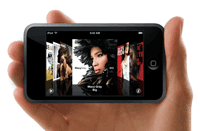
Coming soon: iTunes remote control app for iPhone and iPod touchThis one is obvious but cool nonetheless.

With the launch of the App Store next month, Apple will release free software that lets you control iTunes on your Mac (or PC, we presume) via an iPhone or iPod touch. MacRumors notes the discovery in a pre-release version of iTunes 7.7 seeded to developers last night. “In the Read Me of the iTunes installer is a hint at a previously unannounced iPhone/iPod Touch application”:

… the new Remote application for iPhone or iPod touch to control iTunes playback from anywhere in your home — a free download from the App Store.

Continue reading »

Nokia buys Symbian, opens fire on Android, Windows Mobile and iPhone

Nokia buys Symbian, opens fire on Android, Windows Mobile and iPhoneThe boldest moves are made from a position of strength, not when the chips are down and you’ve very little to lose. Nokia’s decision, announced today, to acquire the remaining 52 per cent of Symbian it doesn’t already own and make the mobile platform open source, is bold to say the least.
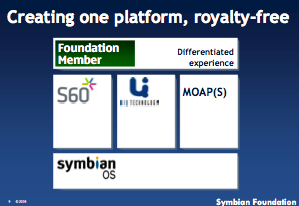
Symbian unified platform: UIQ, S60The ambition, says Nokia CEO Olli-Pekka Kallasvuo, is to create “the most attractive platform for mobile innovation and drive the development of new and compelling web-enabled applications.”

To achieve this, Nokia will join other industry players, initially AT&T, LG Electronics, Motorola, NTT DOCOMO, Samsung, Sony Ericsson, STMicroelectronics, Texas Instruments and Vodafone, to form the non-profit Symbian Foundation, although any company can join.

Together the foundation will unify the Symbian OS with its various competing User Interface layers – primarily Nokia’s S60 and Motorola and Sony Ericsson’s UIQ – into a single open platform for “converged mobile devices”. The new foundation, in which Nokia has the biggest seat since it will swallow up all of Symbian’s current employees, will oversee the process of releasing the new OS under the Eclipse Public License (EPL) 1.0 open source license – a transition that will take two years – and become its long-term custodian.

Continue reading »

Nokia purchases Plazes, a location-based social networking service

plazes logoBuried in Bob Iannucci’s discussion at Supernova 2008 last week was this comment: “Connecting people only through voice communications is limited,” the Nokia chief technical officer said.
To me, that sums up everything Nokia is doing, including today’s announcement. Nokia, the world’s largest handset manufacturer, is purchasing Plazes, the location-based social networking service that’s based in Berlin with all of 13 employees.

Plazes, founded in 2005, lets people alert their friends about what they are doing and where they are — sort of Twitter and Loopt rolled into one. Users can subscribe to their friends, a group of friends, or to specific locations known as “Plazes.”

Updates can be done via plazes.com, by mobile phone and text messaging, or by a number of third-party applications using the Plazes’ API. And, we can expect, Plazes will be on millions of Nokia phones worldwide as soon as possible.

nokia logo“Nokia is a perfect partner for us because they share our product vision and have the muscle to bring locative presence to hundreds of millions of people all over the world,” the Plazes team writes on its blog. “What better partner than Nokia for exploring innovative ways of connecting people?”

With Plazes and other recent acquisitions, Nokia is clearly connecting people through location-based services, maps, music communities, gaming, and — almost forgot — voice.

Continue reading »

No surprise, Gphone reportedly delayed

According to the Wall Street Journal, mobile phones powered by the Google-led Android platform – the so-called GPhone – are unlikely to see the light of day until the fourth quarter of this year at the earliest or, more likely, early next year. Perhaps not all that surprising considering that Google elected not to build its own hardware, and instead is working with over 30 partners to bring Android-based handsets to market.

The reasons given for the delay are plenty:

  • The operating system is still a ‘work in progress’, with the various partners continually lobbying for additional features. “This is where the pain happens,” says Android chief Andy Rubin.
  • Carriers need time to customize Android with their own branded services and User Interface, rather than sticking with Google’s own suite of applications.
  • At the same time, developers are complaining that it’s difficult to write for Android since Google has yet to lock down its own development.
  • China Mobile is said to be having trouble translating the Android software from Roman characters into Chinese.
  • Additionally, it’s claimed that, in a push to help T-Mobile deliver on its promise of getting an Android-powered phone out the door before the year is up, Google has been unable to provide the needed resources to competing networks.

All of the above paints a pretty bumpy road ahead for the GPhone, at least in the short term.

Continue reading »

Podcast: RWW Live episode 2 (3G iPhone and more)

Last month ReadWriteTalk (a regular podcast in which the show’s host Sean Ammirati talks to “The People Behind The Web”) launched a new bi-weekly feature called RWW Live. The idea is to get together a number of writers from the ReadWriteWeb blog network (that includes last100!) for a live discussion on recent events in the technology world.

In episode two, I join Richard MacManus, editor and founder of ReadWriteWeb, Charles Knight from Alt Search Engines, and ReadWriteTalk host, Sean Ammirati, to discuss a number of big events over the last week including:

  • 3G iPhone
  • New Approaches by the Alternative Search Engines & a plug by Charles for his new favorite Alt Search Engine – Tag Galaxy
  • The Future of Yahoo!

You can listen to the whole show here.

@Supernova: Evidence developers are just as interested in Blackberry as they are iPhone, Android

While the Supernova conference is mostly about the future of the network, a part of that network is mobile. And if you listen to most attendees, the two most important mobile players right now are Apple and the iPhone and Google and Android.

Oddly, it’s as if two other established players — Nokia and Research in Motion — have been relegated to the sideline as also-rans. One conference attendee even asked during a discussion about the future of mobile, “Is Blackberry dead?”

Hardly.

Continue reading »

Loopt: a location aware mobile social network

This post is syndicated from ReadWriteWeb.

Loopt is the third location aware mobile social network to become available for the majority of U.S. smartphones . It joins fellow competitors Whrrl and Brightkite, both of which have already started to gain traction (see ReadWriteWeb coverage of Brightkite). However, this is not a market where the first one to debut on the smartphone will be the ultimate winner. Instead, in the wild west of the mobile social networks, the key will be adoption. This is an area where Loopt is making headway, having recently announced deals with all the major U.S. carriers and support for Blackberry smartphones.

Continue reading »

@Supernova: Getting a glimpse of mobile's future without the iPhone and Android

supernovaThe mobile buzzwords at Supernova 2008 are plentiful: location, social networks, iPhone, Android, the cloud. But these are so . . . now.

At Supernova on Monday we got a glimpse of what’s next for mobile and our digital lifestyles and quite frankly, it has squat to do with hardware like the iPhone, software like Google’s open-source operating system Android, mobile platforms put forth by Apple, Google, Nokia, Research in Motion, and the carriers.

What’s coming is life profound: Put billions of sensors in cell phones, regardless of hardware, operating system, or carrier, and affect the way we understand traffic or the weather. With continued advances in chipsets, accelerometers, compasses, we can change the way we interact virtually with the physical world around us. We can turn monthly cell phone bills, which are difficult to use beyond paying, into living information integrated into our working and personal lives and social networks.

“We’re just getting started,” said Bob iannucci, Nokia’s chief technology officer.

Continue reading »

Motorola launches movie store for cellphones, but will anybody bite?

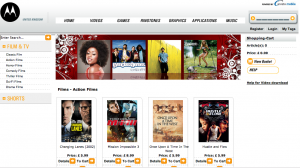
Motorola launches movie store for cellphones, but will anybody bite?Amid all the iPhone 2.0 hype, we missed the news last week that Motorola has launched a full-length movie store for its mobile phones. Before you ask: “Who wants to watch a feature film on their tiny cellphone screen, anyway?” Here are a few of the details.

The service is available first in the UK-only, but will eventually extend to France, Italy, Germany and Spain. The catalog is currently restricted to forty titles from one studio — Paramount Digital Entertainment — including “The Italian Job”, “Star Trek” and “Team America: World Police”, priced at between £5.99 and £8.99 per movie.

Unsurprisingly, movies can’t be downloaded ‘over-the-air’ directly to handsets but instead the service requires “side-loading” whereby content is downloaded to a PC first and then transfered onto a mobile phone. Motorola says this is so that customers avoid potentially expensive data charges but it also means that the service can bypass carriers who may offer a competing service. Users will still need to be able to connect their phones to the Internet, however, as each side-loaded movie has to have its DRM certificate verified online, and each device must be registered with Motorola’s store.

Continue reading »